- 07774503356
- info@skinestheticsclinic.co.uk
- 7 Barnard Road, RM70HX

- ACNE TREATMENT
- Alopecia Treatment
- Tricology
- Exosome Therapy
- Eye brow lift
- Hair Fall Treatment
- PRP
- Micro needling
- HIFU
- Moles, Warts & Skin Tags Removal
- Scalp health treatment
- IV drip (whitening and vitamins)
- Melasma / hyper pigmentation treatment
- Skin booster
- Wrinkle treatment
- Fillers
- Sculptra
- Anti Aging Treatments
- Hair Thining Treatment

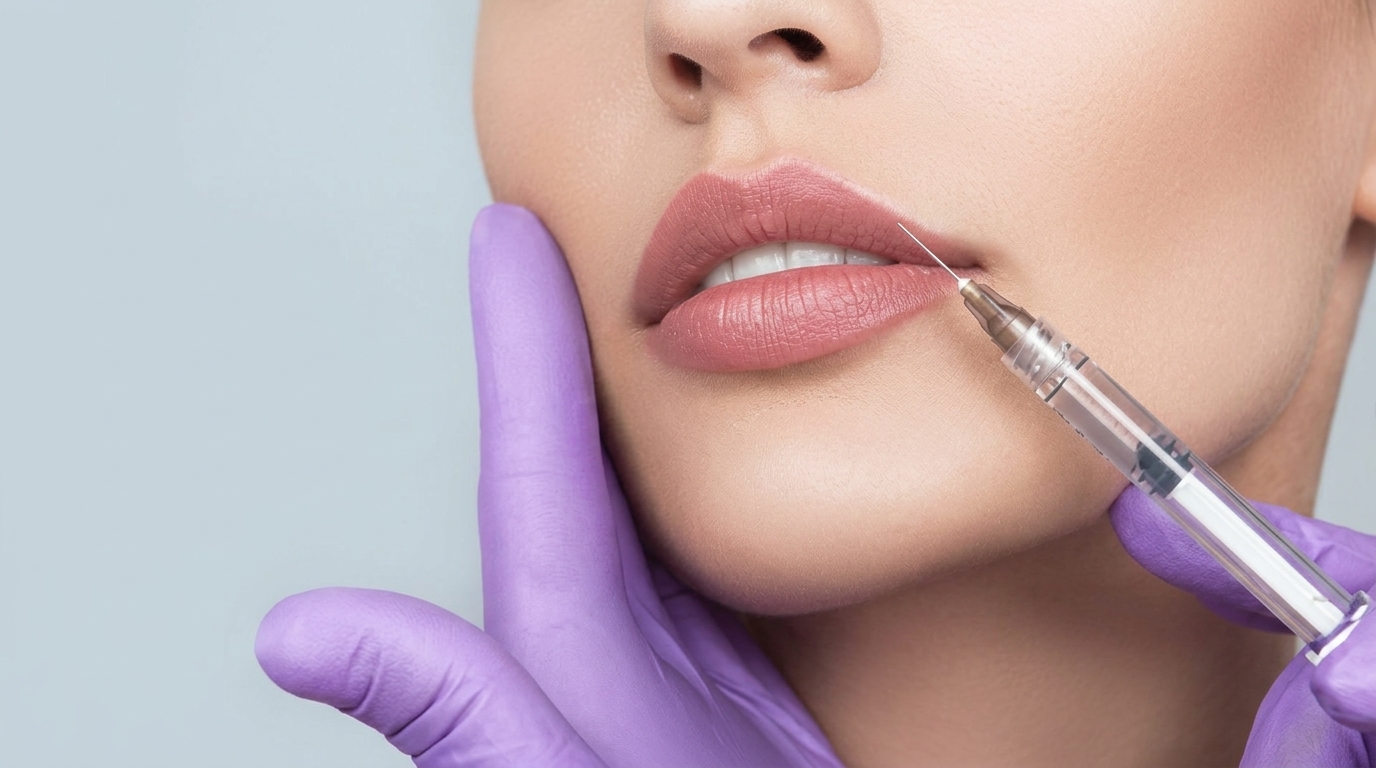
The face changes over time in ways that are gradual and then suddenly very visible. Volume depletes from the cheeks and temples. Hollowing appears beneath the eyes. The jawline softens. Deep lines settle into the nasolabial folds. Lips thin and lose their definition.
Dermal fillers address all of these changes precisely, naturally, and without surgery. At Skin Esthetics Clinic in Romford, we offer a full range of dermal filler treatments — from lip augmentation and cheek contouring to tear trough, jawline, chin, and nasolabial fold treatment — delivered by trained practitioners following a thorough facial assessment.
The goal at every appointment is not an obvious cosmetic change. It is a result that makes you look rested, defined, and naturally like the best version of yourself.
What Are Dermal Fillers?
Dermal fillers are injectable treatments that restore volume, smooth lines, and define facial contours using medical-grade gel placed precisely beneath the skin. They are one of the most popular and most versatile aesthetic treatments available — suitable for multiple areas of the face, neck, and hands, and capable of addressing concerns ranging from fine lines to significant volume loss and structural remodelling.
Unlike anti-wrinkle injections, which work by relaxing facial muscles, dermal fillers work by physically restoring or adding tissue volume in specific locations. The result is immediate and visible from the moment treatment is complete.
What Are Dermal Fillers Made Of?
The vast majority of dermal fillers used in aesthetic medicine — including all fillers used at Skin Esthetics Clinic — are made from hyaluronic acid. Hyaluronic acid is a naturally occurring molecule present in the skin, joints, and connective tissue throughout the body. Its primary biological function is to attract and retain water, keeping tissue hydrated and resilient.
Synthetic hyaluronic acid used in dermal fillers is biocompatible — the body recognises it as a natural substance and does not mount a foreign body response. It is cross-linked to different degrees depending on the product, which determines the filler’s firmness, lift capacity, and how long it lasts in the tissue.
Using hyaluronic acid has a further clinical advantage beyond biocompatibility. If a result is unsatisfactory or complications arise, hyaluronidase — an enzyme that breaks down hyaluronic acid — can dissolve the filler, making hyaluronic acid-based treatment fully reversible.
Hyaluronic acid is also used in some acne treatments for its ability to hydrate and improve skin texture, just as it does in Dermal Fillers.
How Do Dermal Fillers Work?
When dermal filler is injected into the appropriate tissue plane for the area being treated, the hyaluronic acid molecules attract water from the surrounding tissue, creating a soft, flexible gel deposit that integrates naturally into the existing tissue architecture.
In areas of volume depletion — such as the cheeks, tear trough, or temples — the filler physically replaces lost tissue volume, restoring the structural support that keeps the overlying skin lifted and smooth. In areas where contouring is the goal — the jawline, chin, or lip border — filler creates definition and projection that improves facial proportion and balance.
The placement technique varies significantly by area and by the specific goal. Different areas require different filler viscosities, different injection depths, and different amounts. Getting all three right requires both product knowledge and a thorough understanding of facial anatomy.
Just as dermal fillers help restore volume in the face, similar rejuvenation can be achieved for the scalp through Alopecia Treatment.
Dermal Fillers vs Botox — What Is the Difference?
Botox and fillers are the two most common injectable aesthetic treatments — and they are frequently confused or considered interchangeable when they are not.
Botox — anti-wrinkle injections using botulinum toxin — works by temporarily blocking the nerve signals that cause specific muscles to contract. It softens dynamic wrinkles — lines caused by facial movement such as forehead lines, frown lines, and crow’s feet. It does not add volume and it cannot address structural changes caused by volume loss.
Dermal fillers add physical volume and substance to areas of the face. They treat static changes — hollow under eyes, flattened cheeks, softened jawline, thinning lips, and deep folds. They cannot address muscle-driven lines.
In practice, botox and fillers complement each other. Many patients use both — botox for movement-driven lines and fillers for volume and structural concerns. We discuss which approach is most appropriate for your specific concerns at every consultation.
Dermal Filler Treatments We Offer at Skin Esthetics Clinic Romford
Every dermal filler treatment at Skin Esthetics Clinic begins with a full facial assessment. We assess your facial proportions, volume distribution, skin quality, muscle movement, and the specific changes you want to address before recommending any product, placement, or volume.
Lip Fillers Romford
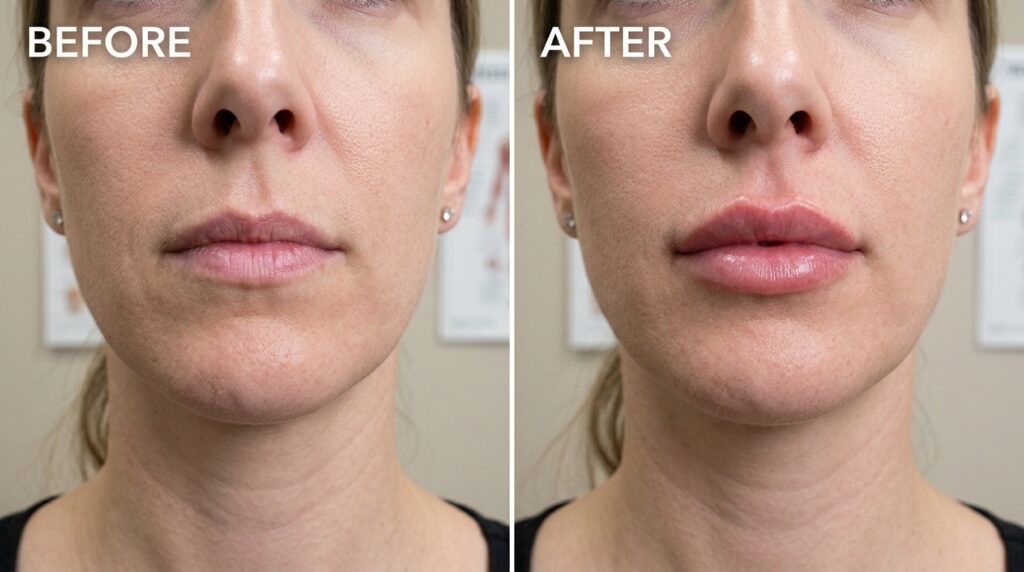
Lip filler is the most requested dermal filler treatment globally and one of our most popular treatments in Romford. Hyaluronic acid placed along the vermillion border, within the body of the lip, or in the philtrum columns can add volume, improve definition, enhance symmetry, and restore the natural shape that lips lose with age.
We offer multiple lip filler techniques — including Russian lip technique for height and definition rather than projection, and natural augmentation for patients who want subtle enhancement rather than a noticeable change. The right technique depends entirely on your existing lip shape, your goals, and how your lips respond to filler.
Cheek Fillers and Cheekbone Filler
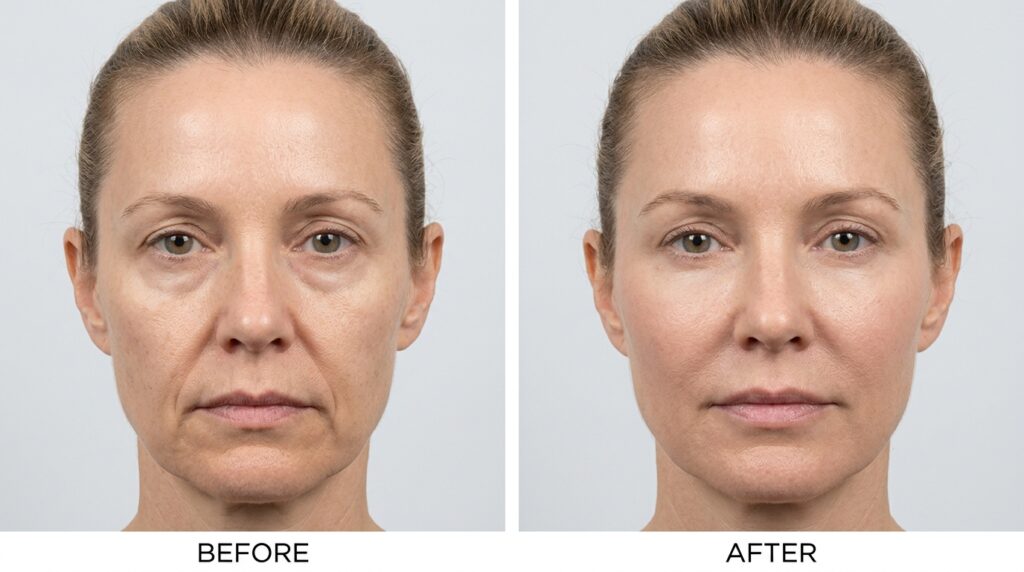
Cheek fillers restore the volume and projection that depletes from the malar fat compartments with age, creating the lifted, contoured midface appearance of youth. Cheekbone filler placed along the zygoma adds structural definition and creates a lifted appearance in the surrounding tissue, reducing the appearance of nasolabial folds without placing filler directly into them.
Cheek filler before and after results are among the most dramatic and satisfying of any filler treatment because volume restoration in the midface has a cascade effect across the entire lower face — lifting the cheeks also lifts the nasolabial folds, the jowls, and the overall appearance of the lower face.
Tear Trough Filler
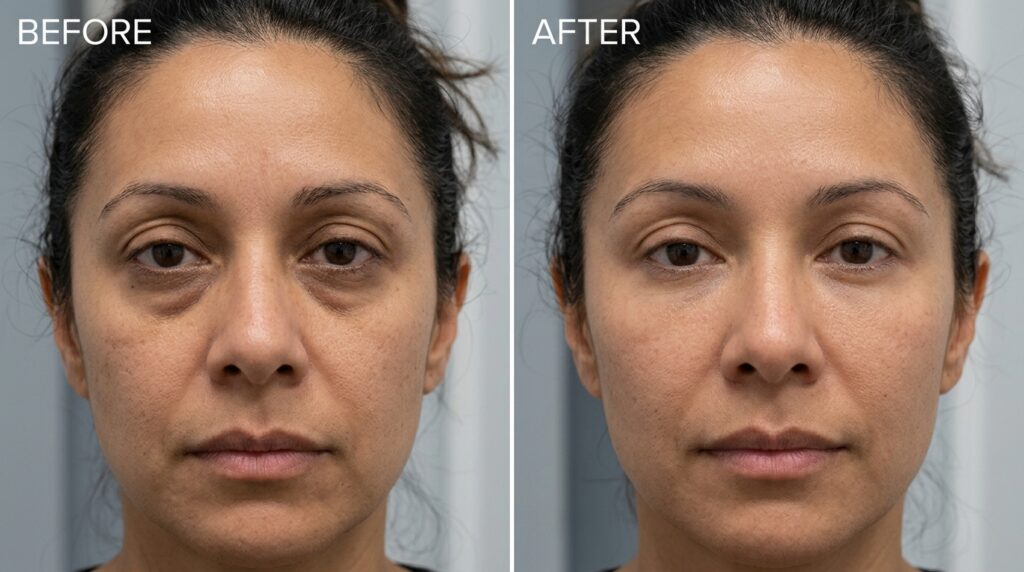
The tear trough is the groove that forms between the lower eyelid and the upper cheek as the fat compartments in this area deplete with age. It creates a hollowing beneath the eye that produces a tired, shadowed appearance that no amount of concealer or sleep consistently resolves.
Tear trough filler is one of the most technically challenging dermal filler treatments. The orbital area has a complex anatomy including a dense vascular network and thin, delicate skin. When performed correctly with the appropriate product placed at the right depth using a cannula technique, tear trough filler produces transformative under eye improvement.
When performed incorrectly — with the wrong product, the wrong depth, or the wrong volume — tear trough filler can cause the Tyndall effect, visible lumping, or persistent swelling. At Skin Esthetics Clinic, we only treat the tear trough area using a cannula technique with a low-viscosity product specifically formulated for delicate, thin-skinned areas. Patient safety and natural results are always prioritised over speed.
Jawline Filler
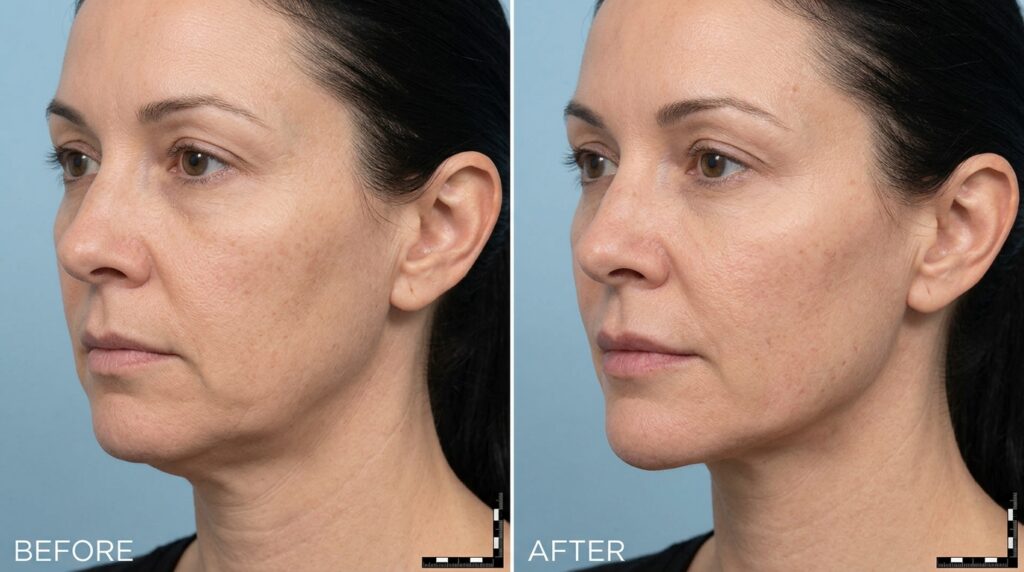
Jawline filler restores definition and sharpness to a jawline that has softened through volume depletion, skin laxity, or natural anatomy. Injectable fillers for jawline placed along the mandibular border create a defined, sharp jaw that improves facial proportion — strengthening the lower face and providing a more defined, contoured appearance from every angle.
Jawline filler is one of the most versatile treatments we offer, suitable for patients who want to address a naturally undefined jawline, those who have lost definition with age, and patients who want a specific aesthetic improvement in facial proportion.
Chin Filler
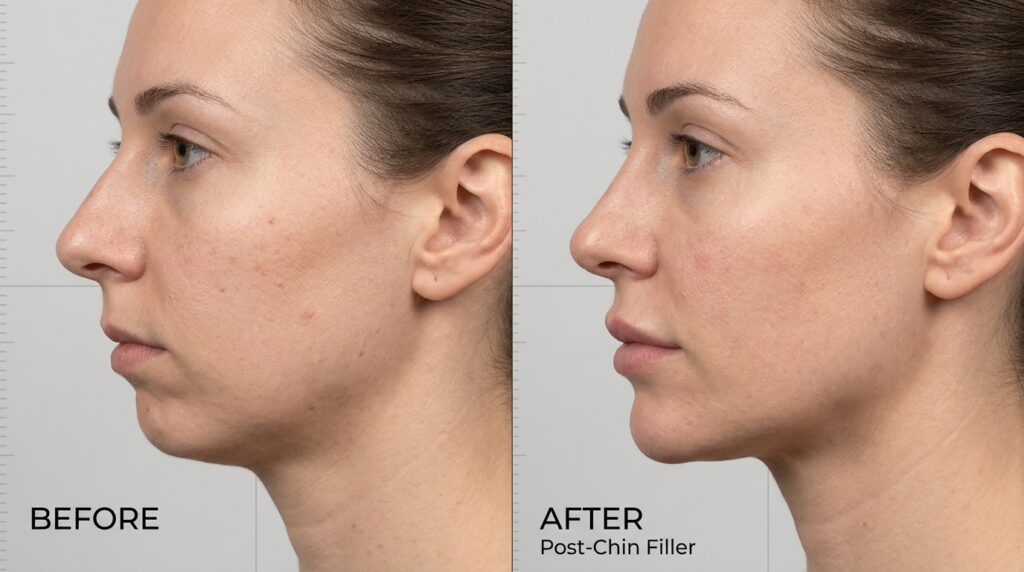
Chin filler adds projection, definition, and vertical height to the chin — improving the balance between the lower face and the rest of the facial structure. A chin filler before and after comparison consistently shows improved facial proportion, a more balanced profile, and a stronger, more defined lower face.
Chin filler is often used in combination with jawline filler and, where appropriate, anti-wrinkle injections for the masseter — addressing the full lower face as a structural unit for the most harmonious result. Chin dermal filler placed at the mentum or along the chin border produces projection that improves the profile significantly in patients with a recessive or flat chin.
Nasolabial Fold Filler
Nasolabial folds — the lines running from the sides of the nose to the corners of the mouth — develop as the malar fat compartments deflate and descend. Dermal filler for nasolabial folds can be placed directly in the fold itself or, more effectively in most cases, in the overlying cheek volume that supports the fold from above.
The best approach for nasolabial fold treatment depends on whether the fold is primarily structural — driven by midface volume loss — or directly in the fold tissue. We assess this at consultation and recommend the most appropriate placement strategy for your specific presentation. Fillers for nasolabial folds produce consistent and significant improvement in patients with moderate to deep folds.
Smile Line Filler
Smile lines — the finer lines that extend outward from the nasolabial area — respond well to a combination of dermal filler placed carefully along the line and skin quality treatment to improve the collagen in the overlying skin. Smile line filler is placed with a very fine needle at a superficial depth to avoid the vascular anatomy in this area.
Forehead Filler
Forehead filler is used to address temporal hollowing — the concavity that develops at the temples with age — and for patients with significant forehead volume depletion. It is a more niche treatment than cheek or jawline filler and requires careful assessment of the forehead anatomy before treatment.
Fillers for Jowls
Jowl filler placed along the pre-jowl sulcus — the depression that forms just in front of the jowl — softens the demarcation between the jowl and the jawline, reducing the visual prominence of jowling without surgical intervention. Cheek filler placed higher up in the midface also produces a lifting effect on the jowls by restoring the structural support above them.
Under Eye Filler
Under eye filler addresses dark circles and hollowing beneath the eye caused by fat compartment depletion and shadowing in the orbital area. Fillers for under eye bags — placed using a cannula at the appropriate depth — reduce the hollow that casts the dark shadow responsible for the tired, aged appearance most patients want to address.
We do not use needle injection for under eye filler due to the vascular risk in this area. All under eye treatments at Skin Esthetics Clinic are performed using a cannula technique that significantly reduces bruising risk and vascular complication risk.
Lip Fillers in Romford
Lip filler treatment at Skin Esthetics Clinic is tailored to your specific lip anatomy, your goals, and the aesthetic you are looking for. We do not apply a standard result to every patient. We work with your existing lip shape to enhance and refine rather than to change.
What Are Lip Fillers?
Lip fillers are hyaluronic acid-based injectable treatments placed into and around the lips to add volume, improve definition, enhance symmetry, and reshape the lip border. They are the most widely performed filler treatment in the UK. Results develop as the filler settles over two weeks and last six to twelve months on average depending on the volume used, the patient’s metabolism, and how active the lip muscles are.
How Long Do Lip Fillers Last?
Lip fillers typically last six to twelve months. The lips are one of the most metabolically active areas of the face due to the constant movement of the orbicularis oris muscle — eating, speaking, and facial expression all contribute to the breakdown of the filler over time. Patients who use their lip muscles more intensively — musicians, singers, and those who speak extensively professionally — may find their lip filler lasts towards the lower end of this range.
How Much Lip Fillers Cost in Romford?
Lip filler price at Skin Esthetics Clinic in Romford depends on the volume required and the technique used. We provide a full transparent cost breakdown at your free consultation. Our dermal fillers Romford prices reflect the quality of the products we use, the expertise of our practitioners, and the thorough assessment and follow-up care included in every treatment.
Do Lip Fillers Hurt?
Lip filler treatment with adequate topical numbing is very well tolerated by most patients. Most lip filler formulations also contain lidocaine — a local anaesthetic — which produces progressive numbing throughout the injection process. The initial injection produces a brief sharp sensation that subsides quickly as the numbing takes effect. Most patients describe the experience as significantly more comfortable than they expected.
Lip Filler Aftercare
After lip filler, avoid touching or pressing the lips for four hours. Avoid alcohol for 24 hours. Avoid vigorous exercise and saunas for 24 hours. Avoid applying makeup to the lip area for four hours. Avoid extremely hot food and drinks for 24 hours. Some swelling and mild bruising in the first 48 hours is completely normal and part of the healing process. Results are fully visible at two weeks as the swelling resolves and the filler settles into its final position.
Cheek Fillers and Cheekbone Filler
Cheek filler is one of the most transformative treatments available in aesthetic medicine because of the cascade effect it produces. Restoring midface volume lifts the surrounding tissue, softens nasolabial folds, reduces the appearance of under eye hollowing, and gives the overall face a more youthful, rested, and contoured appearance — often with just one to two millilitres of product.
What Do Cheek Fillers Do?
Cheek fillers restore the volume and structural support that depletes from the malar fat compartments with age. They can also add definition and projection to the cheekbones in patients who want a more sculpted midface appearance. The result is a lifted, contoured look that improves the overall balance of the face without changing anything specific in an obvious way.
How Long Do Cheek Fillers Last?
Cheek fillers last longer than most other filler areas because the cheeks are not a high-movement zone. Patients typically find cheek filler lasts twelve to eighteen months. With a consistent treatment programme, many patients find they need progressively less product over time as the structural improvements compound.
Tear Trough Filler in Romford
The tear trough area is one of the most common concerns we see at Skin Esthetics Clinic and one of the most technically demanding to treat well. Getting it right produces a result that patients consistently describe as the single most impactful aesthetic treatment they have experienced. Getting it wrong causes complications that are distressing and difficult to resolve.
We take tear trough treatment very seriously. We use only fine cannulas, low-viscosity formulations specifically designed for this area, and conservative volumes. We never rush this treatment and we never compromise on safety for the sake of a more impressive result.
What Is Tear Trough Filler?
Tear trough filler is hyaluronic acid placed in the orbital-malar groove beneath the eye to fill the hollowing that causes the shadowed, tired under eye appearance. The treatment lifts the depressed tissue in this area, reduces the shadow that creates the dark circle appearance, and produces a more rested and youthful look without surgery.
Is Tear Trough Filler Safe?
Tear trough filler is safe when performed by an experienced practitioner using the correct product, the correct placement depth, and a conservative volume. The orbital area has a complex vascular anatomy that makes this treatment higher-risk than most other filler areas if performed incorrectly.
At Skin Esthetics Clinic, tear trough filler is performed by practitioners with specific training in periorbital anatomy using a cannula technique that significantly reduces the risk of intravascular injection — the most serious potential complication in this area.
We also turn away patients who are not anatomically suitable for tear trough filler — including those with very pronounced malar festoons, extremely thin lower eyelid skin, or significant orbital fat prolapse — because these presentations are better addressed through other means. Patient safety and honest assessment always come first.
How Long Does Tear Trough Filler Last?
Tear trough filler lasts nine to twelve months on average. This area is metabolically less active than the lips, which contributes to better longevity. Maintenance treatments every nine to twelve months sustain the results without requiring significant retreatment volume.
Tear Trough Filler Aftercare
After tear trough filler, avoid touching or pressing the treated area for 24 hours. Sleep with the head slightly elevated for the first night to minimise swelling. Avoid vigorous exercise, alcohol, and saunas for 24 hours. Apply a cold compress gently to reduce swelling if needed. Some degree of swelling and occasional bruising in the first few days is normal — the full result is visible at two weeks as the swelling resolves and the filler settles.
Jawline Filler in Romford
A defined jawline is one of the most universally sought aesthetic improvements for both men and women. Jawline filler placed along the mandibular border creates the sharp, contoured definition that improves facial structure, profile, and the overall balance between the upper, middle, and lower thirds of the face.
What Does Jawline Filler Do?
Jawline filler placed along the bony border of the mandible creates structural projection and definition along the jaw. It sharpens the transition between the face and the neck, reduces the visual appearance of jowling by improving the jawline definition around it, and creates a more balanced, structured facial appearance from the front and in profile.
Jawline Filler for Men
Jawline filler for men is one of our most requested treatments from male patients. A strong, defined jaw is one of the most important contributors to a masculine facial aesthetic. Male jawline filler typically uses higher-viscosity, more structural products and slightly higher volumes than female jawline treatment to create a result proportionate to male facial anatomy. We have specific experience treating male patients and understand the differences in technique and goals that male filler treatment requires.
How Long Does Jaw Filler Last?
Jaw filler placed along the mandibular border typically lasts twelve to eighteen months. The mandibular area is not a high-movement zone, which contributes to good product longevity. Maintenance every twelve to eighteen months sustains the structural definition achieved with the initial treatment.
Chin Filler in Romford
Chin projection is one of the most significant contributors to facial proportion — particularly in profile. A recessive or flat chin creates the appearance of a larger nose, a softer jaw, and a less balanced face. Chin filler produces immediate, dramatic improvement in facial proportion without the permanence, recovery, or risks of surgical genioplasty.
What Does Chin Filler Do?
Chin filler adds projection, definition, and vertical length to the chin depending on the specific treatment goal. Forward projection improves the profile and creates a more balanced relationship between the chin and nose. Vertical lengthening improves the ratio between the middle and lower thirds of the face. Width and definition improvements create a stronger, more structured lower face appearance.
A 1ml chin filler before and after comparison typically shows meaningful improvement in facial proportion that is visible from every angle.
Chin Filler for Men
Chin filler for male patients typically uses higher-viscosity structural filler placed at the periosteum to create strong, defined projection rather than soft volume augmentation. Male chin anatomy typically benefits from a stronger, more projected result than female chin treatment. Chin filler for men, often combined with jawline filler, is one of the most impactful combined filler treatments for male facial aesthetic improvement.
How Long Does Chin Filler Last?
Chin filler placed at the periosteal level lasts eighteen to twenty-four months in most patients — significantly longer than filler placed in more mobile areas — because the chin is a low-movement zone with very low metabolic activity in the surrounding tissue.
Nasolabial Fold Filler and Smile Line Filler
Nasolabial folds are one of the first areas where facial ageing becomes unmistakably visible. They deepen as the midface volume depletes and descends, creating the heavy, tired appearance that many patients associate strongly with looking older.
What Causes Nasolabial Folds?
Nasolabial folds develop primarily because the malar fat compartments in the midface deplete and descend with age, removing the structural support that keeps the overlying tissue lifted. When this support is lost, the tissue folds into the crease between the nose and mouth. The fold deepens as the volume loss progresses.
How Does Nasolabial Fold Filler Work?
Nasolabial fold filler can be placed directly within the fold to physically lift the crease — or in the cheek above the fold to restore the structural support that is pulling the fold downward. For mild to moderate folds, direct filler placement produces immediate improvement. For deeper folds in patients with significant midface volume loss, addressing the cheek volume first produces a more natural and longer-lasting outcome.
Filler for nasolabial folds and marionette lines — the lines that extend downward from the mouth corners — is often combined in the same session to address the full lower face fold pattern simultaneously.
Fillers for Jowls in Romford
Can Fillers Lift Jowls?
Yes — though the mechanism is indirect rather than direct in most cases. Pre-jowl filler placed in the sulcus directly in front of the jowl softens the step-off between the jowl and the jawline, reducing the visual demarcation that makes jowls look pronounced. This approach is highly effective for patients with early to moderate jowling.
For more pronounced jowling, the most effective approach combines pre-jowl filler with cheek volume restoration — lifting the entire midface and allowing the jowl tissue to follow. HIFU treatment may also be recommended in combination with filler for patients with significant skin laxity contributing to the jowl appearance.
Under Eye Filler for Dark Circles and Eye Bags
Dark circles and hollowing beneath the eye have multiple possible causes. True structural hollowing in the tear trough — where fat depletion creates a shadow — responds well to tear trough filler. Dark circles caused by vascular prominence and skin thinning respond less well to filler alone and may require a combined approach with skin quality treatment.
Fillers for under eye bags — specifically the tear trough hollow that creates the shadowed appearance most patients interpret as eye bags — produce consistent improvement when the correct product is used at the correct depth. We assess the specific nature of your under eye concern at consultation to determine whether filler is the right first step or whether a different or combined approach will produce better outcomes.
Dermal Fillers for Men in Romford
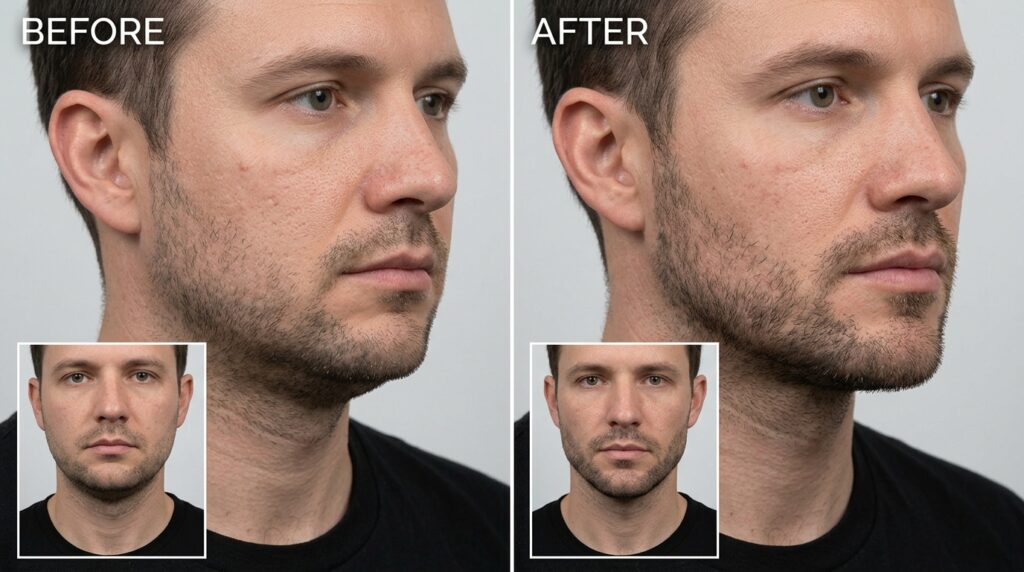
Dermal filler treatment for men has grown significantly at Skin Esthetics Clinic over the past several years. Male patients typically want structural improvement — definition, projection, and a sharper facial architecture — rather than softening or volume addition.
The most commonly requested filler treatments for male patients at our Romford clinic are jawline filler for a sharper, more defined jaw, chin filler for improved profile and lower face projection, cheek filler for structural midface definition, and under eye filler to address the hollowing and shadowing that makes male patients look tired.
Male facial anatomy differs from female anatomy in bone structure, soft tissue distribution, and muscle mass. Treatment plans for male patients are built around these differences — using more structural product placements, higher-viscosity formulations where appropriate, and greater conservatism around softening features that contribute to a masculine appearance.
Male filler before and after results at Skin Esthetics Clinic consistently show improved facial structure, more defined contours, and a rested appearance without any obvious sign of treatment.
Benefits of Dermal Filler Treatment
Immediate Results
Dermal fillers produce visible results immediately from the moment treatment is complete. While swelling resolves and the filler settles over the following two weeks, the structural improvement is visible from the same day. This immediacy is one of the most consistently appreciated aspects of filler treatment.
Natural Looking Enhancement
When performed correctly with the right product and the right volume, dermal fillers produce results that look like you — rested, defined, and naturally improved. The goal is never a dramatic change that announces itself. It is an improvement that people notice without being able to attribute to a specific treatment.
No Surgery or General Anaesthetic
Every filler treatment at Skin Esthetics Clinic is non-surgical and non-invasive. No incisions, no general anaesthetic, no extended recovery period. Most appointments take between 30 and 60 minutes and patients return to normal activities the same day.
Reversible Treatment
All hyaluronic acid-based fillers — the only type we use at Skin Esthetics Clinic — are fully reversible using hyaluronidase. In the unlikely event of a complication or an unsatisfactory result, the filler can be dissolved. This reversibility is an important safety feature that distinguishes hyaluronic acid fillers from permanent injectable options.
Long Lasting Results
Depending on the area treated, dermal filler results last six to twenty-four months. With a consistent maintenance programme, results compound over time and many patients find they need progressively less product to maintain the same improvement.
Are Dermal Fillers Safe?
Yes — when performed by a trained practitioner using appropriate products, correct technique, and thorough pre-treatment assessment. Dermal fillers have an excellent safety record when delivered correctly and represent one of the most widely performed aesthetic treatments globally.
Side Effects of Dermal Fillers
The most common side effects following dermal filler treatment are redness and swelling at the injection sites, mild bruising, and temporary tenderness. These are expected and resolve within a few days to one week depending on the area treated.
Swelling is most pronounced after lip filler and under eye filler — both areas with more sensitive tissue and higher fluid retention. Bruising is most common after lip, tear trough, and under eye treatment due to the vascular density in these areas.
Serious Risks and How We Minimise Them
The most serious risk associated with dermal filler treatment is vascular occlusion — inadvertent injection of filler into or compression of a blood vessel, which can restrict blood flow to the surrounding tissue. This is rare but can cause tissue necrosis if not identified and treated immediately.
At Skin Esthetics Clinic, we minimise vascular risk through thorough anatomical knowledge, the use of cannulas in high-risk areas, aspiration technique where appropriate, conservative injection volumes, and the immediate availability of hyaluronidase at every appointment. We are trained to recognise the early signs of vascular compromise and to respond immediately if they occur.
Who Should Not Have Dermal Fillers?
Dermal fillers are not appropriate for patients who are pregnant or breastfeeding, have an active skin infection or cold sore in the treatment area, have a known allergy to hyaluronic acid or lidocaine, are taking blood-thinning medications without medical clearance, have autoimmune conditions that affect healing, or have had permanent filler placed in the same area previously. We review all contraindications at your consultation.
What to Expect From Dermal Filler Treatment
Your Consultation
Every patient at Skin Esthetics Clinic receives a full facial assessment before any filler is recommended. We assess your facial anatomy and proportions, review your medical history, discuss your aesthetic goals in detail, and explain which treatments are most appropriate for your specific concerns.
We never recommend more treatment than you need and we never pressure patients into multiple areas. Your safety and your outcome depend on an honest consultation — and that is what every patient at Skin Esthetics Clinic receives.
Before Your Filler Appointment
Arrive with clean skin free of makeup. Avoid blood-thinning medications including ibuprofen and aspirin for 48 hours before treatment to reduce bruising risk. Avoid alcohol for 24 hours before treatment. If you have a history of cold sores near the treatment area, inform us at consultation — prophylactic antiviral medication may be recommended.
During Your Dermal Filler Treatment
We cleanse the skin and apply a topical numbing cream to the treatment area. We allow adequate time for the numbing to be effective before beginning injections. The injection phase takes between fifteen and forty-five minutes depending on the areas being treated.
We use ultra-fine needles for most areas and cannulas for high-risk areas including the tear trough and under eye. You will feel mild pressure at each injection point. Most patients find treatment very comfortable.
After Your Filler Treatment
Avoid touching or massaging the treated area for four to six hours. Avoid vigorous exercise, saunas, steam rooms, and alcohol for 24 hours. Avoid extremely hot food and drinks for 24 hours after lip filler. Sleep with the head elevated after tear trough treatment. Apply a cold compress gently if swelling is uncomfortable. Attend your two-week review appointment so we can assess the settled result and make any minor adjustments if needed.
How Long Do Dermal Fillers Take to Settle?
All dermal fillers take time to fully settle after treatment. Initial swelling from the injection process resolves within 24 to 72 hours in most areas. The filler then continues to integrate into the surrounding tissue and attract water for approximately two weeks, during which the final result becomes progressively clearer.
The full, settled result of dermal filler treatment is typically visible at two weeks. We always recommend a two-week review appointment for patients receiving treatment for the first time in any area.
Dermal Filler Results — Before and After
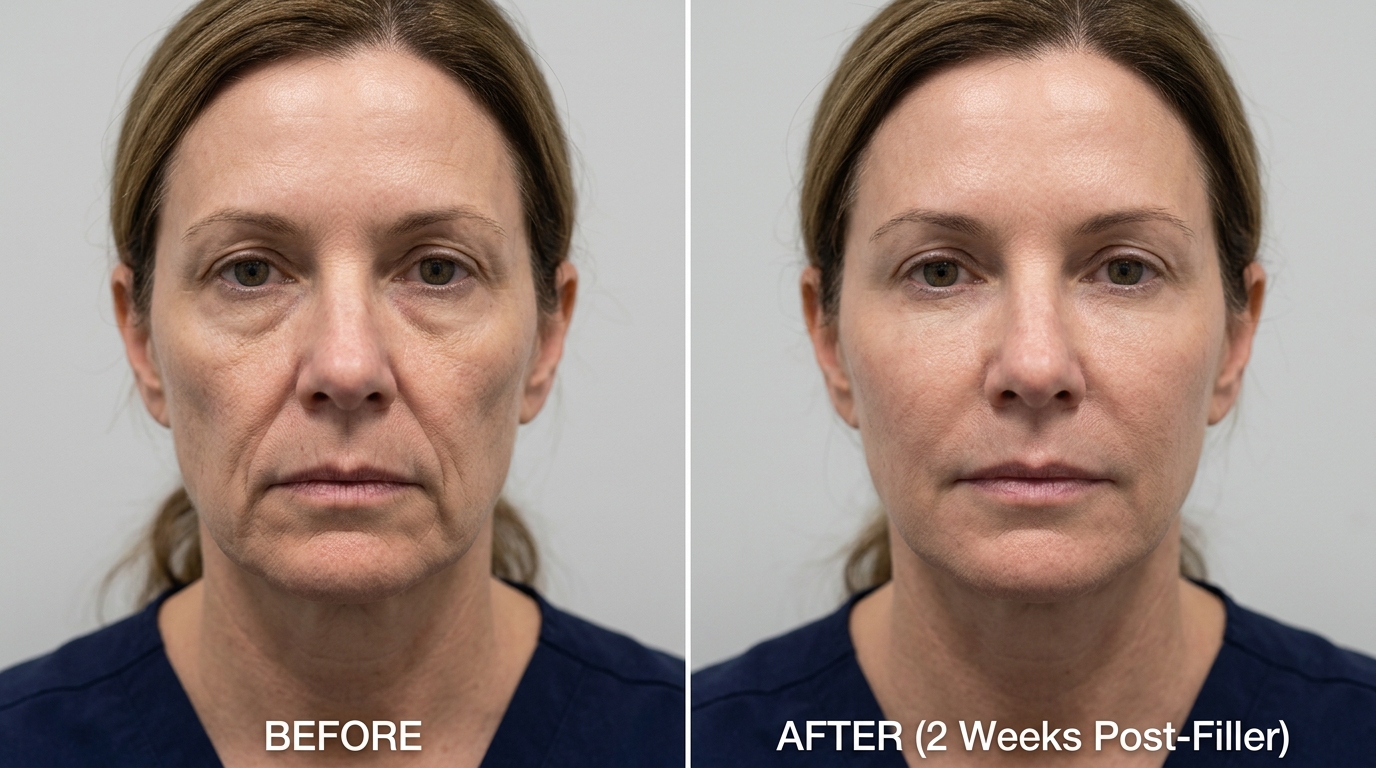
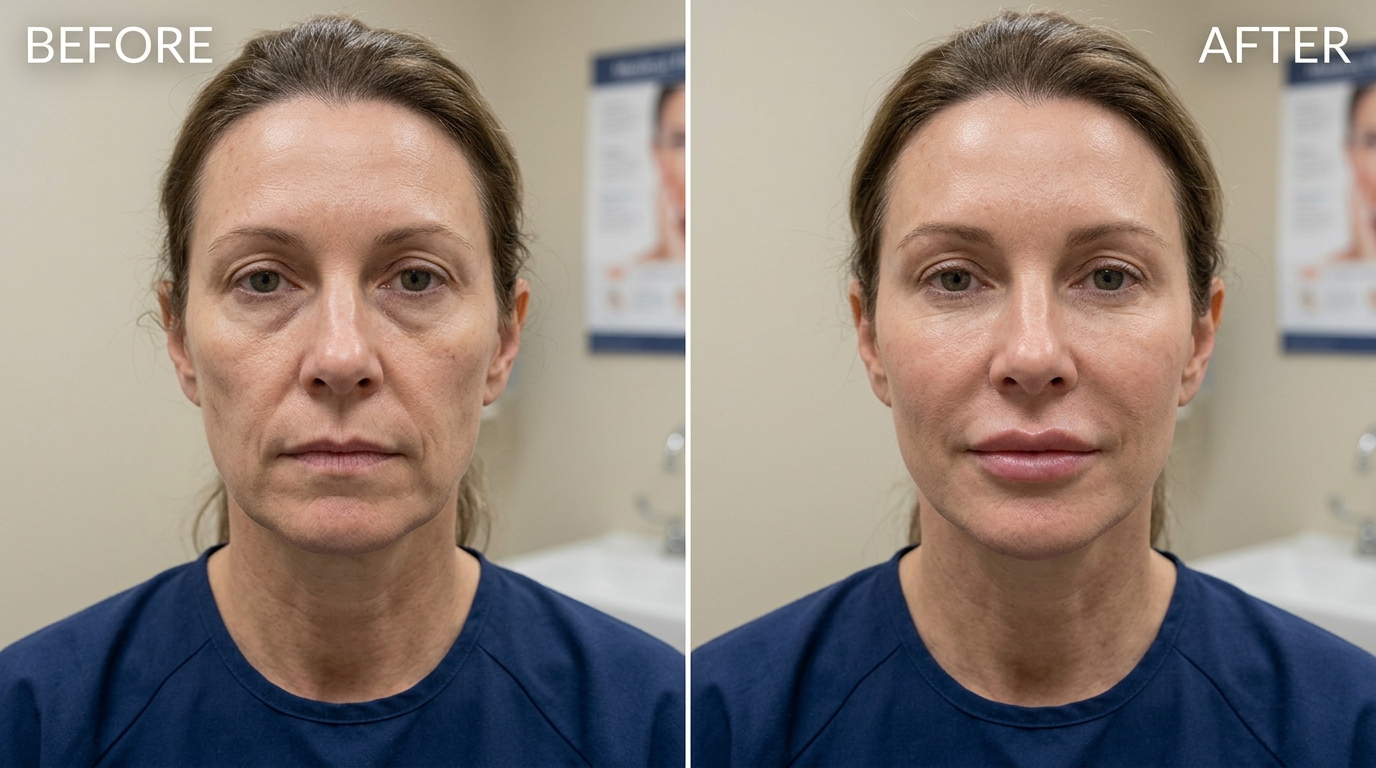
Results from dermal filler treatment vary between patients depending on the area treated, the volume used, the patient’s facial anatomy, and their age and skin quality. At your free consultation, we show you before and after examples from patients with similar concerns and goals to give you an accurate and realistic picture of what to expect.
How Long Do Dermal Fillers Last?
The longevity of dermal fillers varies significantly by area. Lip filler lasts six to twelve months. Cheek filler lasts twelve to eighteen months. Jawline and chin filler last twelve to twenty-four months. Tear trough filler lasts nine to twelve months. Nasolabial fold filler lasts nine to fifteen months.
Several factors affect how long filler lasts in any individual patient. Metabolic rate — patients with faster metabolism break down filler more quickly. Muscle movement in the treatment area — high-movement areas like the lips break down filler faster. Volume used — larger volumes last longer than very small volumes. Product choice — different formulations have different longevity profiles.
We discuss the expected longevity for your specific treatment at every consultation so your expectations are accurate from the start.
Can Dermal Fillers Be Combined with Other Treatments?
Yes — and combination treatment consistently produces more comprehensive and natural-looking results than filler alone. Dermal fillers address volume and structural concerns. Anti-wrinkle injections address muscle-driven dynamic lines. Skin quality treatments including chemical peels, microneedling, and HIFU address the condition of the skin itself. Combining these in the right sequence produces a rejuvenation result that addresses every contributing factor simultaneously.
We plan combination programmes carefully at consultation — recommending the right treatments in the right sequence to produce the best possible outcome from your investment.
Who Is a Good Candidate for Dermal Fillers?
You are likely a good candidate if you:
Have visible volume loss in the cheeks, tear trough, or temples. Have lips that have thinned or lost definition over time. Want to enhance your lip shape, volume, or symmetry. Have a jawline that has softened or lacks the definition you want. Have a recessive chin that creates an imbalanced facial profile. Have nasolabial folds, marionette lines, or smile lines that bother you. Want non-surgical improvement in facial definition and proportion. Are a man seeking structural facial improvement through jawline, chin, or cheek enhancement. Are in good general health without contraindicated conditions. Live in or around Romford, Hornchurch, Ilford, Barking, Dagenham, Havering, or Essex.
Dermal fillers are suitable for adults from their mid-20s onward. Younger patients may seek filler for lip augmentation or facial contouring. Older patients typically seek volume restoration and structural improvement.
Dermal Filler Cost in Romford
Dermal fillers in Romford prices at Skin Esthetics Clinic depend on the area being treated, the volume required, and the specific product used. Different areas require different products and different volumes — lip filler, tear trough filler, and jawline filler are all priced differently because the clinical complexity, product type, and time required vary significantly between areas.
We provide a full, transparent cost breakdown at your free consultation before you commit to anything. There are no hidden fees. The price quoted at consultation is the price you pay. For patients seeking the best dermal fillers in Romford without compromising on quality or safety, we offer a premium clinical service at a competitive price — with every treatment backed by a thorough consultation and two-week follow-up review.
Why Choose Skin Esthetics Clinic for Dermal Fillers in Romford?
Full range of filler treatments. We treat every area of the face — lips, cheeks, tear trough, jawline, chin, nasolabial folds, smile lines, forehead, and under eyes. You do not need to visit multiple clinics for different concerns.
Thorough facial assessment before every treatment. We never inject without a full assessment. Understanding your specific anatomy, your volume distribution, and the contributing factors to your concerns determines whether filler is the right treatment and exactly where and how much to place.
High-risk area expertise. Tear trough treatment and under eye filler require specific knowledge and technique. We use cannulas in all high-risk areas and conservative volumes, and we always have hyaluronidase available at every appointment.
Male filler experience. We treat male patients regularly and understand the differences in technique, product selection, and goals that male filler treatment requires.
Local and accessible. We serve patients from across Romford, Hornchurch, Ilford, Barking, Dagenham, Chadwell Heath, Harold Wood, Havering, and Essex. No GP referral needed. Same-week appointments available. Free initial consultation.
Before and After Dermal Filler Gallery
Conclusion
Dermal fillers are one of the most versatile and most consistently satisfying treatments in aesthetic medicine — when performed by practitioners who understand facial anatomy, choose the right product for each area, and apply conservative technique with patient safety as the first priority.
At Skin Esthetics Clinic in Romford, we offer the full range of dermal filler treatments across all areas of the face. We assess every patient thoroughly, recommend only what is genuinely appropriate, and deliver every treatment with the precision and care that produces natural, lasting results.
Whether you want lip enhancement, cheek volume restoration, jawline definition, tear trough treatment, or any other filler treatment, your first consultation at Skin Esthetics Clinic is completely free. No GP referral needed. No obligation. Just an honest assessment and a clear treatment plan.
Same-week appointments available. Serving patients from Romford, Hornchurch, Ilford, Barking, Dagenham, Chadwell Heath, Harold Wood, Havering, and Essex.
Book your free dermal filler consultation today.
FAQs
What are dermal fillers?
Dermal fillers are injectable treatments that add volume, restore structure, and smooth lines using medical-grade hyaluronic acid gel placed precisely beneath the skin. They are used to enhance lips, restore cheek volume, define the jawline and chin, treat under eye hollowing, and address nasolabial folds and other lines caused by volume depletion with age.
How long do dermal fillers last?
Longevity varies by area. Lip filler lasts six to twelve months. Cheek filler lasts twelve to eighteen months. Jawline and chin filler lasts twelve to twenty-four months. Tear trough filler lasts nine to twelve months. Nasolabial fold filler lasts nine to fifteen months. Individual metabolism, movement in the treatment area, and the specific product used all affect how long results last.
Do dermal fillers hurt?
With topical numbing cream and the lidocaine contained in most filler formulations, dermal filler treatment is very comfortable for most patients. The initial injection produces a brief sting that subsides as the numbing takes effect. Most patients describe the experience as significantly more comfortable than expected.
How much do dermal fillers cost in Romford?
Dermal filler prices at Skin Esthetics Clinic Romford depend on the area being treated and the volume required. We provide a full transparent cost breakdown at your free consultation before you commit to anything. There are no hidden fees and no pressure to proceed.
Can you drink alcohol after fillers?
We recommend avoiding alcohol for 24 hours after dermal filler treatment. Alcohol dilates blood vessels, increases the risk of bruising and swelling at injection sites, and can affect the initial settling of the filler. After 24 hours, normal alcohol consumption can be resumed.
Can you smoke after lip fillers?
We recommend avoiding smoking for at least 24 hours after lip filler treatment. Smoking involves repeated and vigorous muscle movement around the mouth immediately after treatment, which can displace freshly placed product before it has settled. It also affects tissue healing and circulation in the treated area.
Can you eat after lip fillers?
Yes, but we recommend avoiding very hot, very hard, or very chewy foods for 24 hours after lip filler treatment. Extreme temperature and vigorous chewing both place significant demand on the orbicularis oris muscle and can affect the initial settling of the product.
Are dermal fillers safe?
Yes, when administered by a trained practitioner using appropriate products and technique. Dermal fillers have an excellent safety record globally. All hyaluronic acid fillers are reversible with hyaluronidase. At Skin Esthetics Clinic, we conduct a full medical screening before every treatment, use cannulas in high-risk areas, and always have reversal agent available.
What is the difference between botox and fillers?
Botox uses botulinum toxin to relax facial muscles and soften dynamic wrinkles caused by movement — forehead lines, frown lines, and crow’s feet. Dermal fillers use hyaluronic acid to add volume, restore structure, and fill static changes caused by volume loss and ageing. They treat different aspects of facial ageing and are frequently used in combination.
Can you get fillers while pregnant?
No. Dermal filler treatment is contraindicated during pregnancy and breastfeeding. We do not treat pregnant or breastfeeding patients with any injectable treatment.
How long do lip fillers take?
A lip filler treatment session at Skin Esthetics Clinic takes between 20 and 45 minutes including numbing preparation. Allow approximately 60 minutes for your first appointment to include the initial consultation and assessment.
How long does cheek filler take to settle?
Cheek filler settles over approximately two weeks as the initial swelling resolves and the product integrates into the surrounding tissue. Some patients notice their cheeks feel firmer than the final result in the first week — this is normal and resolves as the filler settles into its final position.
Book Your Free Dermal Filler Consultation in Romford
Whether you want to enhance your lips, restore cheek volume, define your jawline, treat under eye hollowing, or address any other concern that dermal fillers can improve, Skin Esthetics Clinic in Romford has the expertise, the products, and the thorough clinical approach to deliver results you will be genuinely happy with.
Your first consultation is completely free. No GP referral needed. No obligation. Just a thorough facial assessment and an honest, personalised treatment recommendation.
Same-week appointments available. Serving patients from across Romford, Hornchurch, Ilford, Barking, Dagenham, Chadwell Heath, Harold Wood, Havering, and Essex.
Book your free dermal filler consultation today.