- 07774503356
- info@skinestheticsclinic.co.uk
- 7 Barnard Road, RM70HX

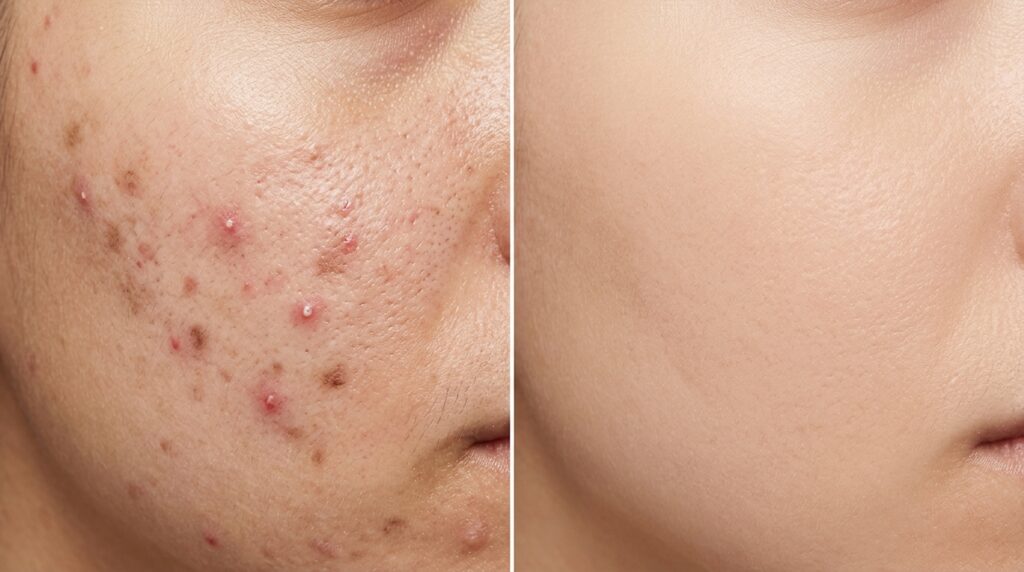
Acne is not just a teenage problem. It affects people of all ages, all skin types, and all backgrounds. For many people in Romford, it is something they deal with every single day.
At Skin Esthetics Clinic, we have various acne treatment options with a proper clinical assessment that actually makes sense specifically built around your skin. Clear skin is not out of reach. You just need the right approach.
What Is Acne?
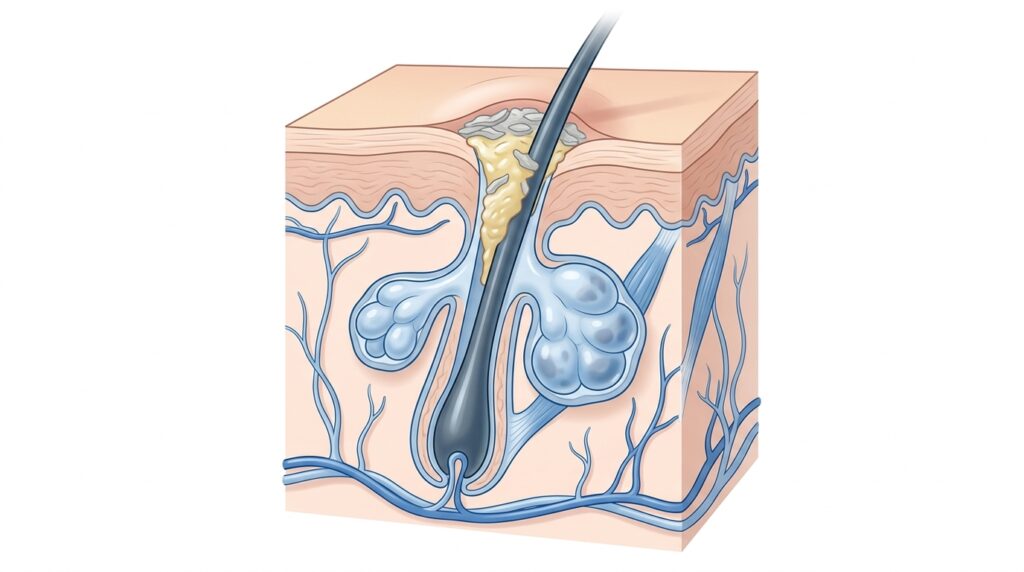
Acne is a skin condition that affects the hair follicles and sebaceous glands beneath the surface of your skin. When excess sebum, dead skin cells, and bacteria block your pores, it triggers inflammation and that inflammation shows up on your face, back, chest, or wherever your skin is most affected.
It goes by many names. Pimples. Zits. Spots. Blemishes. Breakouts. But whatever you call it, the underlying biology is the same.
It ranges from mild a few blackheads and whiteheads to severe, with deep painful nodules, cysts, and scarring that can last a lifetime if left untreated. The good news is that acne is treatable. At every stage. At every age.
What Causes Acne? Understanding the Root Problem
Most people treat acne on the surface. They buy a new cleanser, try a different serum, or follow a skincare routine from social media. And most of the time, it does not work because they are treating the symptom, not the cause.
Acne starts beneath the skin. Understanding why your skin breaks out is the first step toward fixing it.
Hormonal Imbalances
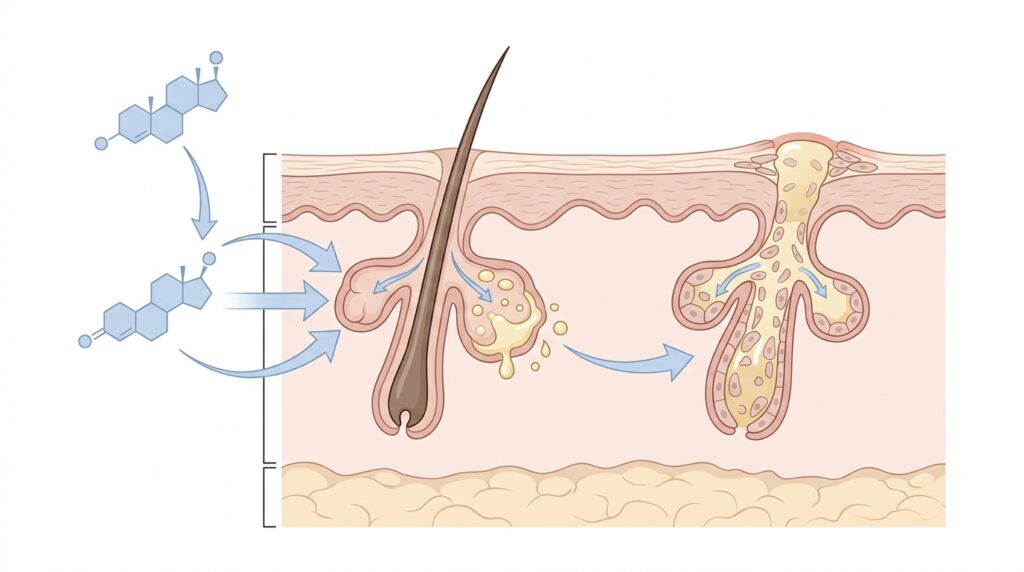
Hormones are the most common driver of acne especially in women. When androgen levels rise, the sebaceous glands produce more sebum. More sebum means more blocked pores. More blocked pores mean more breakouts.
Excess Sebum Production
Sebum is your skin’s natural oil. It keeps your skin hydrated and protected. But when your sebaceous glands produce too much of it, it mixes with dead skin cells and clogs your follicles.
Oily skin types are more prone to this. But even combination and dry skin types can experience sebum-driven breakouts especially in the T-zone.
Bacteria and Blocked Pores
Your skin carries a natural microbiome, a balance of bacteria that keeps your skin healthy. When pores become blocked with sebum and dead skin cells, a bacteria called Cutibacterium acnes multiplies rapidly inside the follicle.
Your immune system detects this and responds with inflammation. That inflammation is what causes the redness, swelling, and pain you see in papules, pustules, and cysts.
Diet and Lifestyle Triggers
What you eat affects your skin more than most people realise. High glycaemic foods white bread, sugar, processed snacks, spike insulin levels, which in turn raises androgen activity and sebum production.
Stress raises cortisol. High cortisol increases oil production and inflammation. Poor sleep disrupts the skin’s overnight repair cycle. All of these factors compound each other.
Treating acne without addressing diet and lifestyle is like patching a leak without turning off the tap.
Fungal vs Bacterial Acne
This is one of the most misunderstood areas in acne treatment. Many people treat what they think is bacterial acne for months with no results because they actually have fungal acne.
Fungal acne, or Malassezia folliculitis, is caused by an overgrowth of yeast in the hair follicles. It looks similar to bacterial acne small, uniform bumps, usually on the forehead, chest, or back. But it does not respond to standard acne treatments. In fact, some acne products make it worse.
The key differences:
- Fungal acne tends to be itchy. Bacterial acne rarely is.
- Fungal acne bumps are more uniform in size. Bacterial acne varies.
- Fungal acne often worsens with antibiotics. Bacterial acne improves.
Getting the correct diagnosis changes everything. This is why a clinical assessment at Skin Esthetics Clinic is always the starting point.
What Type of Acne Do You Have?
Not all acne is the same. The type of acne you have determines the treatment you need. Treating the wrong type with the wrong approach wastes time, money, and does nothing for your skin.
Hormonal Acne
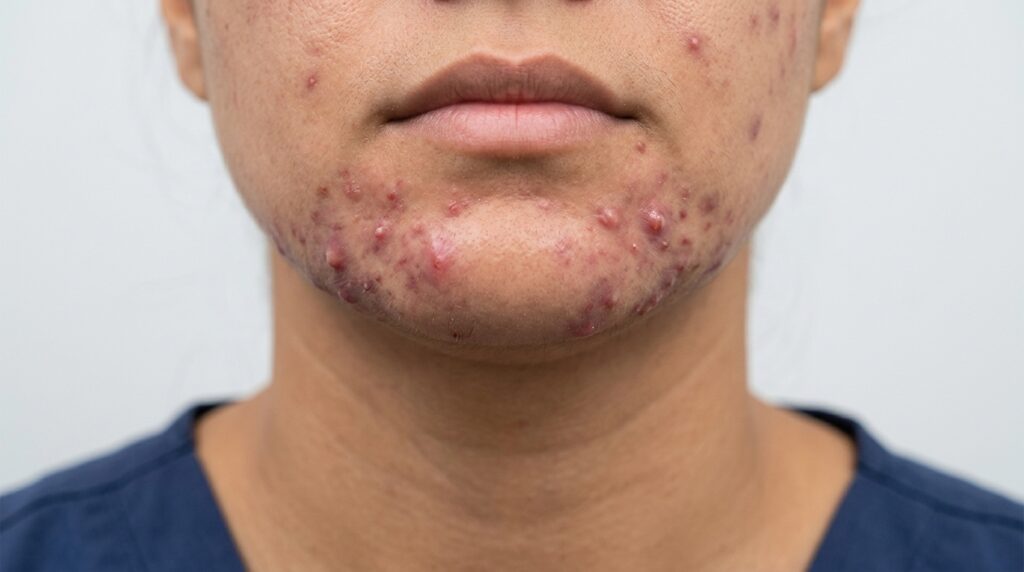
Hormonal acne tends to appear on the lower face jawline, chin, and neck. It is often deep, cystic, and painful. It follows a pattern flaring at predictable points in your hormonal cycle.
Back Acne
Back acne, sometimes called bacne develops when follicles on the back become blocked with sebum, sweat, and dead skin cells. The back has a high density of sebaceous glands, which makes it particularly prone to breakouts.
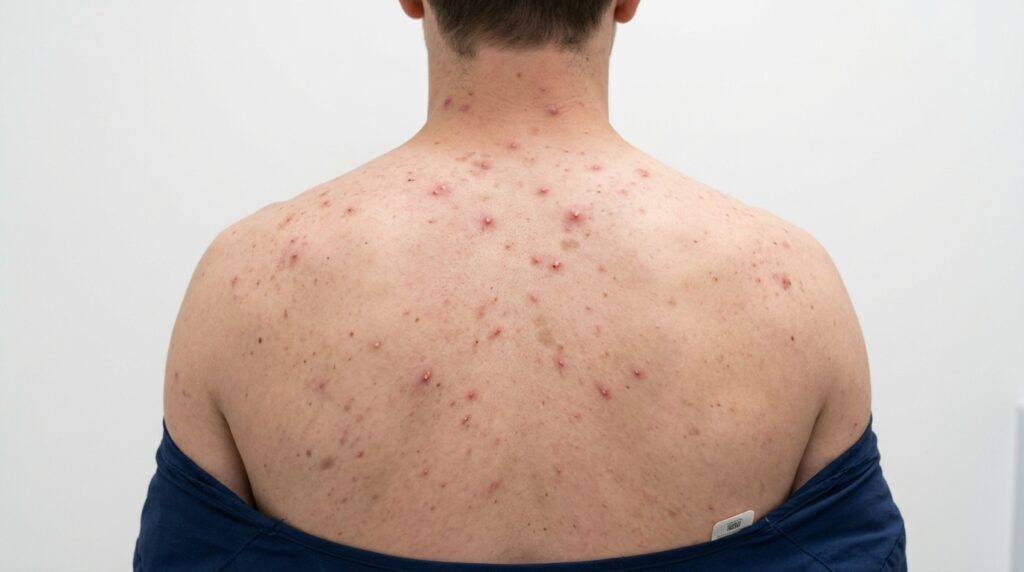
Fungal Acne
As covered above, fungal acne is driven by yeast overgrowth rather than bacteria. It requires antifungal treatments not standard acne products. Using the wrong treatment prolongs the problem and often makes it worse.
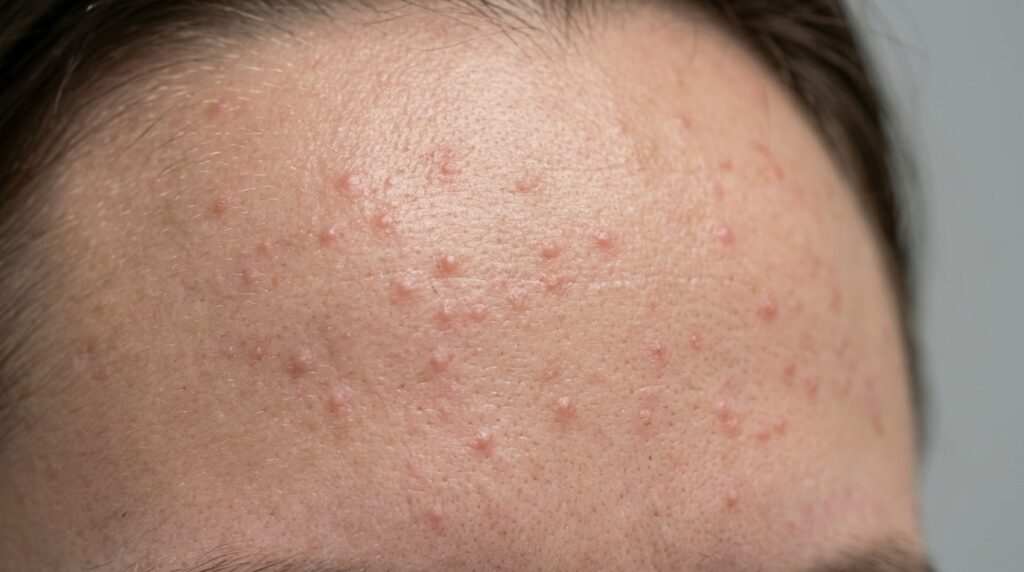
Cystic Acne
Cystic acne is the most severe form. Cysts form deep beneath the skin, large, painful, and filled with pus. They do not come to a head like regular spots. They sit beneath the surface for weeks, often leaving permanent scarring when they eventually resolve.
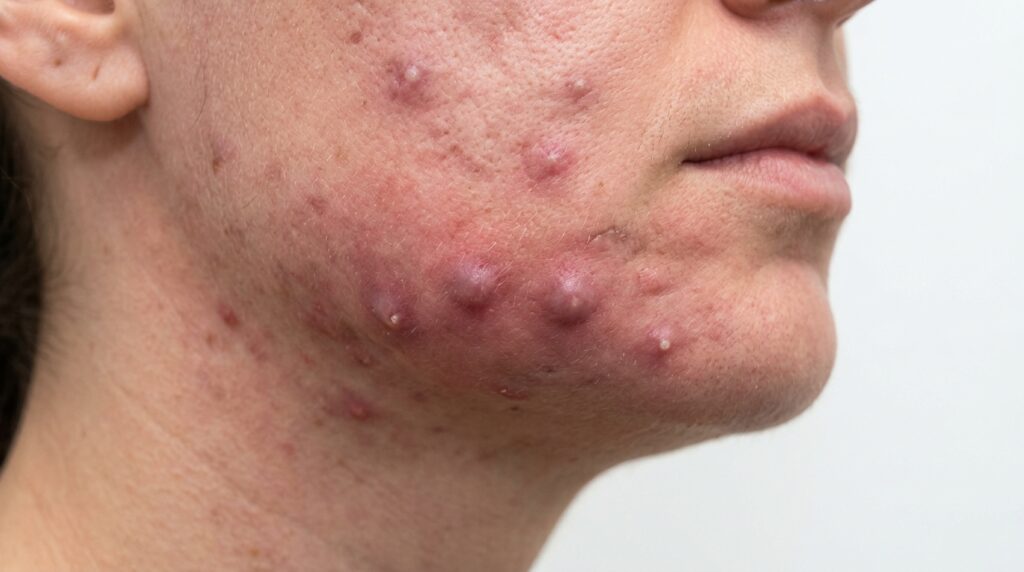
Teen & Adult Acne
Teen acne and adult acne share the same basic biology but differ in their causes and how they respond to treatment.
Teen acne: is driven primarily by puberty. A surge in androgens that triggers excess sebum production across the face, back, and chest. It tends to be widespread and affects both boys and girls.
Adult acne: is more targeted. It tends to concentrate on the lower face and jawline. It is more likely to be hormonal, stress-driven, or linked to diet and gut health.
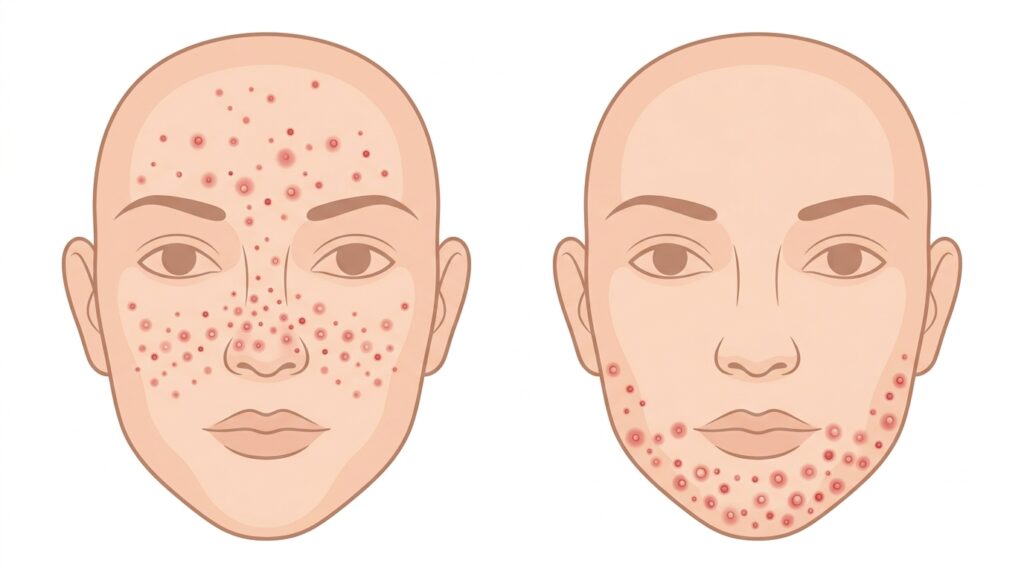
Understanding which type of acne you have and at what life stage shapes every decision in your treatment plan.
Our Acne Treatment Options at Skin Esthetics Clinic Romford
At Skin Esthetics Clinic, we do not offer a single one-size-fits-all acne treatment. We offer a range of clinically proven options and we choose the right combination based on your skin, your acne type, and your goals.
Chemical Peels for Acne
A chemical peel applies a controlled acidic solution of salicylic acid, glycolic acid, or azelaic acid to the surface of the skin. It removes the outer layer of dead skin cells, unblocks pores, reduces sebum buildup, and accelerates cell turnover.
Salicylic acid peels are particularly effective for oily and acne-prone skin. Salicylic acid is oil-soluble meaning it penetrates directly into the pore and dissolves the sebum and debris blocking it from the inside.
A course of peels combined with a home skincare routine produces results that no over-the-counter product can match.
Microneedling for Acne & Acne Scars
Microneedling uses fine needles to create controlled micro-channels in the skin. This triggers the skin’s natural wound-healing response stimulating collagen and elastin production deep within the dermis.
For active acne, microneedling reduces inflammation and improves skin texture. For acne scars particularly pitted or atrophic scarring it is one of the most effective non-surgical resurfacing treatments available.
LED Light Therapy for Active Acne
LED light therapy uses specific wavelengths of light to target the bacteria responsible for acne inflammation without damaging surrounding skin.
Blue light targets Cutibacterium acnes directly destroying the bacteria that triggers infected spots and pustules. Red light reduces inflammation and supports skin healing. Combined, they create an environment where breakouts are actively suppressed and skin recovers faster between sessions.
Laser Treatment for Acne
Laser acne treatment targets sebaceous glands directly reducing their activity and cutting sebum production at the source. It also destroys acne-causing bacteria, reduces redness, and stimulates collagen production in the surrounding skin.
Exosome Therapy for Post-Acne Skin
Exosome therapy is one of the most advanced skin regeneration treatments available. Exosomes are cell-signalling particles loaded with growth proteins. Applied to the skin after microneedling or laser treatment, they accelerate healing, reduce post-inflammatory pigmentation, and support the skin’s natural repair process.
Acne Treatment Overview
Treatment | Best For | Sessions Needed | Downtime |
Chemical Peel | Active acne, blackheads, pigmentation | 4 to 6 | Minimal |
Microneedling | Acne scars, skin texture | 3 to 6 | 24 to 48 hours |
LED Light Therapy | Mild to moderate active acne | 6 to 8 | None |
Laser Treatment | Severe acne, sebum control | 3 to 6 | Minimal |
Exosome Therapy | Post-acne repair and scarring | 1 to 3 | None |
Personalised Skincare Plan | All acne types | Ongoing | None |
Acne Treatment Procedure at Skin Esthetics Clinic
Here is exactly what your journey at Skin Esthetics Clinic looks like from your first contact to your final review.
Step 1 — Free Skin Consultation & Acne Assessment
Your first visit costs nothing. We examine your skin, assess your acne type and severity, review your medical history, and ask about your diet, lifestyle, and current skincare routine. No assumptions. No rushed recommendations. Just a thorough assessment that tells us exactly what your skin needs.
Step 2 — Personalised Treatment Plan
Based on your assessment, we build a treatment plan specific to your acne type, your skin type, and your goals. We explain each treatment clearly — what it does, how many sessions you will need, and what results you can realistically expect. You leave with a plan that makes sense, not a vague list of products to try.
Step 3 — In-Clinic Treatment Sessions
Your sessions are carried out by trained skin specialists using medical-grade equipment. Most treatments take between 30 and 60 minutes. We keep you comfortable throughout and check in with you at every stage.
Step 4 — Aftercare & Maintenance Programme
What you do between sessions directly affects your results. We give you a clear aftercare routine — specific to your skin type and treatment — including which ingredients to use, what to avoid, and how to protect your skin barrier while it heals. Aftercare is not optional. It is part of the treatment.
Step 5 — Follow-Up & Progress Review
We track your results at regular intervals. If your skin is responding well, we continue the plan. If adjustments are needed, we make them. Acne treatment is not a one-time event — it is a process. We stay with you throughout it.
Why Professional Acne Treatment Works Better Than at Home
Home skincare products contain low concentrations of active ingredients. Regulations limit how strong over-the-counter products can be. A salicylic acid cleanser from a pharmacy contains a fraction of the concentration used in a clinical peel.
Professional treatments reach deeper. Chemical peels, microneedling, and laser treatment work at a depth that no serum or cream can reach. They address the follicle, the sebaceous gland, and the dermis, not just the surface.
We combine treatments strategically. A chemical peel works differently to LED therapy. Microneedling combined with exosomes produces better results than microneedling alone. Professional treatment uses the right combination in the right sequence, something no home routine can replicate.
Who Is a Good Candidate for Acne Treatment?
You are likely a good candidate if you:
- Have active acne on your face, back, chest, or body that has not responded to over-the-counter products
- Have been diagnosed with hormonal acne, cystic acne, fungal acne, or adult acne
- Are dealing with post-acne scarring, pigmentation, or red marks
- Have oily, combination, or acne-prone skin with persistent breakouts
- Are a teenager or adult experiencing acne at any stage of life
- Live in or around Romford, Hornchurch, Ilford, Barking, Dagenham, or East London
- Are committed to following a treatment plan and home skincare routine
The earlier you seek professional treatment, the less scarring and pigmentation you will carry long term.
Before & After — Real Acne Treatment Results
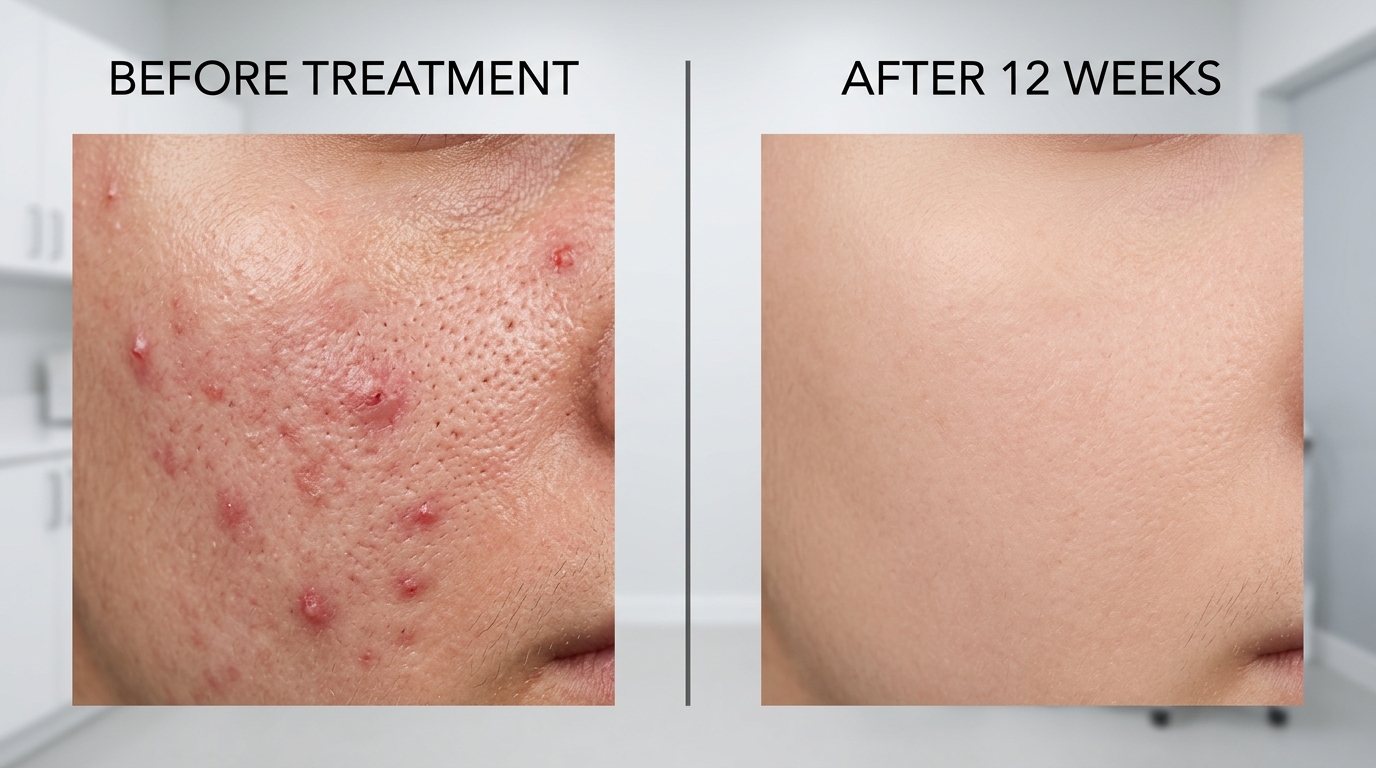
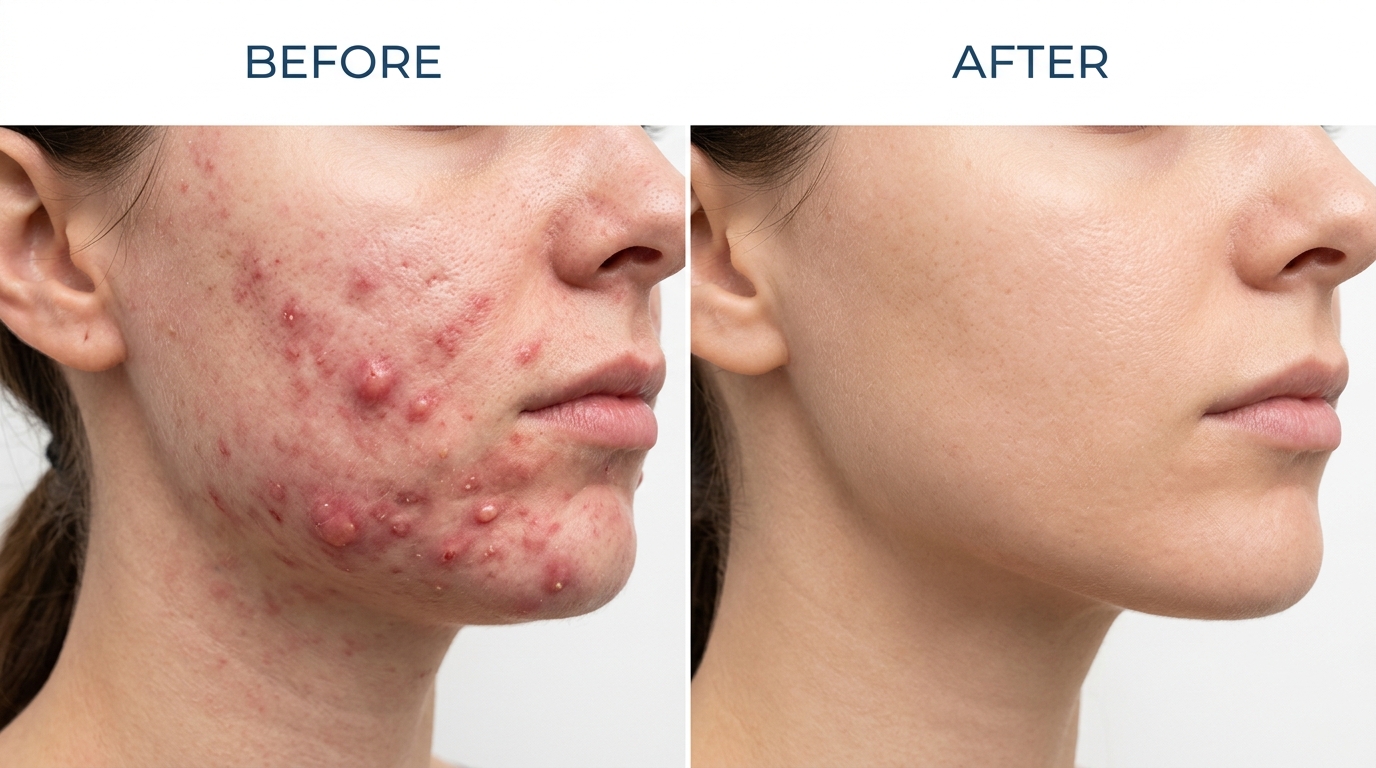
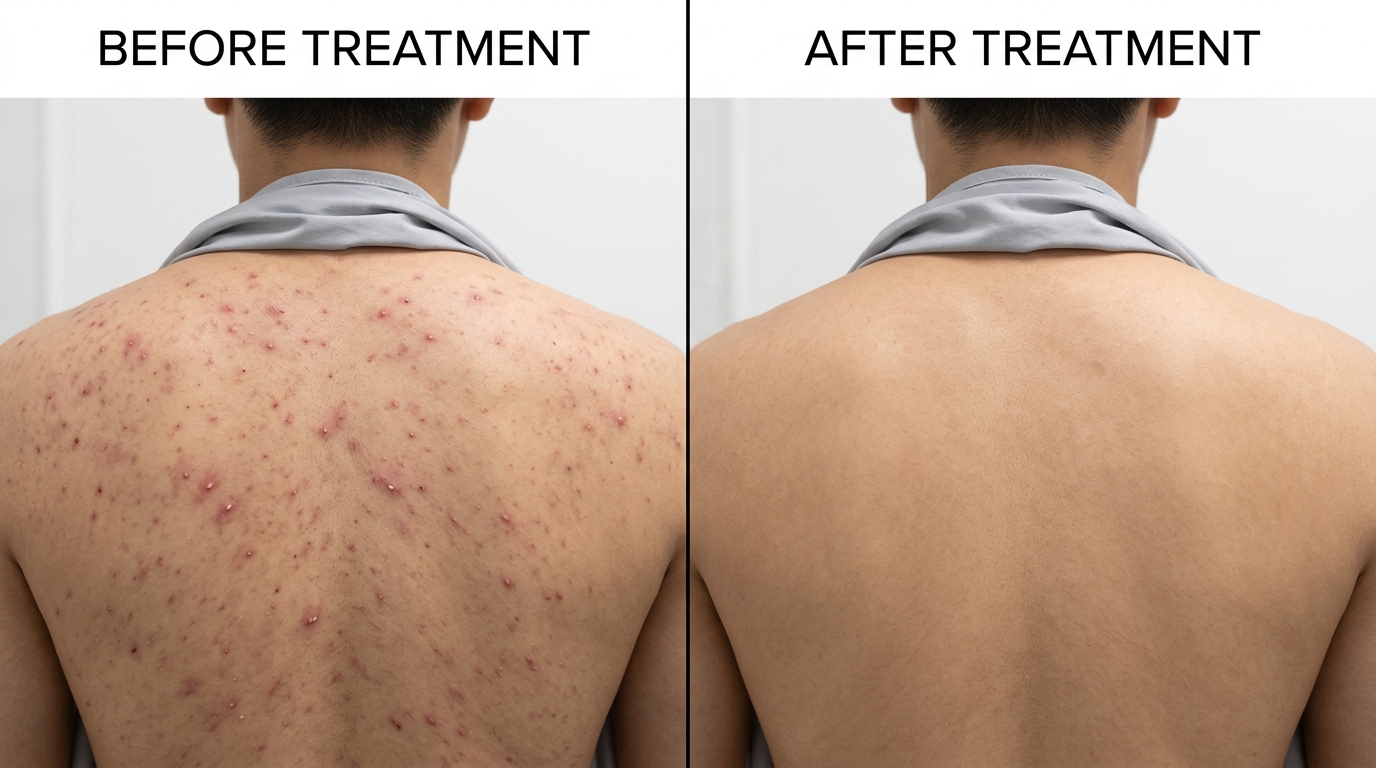
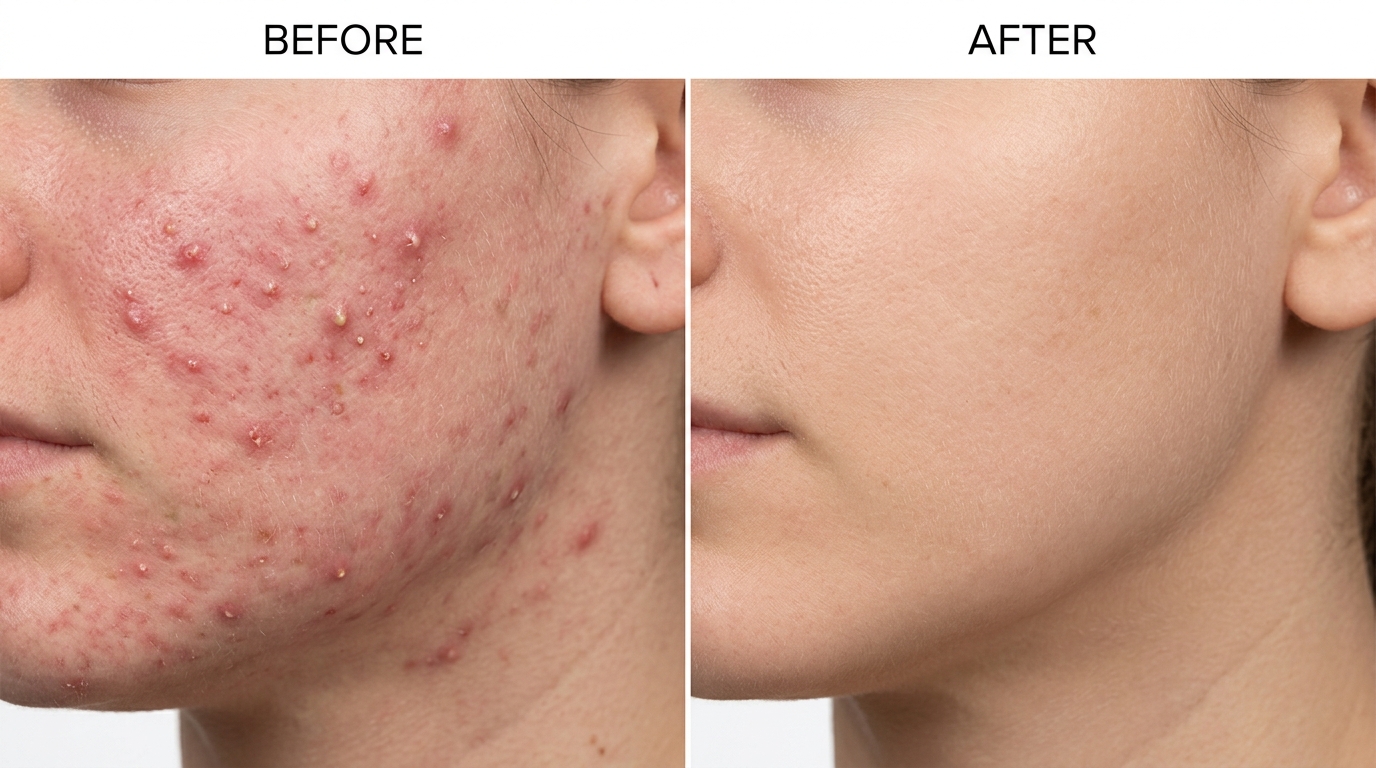
Results vary depending on acne type, severity, skin type, and how consistently the treatment plan is followed. During your free consultation, we will give you a realistic expectation based on your specific skin condition — not a best-case scenario.
Acne Skincare Advice From Our Specialists
What you do at home every day either helps your skin heal or keeps it stuck in a cycle of breakouts. Here is what our specialists recommend for acne-prone skin.
Cleanse twice daily but gently. Over-cleansing strips your skin barrier and triggers more oil production as compensation. Use a gentle, non-comedogenic cleanser morning and night. Nothing harsh. Nothing foaming aggressively.
Never skip moisturiser. Dry, dehydrated skin produces more sebum to compensate. Even oily skin needs hydration. Choose a lightweight, oil-free moisturiser with niacinamide; it regulates sebum and reduces redness at the same time.
SPF every single day. Sun exposure darkens post-acne marks and slows skin healing. A non-comedogenic SPF 30 or higher applied every morning protects your skin and your treatment results.
Do not pick or squeeze. Every time you pick a spot, you push bacteria deeper into the skin, extend the inflammation, and increase your chances of scarring. It is harder than it sounds. But it makes a real difference to your results.
Check your hair products. Ingredients like silicones, heavy oils, and sulphates in shampoos and conditioners run down onto your forehead, jawline, and back and block pores. If you have acne in those areas, your hair products may be contributing.
Watch your diet. Cutting back on high-sugar, high-glycaemic foods reduces the insulin spikes that drive sebum production. You do not need a perfect diet. Small, consistent changes add up.
FAQs
What is the best acne treatment in Romford?
The best acne treatment depends entirely on your skin type and acne type. At Skin Esthetics Clinic in Romford, we offer chemical peels, microneedling, LED light therapy, laser treatment, and exosome therapy. There is no single best treatment. There is only the right treatment for your skin.
How many sessions does acne treatment take?
Most patients need between four and eight sessions depending on the severity of their acne and the treatments used. Mild to moderate acne often responds well within four to six sessions.
Is acne treatment suitable for dark skin tones?
Yes. We have significant experience treating acne across all skin tones including darker skin types.
Can you treat hormonal acne without medication?
In many cases, yes. PRP therapy, chemical peels, LED light therapy, and a targeted skincare plan can significantly reduce hormonal acne without prescription medication.
How much does acne treatment cost in Romford?
Treatment costs depend on the type of acne, the treatments recommended, and the number of sessions required. We provide a full, transparent cost breakdown at your free consultation before you commit to anything.
Will acne treatment remove acne scars too?
Some treatments address both active acne and scarring simultaneously. Microneedling and laser resurfacing are particularly effective for acne scars. Chemical peels improve surface-level pigmentation and red marks.
For deep pitted scarring, a dedicated course of microneedling or laser treatment may be recommended after active acne is under control.
Is there any downtime after acne treatment?
It depends on the treatment. LED light therapy has zero downtime. Chemical peels may cause mild redness and peeling for two to three days.
Microneedling causes temporary redness for 24 to 48 hours. Laser treatment varies by type and intensity. We always explain the expected downtime for your specific treatment before your session.
How soon will I see results from acne treatment?
Some patients see improvement after their first or second session. Meaningful, lasting results typically develop over six to twelve weeks as the skin renews itself.
Acne scarring takes longer — up to six months for full collagen remodelling. We track your progress at every review and adjust your plan based on how your skin responds.
Can men get acne treatment at Skin Esthetics Clinic?
Absolutely. We treat male patients with acne at every stage of life — teenage acne, adult acne, back acne, chest acne, and post-acne scarring.
Male skin is thicker and produces more sebum than female skin, which can make acne more persistent. Our treatment plans are adapted to male skin characteristics and goals.
How to clear up hormonal acne fast in the UK?
The fastest route to clearing hormonal acne is a professional clinical assessment followed by targeted treatment. At Skin Esthetics Clinic in Romford, we identify the hormonal triggers driving your breakouts and combine in-clinic treatment with a home skincare routine designed for your specific skin. No GP referral needed. Same-week appointments available.
Book Your Acne Treatment Consultation in Romford
Acne affects more than your skin. It affects how you feel walking into a room, how you look in photos, and how much mental energy you spend thinking about your face every day. That is not something you should have to accept especially when effective, professional treatment is available right here in Romford.
At Skin Esthetics Clinic, we have helped patients from across Romford, Hornchurch, Ilford, Barking, Dagenham, and Chadwell Heath get their skin and their confidence back. Whether you are dealing with your first serious breakout or have been battling cystic acne for years, we will give you an honest diagnosis and a plan that actually works.