- 07774503356
- info@skinestheticsclinic.co.uk
- 7 Barnard Road, RM70HX

- ACNE TREATMENT
- Alopecia Treatment
- Tricology
- Exosome Therapy
- Eye brow lift
- Hair Fall Treatment
- PRP
- Micro needling
- HIFU
- Moles, Warts & Skin Tags Removal
- Scalp health treatment
- IV drip (whitening and vitamins)
- Melasma / hyper pigmentation treatment
- Skin booster
- Wrinkle treatment
- Fillers
- Sculptra
- Anti Aging Treatments
- Hair Thining Treatment
That patch of brown or grey discolouration on your cheeks, forehead, or upper lip did not appear overnight. For most people with melasma, it crept in gradually — and once it settled, no amount of concealer or brightening serum made it go away. Melasma is stubborn. It has a specific biological mechanism. And it requires clinical treatment that addresses that mechanism directly.
At Skin Esthetics Clinic in Romford, we treat melasma using advanced laser technology, clinical chemical peels, and personalised treatment programmes built around your skin tone, your melasma type, and the specific triggers driving your pigmentation. We do not offer generic skin brightening treatments and call them melasma treatment. We diagnose your specific presentation and target it precisely.
If you have been struggling with melasma and nothing has worked, this is where real results start.
What Is Melasma?
Melasma is a chronic skin condition characterised by patches of brown, grey-brown, or blue-grey discolouration on the face. It develops when melanocytes — the pigment-producing cells in the skin — become overactive and produce excess melanin in certain areas.
It is extremely common. It affects up to 6 million people in the UK and is significantly more prevalent in women than in men. It occurs most frequently on the cheeks, forehead, bridge of the nose, upper lip, and chin — areas with the highest sun exposure and the highest density of hormonally sensitive melanocytes.
Melasma is not dangerous. It does not become cancerous and it does not affect your physical health. But it significantly affects how people feel about their appearance — and for many patients at Skin Esthetics Clinic, it affects their confidence in ways that make daily life genuinely difficult.
What Does Melasma Look Like?
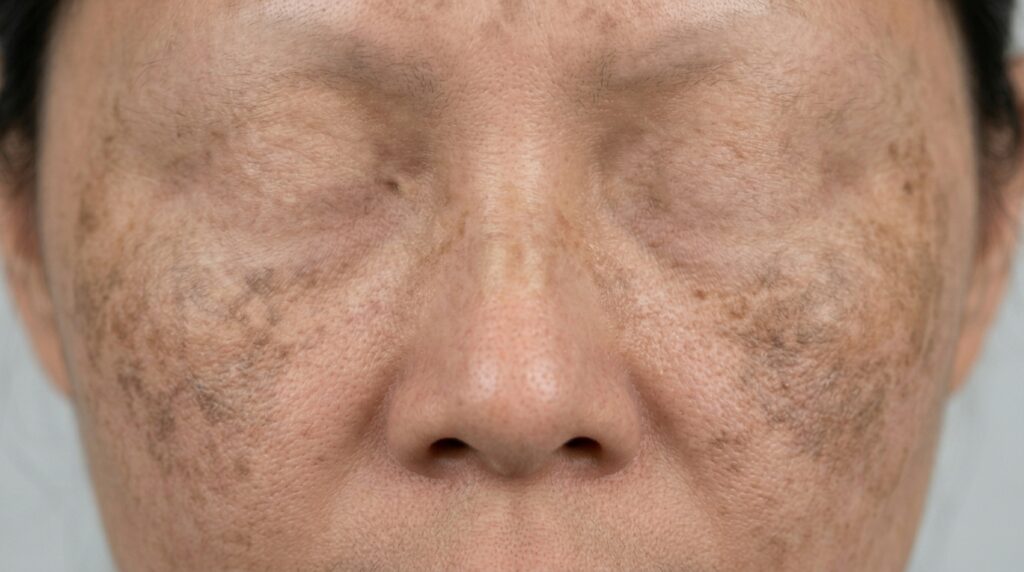
Melasma presents as well-defined patches of discolouration that are darker than the surrounding skin. The patches have irregular, map-like borders. They are symmetrical — appearing on both sides of the face in mirror-image patterns.
The colour ranges from light brown to dark brown to grey-brown depending on how deep in the skin the excess melanin sits. In some patients, particularly those with darker skin tones, the patches can appear almost grey or ashen rather than brown.
Melasma does not itch, bleed, or cause any physical symptoms beyond the visible discolouration. The diagnosis is made visually, often confirmed under Wood’s lamp or dermoscopy examination.
Types of Melasma
Understanding which type of melasma you have is essential for selecting the right treatment. The three types are classified by where the excess melanin sits within the skin layers.
Epidermal melasma:
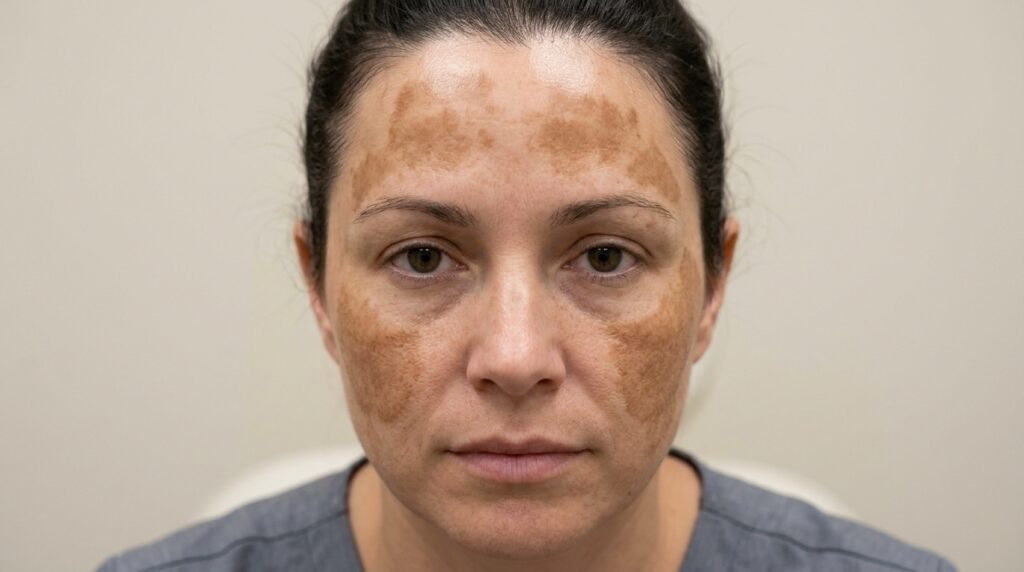
Melanin deposits in the upper layers of the skin, the epidermis. This is the most treatable type. It appears as clearly defined, tan to dark brown patches. It responds well to laser treatment, chemical peels, and topical protocols.
Dermal melasma:
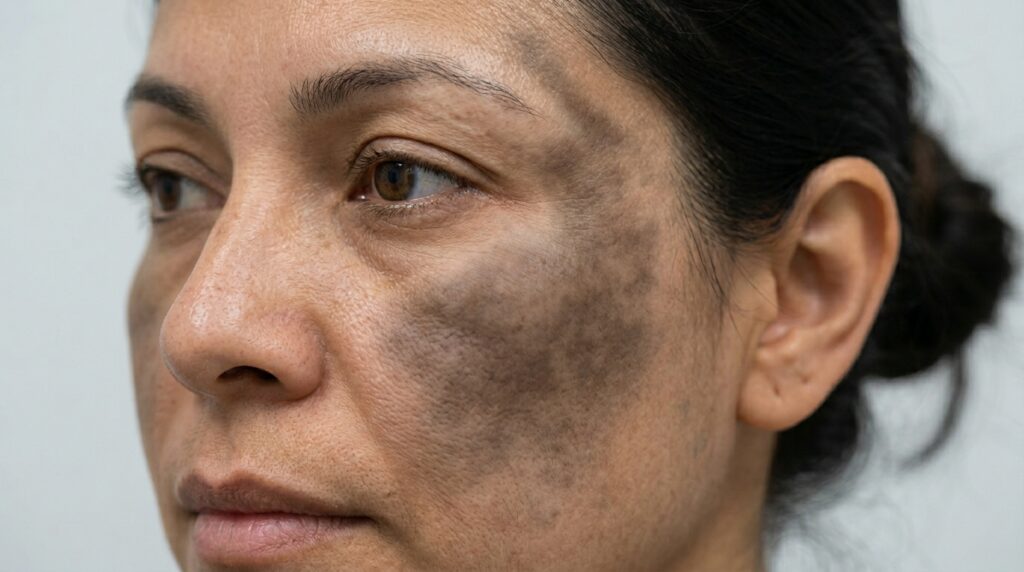
Melanin deposits deeper in the dermis. It appears as blue-grey or ash-coloured patches with less defined edges. It is harder to treat than epidermal melasma and typically requires more sessions and more advanced laser technology.
Mixed melasma:
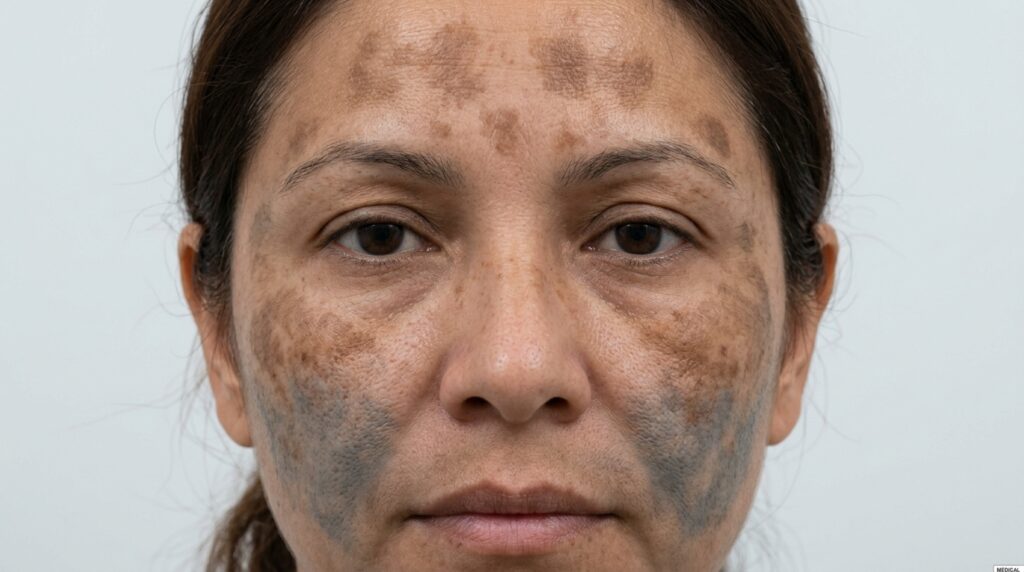
The most common presentation. A combination of both epidermal and dermal melanin deposits. Under Wood’s lamp examination, some areas enhance (epidermal) and some do not (dermal). Treatment must address both depths simultaneously for meaningful improvement.
Identifying your melasma type at consultation allows us to select the treatment modality and protocol that will reach the pigment at the depth where it actually sits.
Is Melasma the Same as Hyperpigmentation?
Melasma is a specific type of hyperpigmentation but not all hyperpigmentation is melasma. Post-inflammatory hyperpigmentation — the dark marks left after acne, eczema, or skin trauma — shares the same visible appearance but has a completely different mechanism and responds to different treatments.
Sun damage and age spots are also hyperpigmentation but are not melasma. Melasma has a specific hormonal component and a characteristic bilateral symmetrical distribution that distinguishes it from other forms of excess pigmentation. Treating it with the wrong approach for the wrong diagnosis produces disappointing results — which is why clinical assessment and accurate diagnosis always come first at Skin Esthetics Clinic.
What Causes Melasma?
Melasma rarely has a single cause. It is typically driven by a combination of factors that individually would not produce melasma but together create the conditions for melanocyte overactivation.
Hormonal Changes and Melasma
Hormones are the primary driver of melasma in the majority of patients. Oestrogen and progesterone directly stimulate melanocytes. When hormone levels rise — during pregnancy, with oral contraceptive use, during hormone replacement therapy, or as a result of thyroid dysfunction — melanocyte activity increases and melasma develops or worsens.
This hormonal connection is why melasma is sometimes called the mask of pregnancy and why it is so much more common in women of reproductive age than in men or post-menopausal women. Without addressing the hormonal context alongside the clinical treatment, melasma consistently returns.
Sun Exposure and UV Damage
UV radiation is the most consistent trigger and the most consistent cause of melasma relapse. UV light stimulates melanocyte activity directly and also triggers an inflammatory response in the skin that further activates melanin production. Even brief, repeated sun exposure without adequate SPF protection is enough to trigger or worsen melasma — and to undo weeks of clinical treatment.
SPF is not optional for melasma patients. It is a clinical necessity that is as important as any in-clinic treatment.
Postpartum Melasma
Postpartum melasma develops during or after pregnancy when oestrogen and progesterone surge during gestation and then drop sharply after delivery. The sudden hormonal shift, combined with the increased UV sensitivity that many pregnant women experience, creates ideal conditions for melasma development.
For many women, postpartum melasma fades partially after delivery as hormone levels normalise. For others it persists or worsens — particularly if sun exposure is not carefully managed. Clinical treatment for postpartum melasma at Skin Esthetics Clinic is available and produces good results when the hormonal context is stabilised.
Medications That Trigger Melasma
Certain medications are known to trigger or worsen melasma beyond the oral contraceptive pill. These include some antiepileptic drugs, certain antihypertensives, and medications that increase photosensitivity. If your melasma appeared or worsened after starting a new medication, we review this at consultation as part of your clinical assessment.
Genetics and Skin Type
Genetic predisposition plays a significant role. Melasma runs in families and is significantly more prevalent in people with Fitzpatrick skin types III to VI — medium, olive, brown, and dark skin tones. These skin types have more melanocytes and more melanin-producing capacity, which makes them both more prone to developing melasma and more sensitive to certain treatment approaches.
This does not mean melasma treatment is not effective in darker skin tones. It means the treatment approach must be carefully selected to produce pigmentation improvement without causing post-inflammatory hyperpigmentation — a risk with certain aggressive laser settings and high-strength peels if not properly calibrated for the individual’s skin type.
Medical Treatment for Melasma at Skin Esthetics Clinic Romford
Melasma requires clinical intervention. Over-the-counter brightening products contain active ingredients at concentrations too low to produce a meaningful clinical effect on established melasma. Professional treatment delivers active intervention at the depth and concentration required to break down existing melanin deposits and suppress the overactive melanocytes driving new production.
Every melasma treatment plan at Skin Esthetics Clinic begins with an accurate diagnosis. We assess your melasma type, your skin tone, your Fitzpatrick classification, your hormonal history, your sun exposure habits, and your current skincare routine before recommending any treatment.
PicoSure Laser Treatment for Melasma
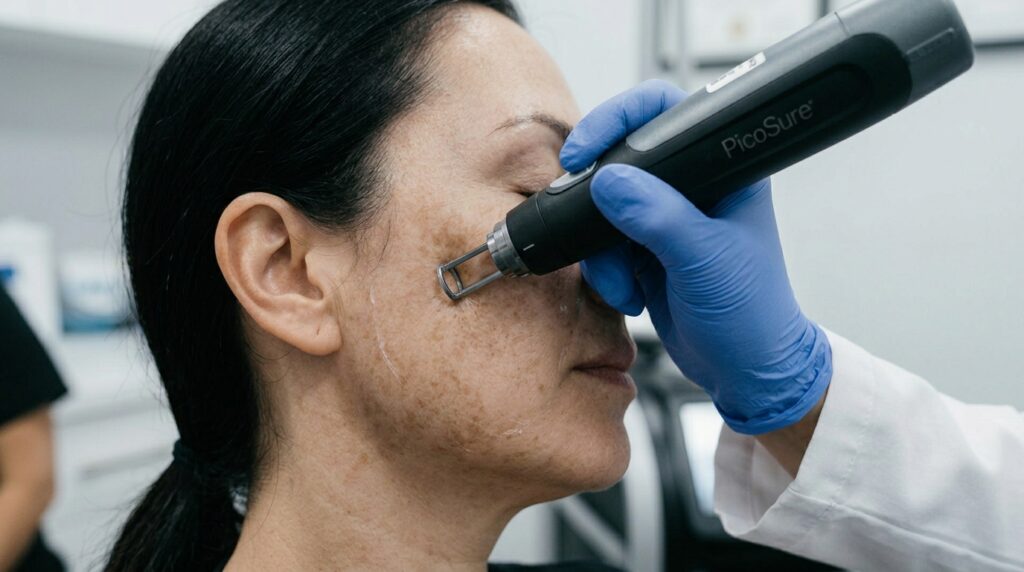
PicoSure is one of the most advanced laser technologies available for melasma treatment and one of the safest across all skin types when used by a trained practitioner. It delivers ultra-short picosecond pulses of energy that shatter melanin deposits into microscopic particles without the prolonged heat exposure that older nanosecond lasers produce.
This distinction matters for melasma. The brief thermal exposure of PicoSure’s picosecond pulses significantly reduces the risk of post-inflammatory hyperpigmentation — the primary concern when treating melasma in medium to darker skin tones with laser technology.
The PicoSure Focus lens array also stimulates collagen and elastin production in the dermis, improving overall skin texture, pore size, and radiance alongside the pigmentation improvement. Patients see progressive improvement in skin tone, reduced patch intensity, and improved overall skin quality over a course of treatments.
For patients searching for the best treatment for melasma on the face in Romford, PicoSure laser treatment consistently delivers the strongest clinical outcomes for epidermal and mixed melasma presentations.
Chemical Peels for Melasma
Clinical chemical peels accelerate skin cell turnover, remove pigmented epidermal cells, and deliver active depigmenting agents — including azelaic acid, kojic acid, and lactic acid formulations — deeper into the skin than topical application can achieve. They are particularly effective for epidermal melasma and as a preparatory treatment before laser sessions.
The right peel depth and formulation for melasma depends on your skin tone, your melasma type, and whether you are in an active phase or a maintenance phase of treatment. We assess this at every consultation to ensure the peel delivers maximum benefit without triggering rebound pigmentation.
If your marks were triggered by breakouts rather than melasma, our acne treatment page explains how we treat active acne and reduce post-inflammatory marks.
Microneedling for Melasma
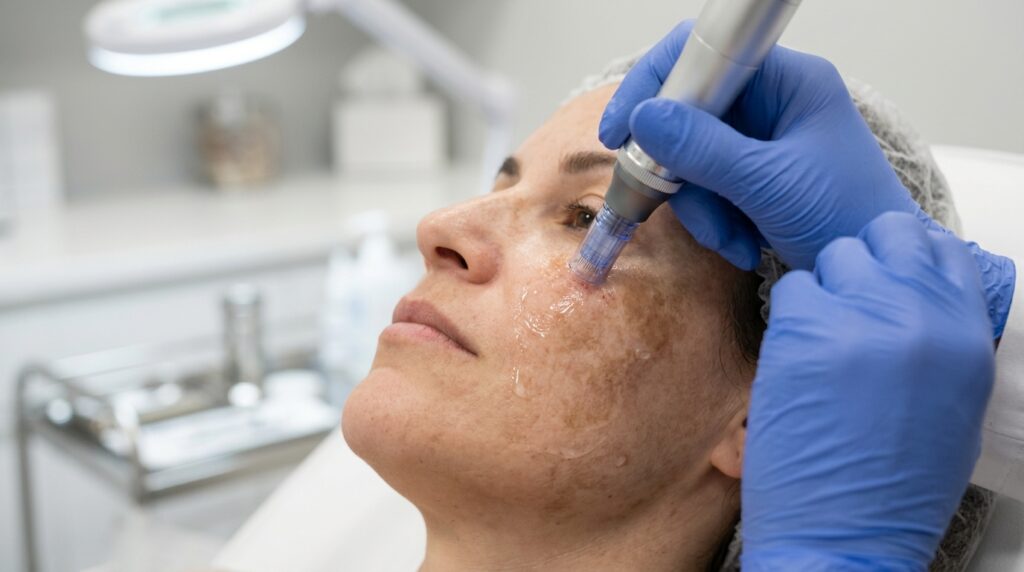
Scalp microneedling creates micro-channels in the skin that dramatically improve the penetration of topical depigmenting agents applied during and after the procedure. When combined with targeted serums containing tranexamic acid, niacinamide, and vitamin C, microneedling delivers these active ingredients to the melanocyte level — producing a direct suppressive effect on melanin overproduction.
Microneedling is particularly useful for patients who have not tolerated laser treatment well or who have predominantly dermal melasma that is less responsive to surface-level treatments.
Topical Prescription Protocols
For patients with persistent melasma or those in the maintenance phase between clinical sessions, we create a personalised topical protocol using prescription-grade depigmenting agents. These may include medical-grade azelaic acid, kojic acid, tranexamic acid, or retinoid formulations — all at concentrations significantly above what is available over the counter.
Topical protocols are always combined with strict broad-spectrum SPF 50 application as the foundational element of every melasma management plan.
Combination Treatment for Melasma
Melasma consistently responds better to combination approaches than to single-modality treatment. A protocol that combines laser treatment to break down existing melanin with chemical peels to accelerate cell turnover and a targeted topical protocol to suppress new melanin production addresses the condition from multiple angles simultaneously.
This is the approach we favour at Skin Esthetics Clinic for patients with moderate to severe melasma or mixed epidermal and dermal presentations.
Personalised Melasma Treatment Programme
For patients with complex, persistent, or treatment-resistant melasma, a fully personalised programme is built around your specific diagnosis. This may combine multiple treatment modalities in a precisely sequenced protocol alongside home care and lifestyle guidance tailored to your melasma triggers.
Our anti-aging solutions also help treat melasma, giving your skin a clearer, more even tone.
Melasma Treatment for Dark Skin Tones
Melasma is most prevalent in medium to dark skin tones — and this is also where it is most frequently undertreated or incorrectly treated. The concern is legitimate: aggressive laser settings and high-strength peels that work well on lighter skin types can trigger post-inflammatory hyperpigmentation in darker skin, making the pigmentation worse rather than better.
At Skin Esthetics Clinic, we have significant experience treating melasma across all skin tones including Fitzpatrick types IV, V, and VI. PicoSure laser technology, when calibrated correctly for darker skin tones, delivers effective melasma improvement with a significantly lower risk of post-inflammatory hyperpigmentation than older laser platforms.
We use conservative initial settings, progress cautiously based on your skin’s response, and always prioritise safety over speed. For patients with darker skin tones who have had negative experiences with melasma treatment elsewhere, we take particular care in our assessment and approach.
Melasma treatment for dark skin requires expertise and patience. Rushed treatment at the wrong settings causes harm. Properly calibrated treatment with the right technology produces real, lasting improvement without complications.
How Does the PicoSure Laser Work for Melasma?
PicoSure delivers laser energy in pulses measured in picoseconds — one trillionth of a second. These ultra-short pulses create a pressure wave effect in the skin called photomechanical impact. This pressure wave shatters melanin pigment particles into microscopic fragments that the body’s immune system can then clear naturally.
The critical difference from conventional Q-switched nanosecond lasers is the duration of the energy pulse. Nanosecond lasers produce more heat in the tissue because their pulses are longer. Heat in the tissue creates the thermal injury that can trigger post-inflammatory hyperpigmentation — particularly in darker skin types and in melasma patients whose melanocytes are already in an overactive state.
PicoSure’s picosecond pulses deliver the shattering energy with minimal thermal transfer. Less heat means less risk of triggering additional pigmentation while still effectively breaking down the existing melanin deposits.
What Makes PicoSure Different from Other Laser Treatments?
The standard Q-switched Nd:YAG laser has been used for melasma for decades. It produces results but carries a higher risk of post-inflammatory hyperpigmentation than PicoSure, particularly in darker skin types. Multiple treatment intervals must be longer to allow the skin to recover from the thermal effect.
PicoSure allows more frequent treatment sessions, produces less post-treatment redness and downtime, and is significantly safer across a wider range of skin tones. For melasma specifically — a condition that is itself exacerbated by inflammation and heat — this distinction is clinically meaningful.
Is PicoSure Safe for All Skin Types?
Yes, when calibrated correctly by a trained practitioner. PicoSure is one of the most inclusive laser technologies available for pigmentation treatment across all skin tones. The key is the combination of the right wavelength, the right fluence settings, and the practitioner’s understanding of how different skin types respond to laser energy.
At Skin Esthetics Clinic, we conduct a full Fitzpatrick skin type assessment and a test patch before any laser melasma treatment to ensure the settings are appropriate for your specific skin.
Chemical Peel vs Laser Treatment for Melasma — Which Is Better?
Both are effective for melasma. The right choice depends on your melasma type, your skin tone, and the severity of your pigmentation.
Chemical peels are most effective for epidermal melasma — pigmentation in the upper skin layers. They are lower-risk for sensitive skin types, produce no thermal effect, and can be combined with topical depigmenting agents for a combined exfoliating and melanin-suppressing effect. They require more frequent sessions than laser for equivalent results and do not address dermal melanin effectively.
Laser treatment — particularly PicoSure — is more powerful for moderate to severe melasma and for mixed presentations involving both epidermal and dermal melanin. It produces faster pigmentation reduction, requires fewer sessions for equivalent results, and targets deeper melanin deposits that chemical peels cannot reach.
The combination approach — alternating chemical peels with laser sessions and supporting both with a prescription topical protocol and strict sun protection — consistently produces better outcomes than either treatment alone for most patients with moderate to severe melasma treatment uk.
At your consultation, we recommend the most appropriate approach for your specific skin and melasma presentation.
How Many Melasma Treatments Do You Need?
This depends on your melasma type, its severity, and how consistently you protect your skin from sun exposure between sessions.
For mild epidermal melasma, most patients see meaningful improvement within three to four PicoSure sessions or four to six chemical peel sessions. Moderate to severe melasma and mixed presentations typically require six to eight sessions of the primary treatment modality with supporting protocols.
Melasma is a chronic condition. Even after successful treatment, maintenance sessions are needed to prevent relapse — particularly if the hormonal trigger is still active. Most patients move to a maintenance schedule of one treatment every two to three months once their melasma is under control, combined with a daily home care routine.
We give you a specific session estimate at your free consultation based on your diagnosis.
What to Expect From Melasma Treatment
Do I Need an Initial Consultation?
Yes — always. Melasma treatment at Skin Esthetics Clinic never begins without a proper clinical assessment. We assess your melasma type under dermoscopy, evaluate your Fitzpatrick skin type, review your medical history and hormonal background, assess your current skincare routine and sun protection habits, and confirm whether any contraindications are present.
This assessment is the difference between a treatment plan that works and one that makes your pigmentation worse. It is not optional. It is the clinical foundation of every result we deliver.
Before Your Melasma Treatment Session
Avoid sun exposure for two weeks before your treatment. Apply broad-spectrum SPF 50 every morning without exception. Avoid retinoids, AHA, and BHA exfoliating products for five to seven days before your session. Do not wax or use depilatory creams on the treatment area in the week before your appointment. Arrive with clean, makeup-free skin.
During Your Melasma Treatment Session
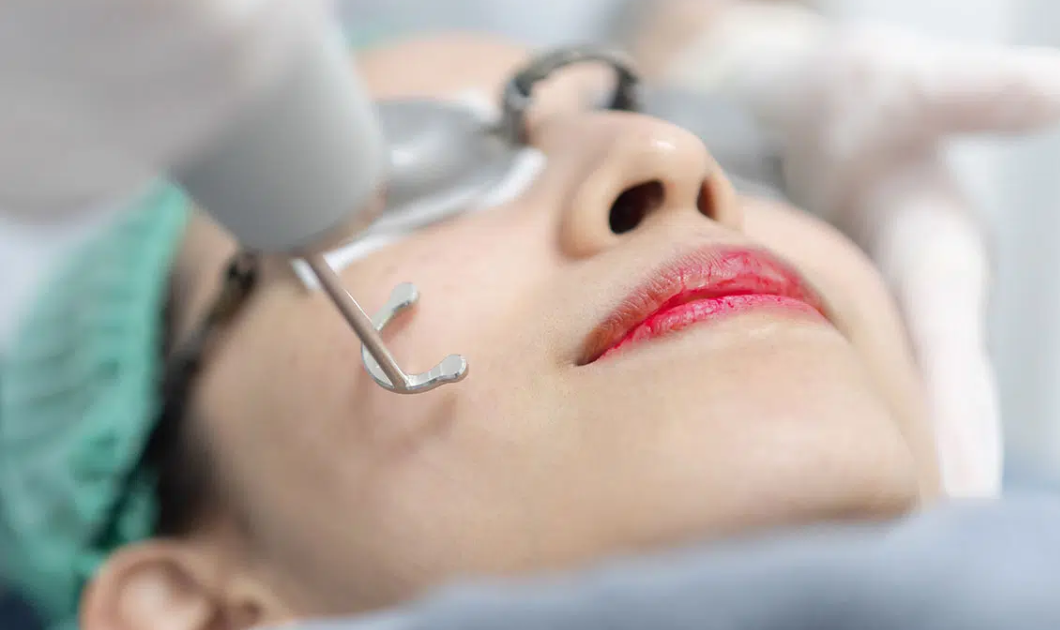
For PicoSure laser treatment, we cleanse the skin, apply a topical numbing cream where needed, and use protective goggles throughout the procedure. The laser handpiece is passed systematically across the treatment area, delivering precise pulses of energy to the pigmented patches. You will feel a brief sensation of heat or snapping with each pulse — most patients describe it as a mild prickling or warmth. The session typically takes 20 to 45 minutes depending on the treatment area.
For chemical peel treatment, the skin is cleansed and degreased before the peel solution is applied. You will feel tingling or mild warmth during the application, which intensifies briefly and then subsides as the peel is neutralised. Total session time is 30 to 45 minutes.
After Your Melasma Treatment
Redness and mild swelling are normal for 24 to 48 hours following laser treatment. The treated skin may feel warm and sensitive. Avoid touching or washing the face for four hours after your session. Use a gentle, fragrance-free cleanser and a soothing moisturiser for the first three days. Apply SPF 50 every morning — without exception. Avoid sun exposure for two weeks post-treatment.
Following chemical peel treatment, expect light to moderate peeling over three to seven days depending on the peel depth. Do not pick or peel the skin manually. Keep it clean, moisturised, and protected from the sun throughout the peeling phase.
Are There Any Side Effects?
Melasma treatment is generally well tolerated. The most common side effects from PicoSure laser are temporary redness, mild swelling, and occasional pinpoint crusting at the treatment sites — all of which resolve within three to five days. Chemical peels may cause redness, tightness, and peeling over three to seven days.
The most important risk specific to melasma treatment is post-inflammatory hyperpigmentation — temporary darkening of the treated area triggered by inflammation. This risk is minimised through correct device calibration, appropriate skin type assessment, and strict sun protection adherence before and after treatment. At Skin Esthetics Clinic, we take this risk seriously and calibrate every treatment conservatively, particularly for medium to darker skin tones.
Is Melasma Treatment Painful?
Most patients find melasma treatment very comfortable. PicoSure laser treatment produces a mild prickling sensation during the procedure — often described as a warm snap on the skin. We apply topical numbing cream where needed to ensure your comfort throughout. Chemical peels cause a temporary tingling or mild burning sensation during application that quickly subsides. Neither treatment requires sedation or significant pain relief.
Melasma Treatment Results — What to Expect
How Long Before You See Results?
Initial fading of the pigmented patches is typically visible after two to three treatment sessions. Meaningful improvement in melasma intensity usually becomes apparent at the four to six week mark following the first session as the skin’s natural clearance mechanisms process the shattered melanin.
Full results from a treatment course develop progressively over three to six months. Melasma that has been present for years requires more patience than recent-onset melasma — the melanin deposits are more established and the melanocytes more deeply conditioned to overproduction.
Most patients achieve 50 to 80% reduction in melasma intensity after a full treatment course combined with consistent sun protection. Complete clearance is possible in some presentations but is not achievable in all — particularly in dermal or mixed melasma with an active hormonal trigger. We always give you a realistic expectation at consultation based on your specific diagnosis.
Before and After Melasma Treatment Results
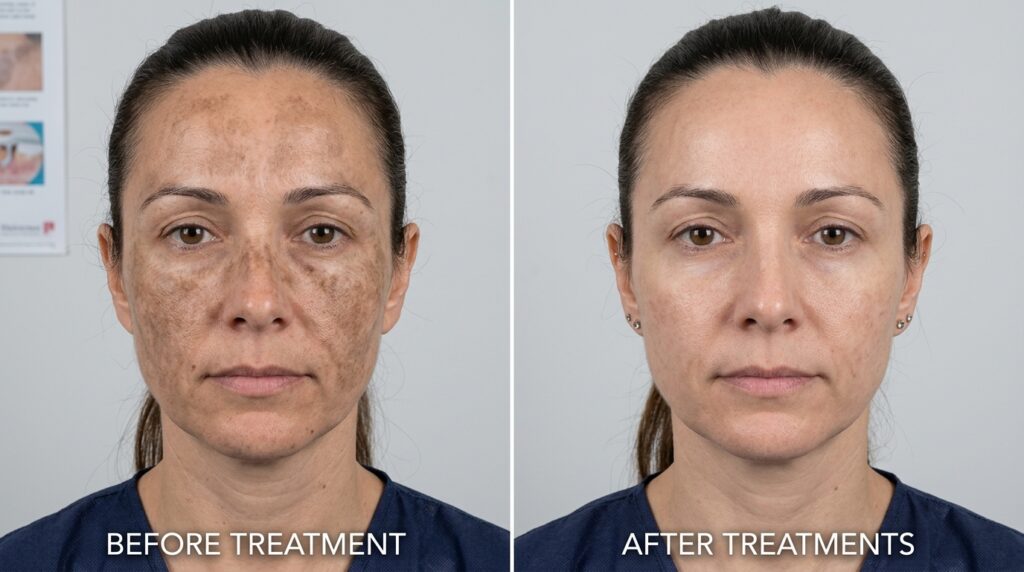
Results vary between patients depending on melasma type, skin tone, treatment adherence, and consistency of sun protection. At your free consultation, we show you before and after examples from patients with similar presentations so your expectations are accurate before treatment begins.
How to Prevent Melasma from Coming Back
Melasma is a chronic condition with a strong tendency to relapse — particularly when the hormonal trigger is still active or when sun protection lapses. Prevention of relapse is as important as the treatment itself.
SPF and Sun Protection After Treatment
SPF 50 applied every morning is the single most important thing you can do to protect your melasma treatment results. UV exposure — even on cloudy days — is the most consistent trigger for melasma relapse. A broad-spectrum SPF 50 with both UVA and UVB protection, applied thirty minutes before sun exposure and reapplied every two hours when outdoors, is the clinical standard for melasma maintenance.
Physical sunscreens containing zinc oxide or titanium dioxide provide the most consistent protection and are generally better tolerated by melasma-prone skin than chemical sunscreen formulations.
Skincare Routine for Melasma-Prone Skin
Between clinical sessions, a targeted home care routine supports your treatment results. Niacinamide reduces melanin transfer to skin cells and improves the skin barrier. Vitamin C is a potent antioxidant that inhibits melanin synthesis and protects against UV-induced melanocyte activation. Tranexamic acid applied topically reduces melanin production by blocking the signal pathway that activates melanocytes in response to UV and hormonal stimulation.
We build a specific home care routine for every patient based on their skin type and their melasma treatment plan. Products we recommend are medical-grade formulations at concentrations that produce a genuine clinical supporting effect.
Maintenance Treatments
Once melasma is under control, maintenance sessions every two to three months sustain the results achieved during the initial treatment course. This frequency keeps melanin levels suppressed and addresses any early signs of recurrence before they become established.
For patients who have invested in a full treatment programme, maintenance is the protection of that investment. Skipping maintenance sessions and allowing melasma to re-establish means repeating the full treatment cycle rather than simply sustaining what has already been achieved.
Who Is a Good Candidate for Melasma Treatment?
You are likely a good candidate if you:
Have visible patches of brown, grey-brown, or blue-grey discolouration on your face — particularly on the cheeks, forehead, upper lip, or nose. Have been diagnosed with or suspect you have melasma rather than another form of hyperpigmentation. Have tried brightening serums and topical products without meaningful improvement. Are committed to consistent SPF 50 use before, during, and after treatment — without which results will be limited. Are not currently pregnant — laser treatment and many peel formulations are contraindicated during pregnancy. Are in good general skin health with no active inflammatory skin conditions in the treatment area. Have a hormonal trigger that is currently stable or managed. Live in or around Romford, Hornchurch, Ilford, Barking, Dagenham, Havering, or Essex.
The best results come from patients who are committed to the full treatment programme and the sun protection protocol. Half measures produce half results with melasma.
Who Is Not Suitable for Melasma Treatment?
You may not be a suitable candidate at this time if you:
- Are currently pregnant or breastfeeding — laser treatment and many depigmenting agents are contraindicated.
- Have an active hormonal trigger including an unmanaged thyroid condition or have recently started or changed hormonal contraception — until the hormonal environment is stable, treatment outcomes are significantly compromised.
- Have active inflammation, infection, or open wounds in the treatment area. Have a history of cold sores in the treatment area — laser treatment can trigger HSV reactivation without prophylactic antiviral coverage.
- Are taking medications that cause significant photosensitivity — we review all medications at consultation.
- Cannot commit to strict sun protection before and after treatment — sun exposure without adequate SPF undoes clinical treatment and is the primary cause of relapse.
- Have recently had any ablative procedure or other laser treatment in the area within six weeks.
We identify all contraindications at your free consultation. Where treatment is not currently appropriate, we advise on the timing and conditions under which it can safely proceed.
Melasma Treatment Cost in Romford
Melasma treatment price at Skin Esthetics Clinic in Romford depends on the treatment modality selected, the size of the affected area, and the number of sessions in your treatment programme. PicoSure laser sessions and chemical peel sessions are priced differently, and combination protocols are costed accordingly.
We provide a full transparent cost breakdown at your free consultation before you commit to anything. There are no hidden fees. Our melasma treatment Romford prices reflect the quality of our technology, the expertise of our practitioners, and the thoroughness of our clinical assessment and follow-up support.
For patients concerned about best melasma treatment near me cost, we offer course packages at reduced per-session rates for patients committing to a full treatment programme.
Why Choose Skin Esthetics Clinic for Melasma Treatment in Romford?
Accurate diagnosis before treatment. We never begin melasma treatment without dermoscopy assessment to confirm the melasma type and Fitzpatrick classification. Treating the wrong type of melasma with the wrong approach does not work and can make pigmentation worse. Getting the diagnosis right is what everything else depends on.
Advanced PicoSure laser technology. We use PicoSure — one of the most clinically advanced and safest laser platforms available for melasma treatment across all skin tones. The technology matters. Older platforms carry higher risks and produce less consistent results.
Experience with all skin tones. We treat melasma across Fitzpatrick types I through VI. Our team understands the specific considerations for medium and darker skin tones and calibrates every treatment conservatively to deliver results safely.
Combination treatment expertise. We combine laser, chemical peels, and clinical topical protocols in the right sequence for each patient. Single-modality treatment is rarely sufficient for established melasma. Our combination approach consistently outperforms isolated treatments.
Local and accessible. We serve patients from across Romford, Hornchurch, Ilford, Barking, Dagenham, Chadwell Heath, Harold Wood, Havering, and Essex. No GP referral needed. Same-week appointments available. Your first consultation is free.
Conclusion
Melasma is one of the most challenging pigmentation conditions to treat — not because effective treatments do not exist, but because it requires the right diagnosis, the right technology, the right technique, and consistent commitment to sun protection before, during, and after every session.
At Skin Esthetics Clinic in Romford, we treat melasma with the clinical precision it requires. From PicoSure laser to medical-grade chemical peels and personalised home care protocols, every element of your treatment plan is chosen around your specific skin tone, your melasma type, and the triggers driving your pigmentation.
Your first consultation is free. No GP referral needed. No obligation to proceed. Just a thorough clinical assessment of your melasma and an honest, personalised treatment plan.
We serve patients from across Romford, Hornchurch, Ilford, Barking, Dagenham, Chadwell Heath, and Essex. Same-week appointments are available.
Book your free melasma treatment consultation today and take the first real step toward clearer, more even skin.
Frequently Asked Questions About Melasma Treatment in Romford
Can melasma be cured permanently?
Melasma cannot be permanently cured because the underlying predisposition remains active — melanocytes that have been triggered once are more easily triggered again. However, melasma can be brought under excellent clinical control with the right treatment programme. Most patients achieve 50 to 80% reduction in pigmentation intensity and maintain clear skin with a combination of regular maintenance sessions and consistent daily SPF 50 use.
What is the best treatment for melasma on the face?
The best treatment for melasma on the face depends on your melasma type, skin tone, and the severity of your pigmentation. PicoSure picosecond laser treatment is currently one of the most effective and safest options for melasma across all skin tones, particularly for mixed and moderate to severe presentations. Chemical peels are highly effective for epidermal melasma. The most consistent results come from combination treatment — laser plus peels plus a prescription topical protocol plus strict sun protection.
Is laser treatment good for melasma?
Yes — when the right laser technology and settings are used. PicoSure picosecond laser is particularly well suited to melasma because its ultra-short energy pulses break down melanin with minimal thermal damage, significantly reducing the risk of post-inflammatory hyperpigmentation. Older laser platforms carry a higher risk of worsening pigmentation in melasma patients if not used with extreme care. At Skin Esthetics Clinic, we use PicoSure specifically because of its superior safety profile for this condition.
How many sessions does melasma treatment take?
The number of sessions depends on melasma type and severity. Mild epidermal melasma typically responds within three to four laser sessions or four to six chemical peel sessions. Moderate to severe or mixed melasma usually requires six to eight sessions of the primary treatment modality. Maintenance sessions every two to three months are recommended after the initial treatment course to prevent relapse. We give you a specific estimate at your free consultation.
Is melasma treatment safe for dark skin tones?
Yes, when performed by an experienced practitioner using the right technology and settings. PicoSure laser treatment is safe across all skin tones including Fitzpatrick types IV, V, and VI when calibrated correctly. We always conduct a Fitzpatrick assessment and a test patch before laser treatment on medium to darker skin tones and progress conservatively based on the skin’s response. Patient safety always takes priority over treatment speed.
Can melasma come back after treatment?
Yes. Melasma has a strong tendency to relapse, particularly if sun protection lapses, if a hormonal trigger becomes active again, or if maintenance treatment is stopped. This is not a treatment failure — it is the nature of the condition. Consistent SPF 50 use every day and regular maintenance sessions are what keep treated melasma from re-establishing. We build long-term management planning into every treatment programme from the outset.
What triggers melasma flare-ups?
The most common triggers for melasma flare-ups are UV exposure without adequate sun protection, hormonal changes including pregnancy, starting or changing contraception, or thyroid dysfunction, heat exposure, and stress. Certain skincare ingredients including fragrances, alcohol-based products, and some chemical exfoliants can also trigger inflammation that worsens melasma. We review your specific triggers at consultation and factor them into your treatment and maintenance plan.
How much does melasma treatment cost in Romford?
Melasma treatment Romford price at Skin Esthetics Clinic depends on the treatment modality and the number of sessions required. We provide a full transparent cost breakdown at your free consultation before you commit to anything. Course packages are available at reduced per-session rates. There are no hidden fees.
Can I wear makeup after melasma treatment?
After PicoSure laser treatment, we recommend avoiding makeup for 24 to 48 hours to allow the skin to recover and reduce the risk of irritation or infection at the treatment sites. After chemical peel treatment, mineral-based makeup can typically be applied from day two onwards but should be kept minimal while the skin is actively peeling. We give you specific aftercare guidance including makeup advice at every session.
Is chemical peel or laser better for melasma?
Neither is universally better — the right choice depends on your specific presentation. Chemical peels are highly effective for epidermal melasma and are lower-risk for sensitive skin types. Laser treatment — particularly PicoSure — is more powerful for moderate to severe melasma and for mixed presentations with dermal melanin involvement. The strongest results consistently come from combining both modalities in the right sequence, supported by a targeted topical protocol. We recommend the most appropriate approach for your skin at your free consultation.
Book Your Free Melasma Treatment Consultation in Romford
Melasma is not something you have to keep covering up. With the right clinical treatment and the right sun protection routine, significant and lasting improvement is achievable — even in stubborn, long-standing melasma.
At Skin Esthetics Clinic in Romford, your first consultation is completely free. No GP referral needed. No obligation to proceed. Just a thorough dermoscopy assessment of your melasma and a clear, personalised treatment plan based on your specific skin tone and pigmentation type.
Same-week appointments available. Serving patients from across Romford, Hornchurch, Ilford, Barking, Dagenham, Chadwell Heath, Harold Wood, Havering, and Essex.
Book your free melasma treatment consultation today and take the first real step toward clearer, more even skin.