- 07774503356
- info@skinestheticsclinic.co.uk
- 7 Barnard Road, RM70HX
- ACNE TREATMENT
- Alopecia Treatment
- Tricology
- Exosome Therapy
- Eye brow lift
- Hair Fall Treatment
- PRP
- Micro needling
- HIFU
- Moles, Warts & Skin Tags Removal
- Scalp health treatment
- IV drip (whitening and vitamins)
- Melasma / hyper pigmentation treatment
- Skin booster
- Wrinkle treatment
- Fillers
- Sculptra
- Anti Aging Treatments
- Hair Thining Treatment
A mole you have lived with for years can suddenly become the thing you notice every time you look in the mirror. Whether it sits on your face, neck, or body, an unwanted mole affects confidence in quiet but consistent ways.
At Skin Esthetics Clinic in Romford, we offer professional cosmetic mole removal using clinically proven techniques, performed by trained practitioners in a safe, medical-grade environment. Every patient is assessed thoroughly before any treatment is discussed. Every removal is carried out with precision, with your safety and cosmetic result as the priority.
Whether you are searching for mole removal near me, have a raised mole on your face you have wanted removed for years, or want multiple moles addressed in a single visit — this page tells you everything you need to know.
What Is Mole Removal?
Mole removal is a clinical procedure that removes a benign skin lesion — a mole — either for cosmetic reasons, practical comfort reasons, or because the mole’s appearance warrants assessment before a removal decision is made.
What Is a Mole?
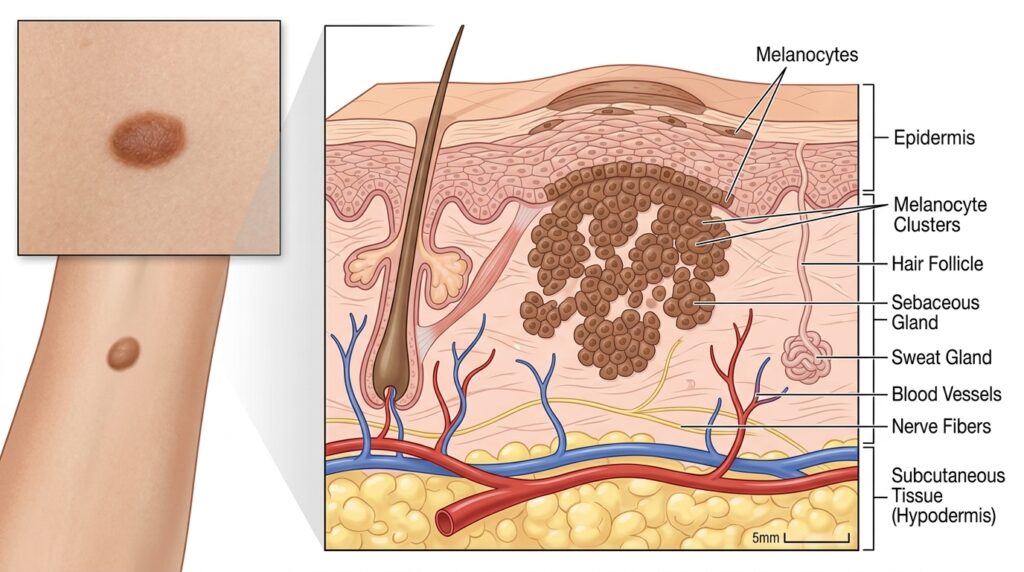
A mole is a cluster of melanocytes — the pigment-producing cells in the skin — that grow together rather than spreading evenly through the surrounding tissue. The medical term is a naevus, plural nevi. Most people develop between 10 and 40 moles over the course of their lifetime.
Moles can be flat or raised, smooth or textured, pigmented or skin-coloured, and can appear anywhere on the face or body. Most are completely harmless and require no medical intervention. They become a concern when they change, cause symptoms, or when a person wants them removed for cosmetic or practical reasons.
Types of Moles We Remove
Intradermal Naevus (Raised Skin-Coloured Mole):
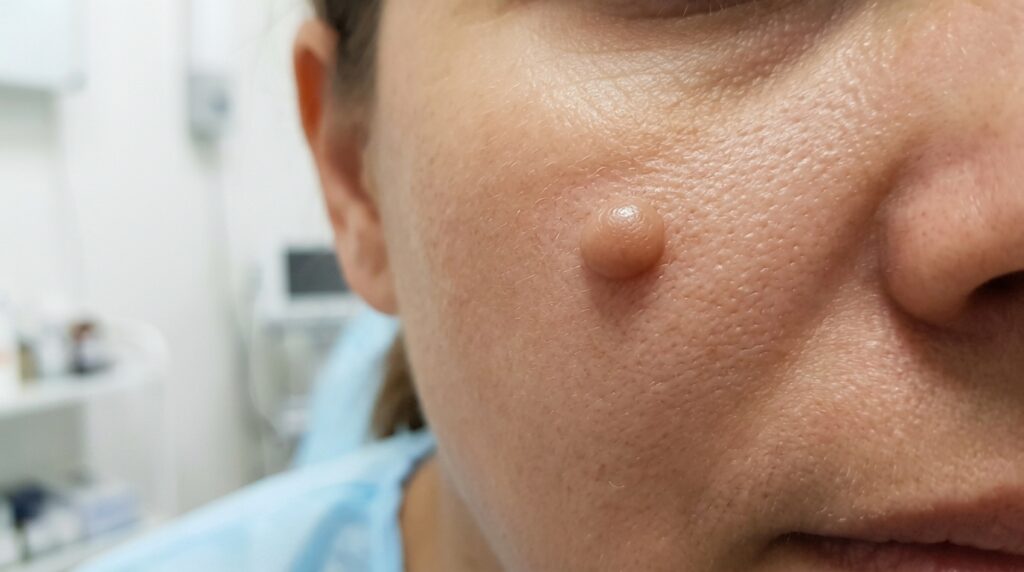
The most common type we remove at Skin Esthetics Clinic. An intradermal naevus sits entirely within the dermis, producing a dome-shaped, raised lesion that is typically skin-coloured or lightly pigmented. Very common on the face and neck. Often described as a white or flesh-coloured raised mole.
Compound Naevus:
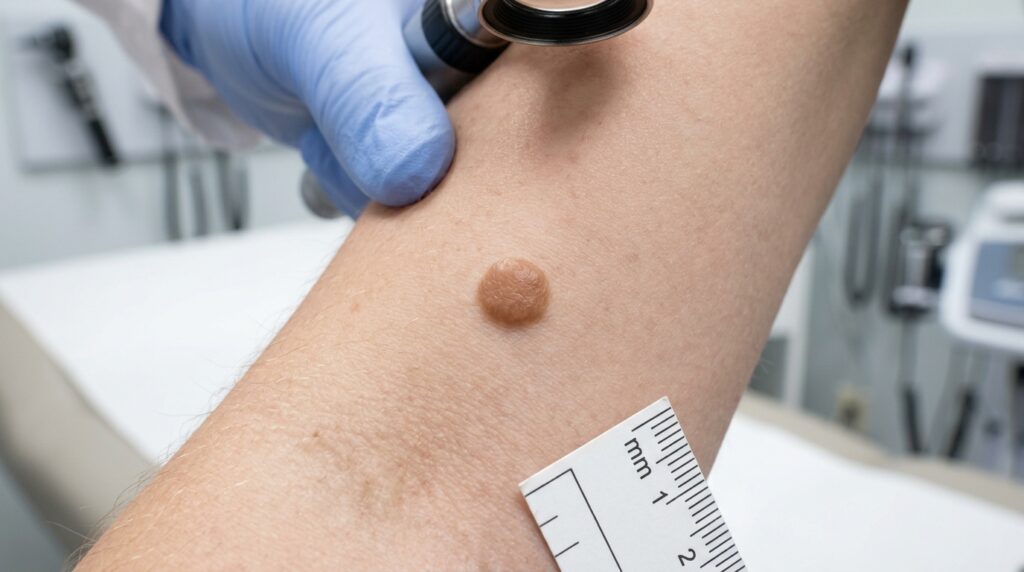
Sits both in the epidermis and dermis. Usually raised with some pigmentation. Common on the trunk and limbs. Often removed when it catches on clothing or grows larger over time.
Junctional Naevus:
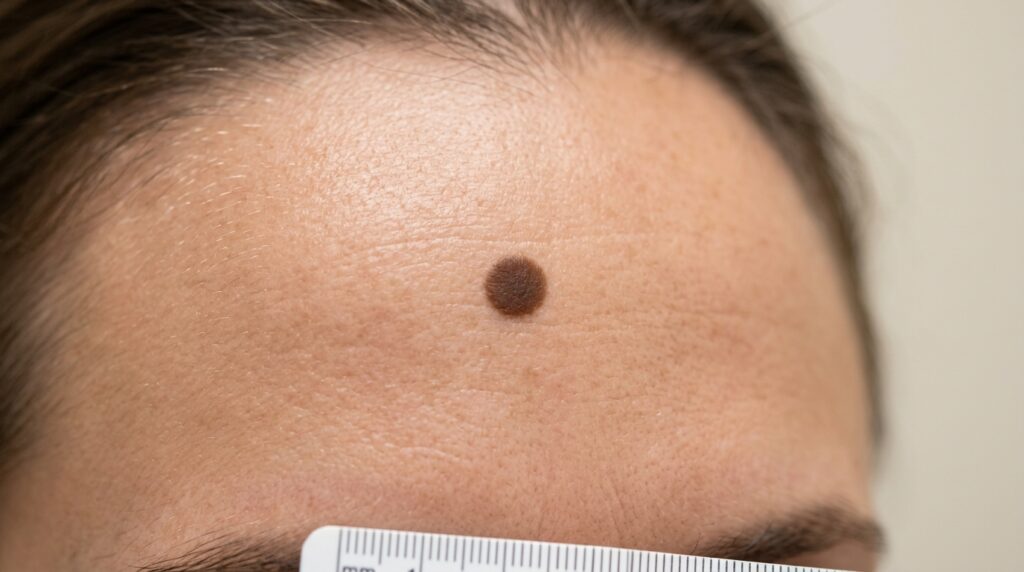
A flat, dark brown or black mole that sits at the junction of the epidermis and dermis. Smooth surface. Commonly removed for cosmetic reasons when located on the face.
Seborrhoeic Keratosis:
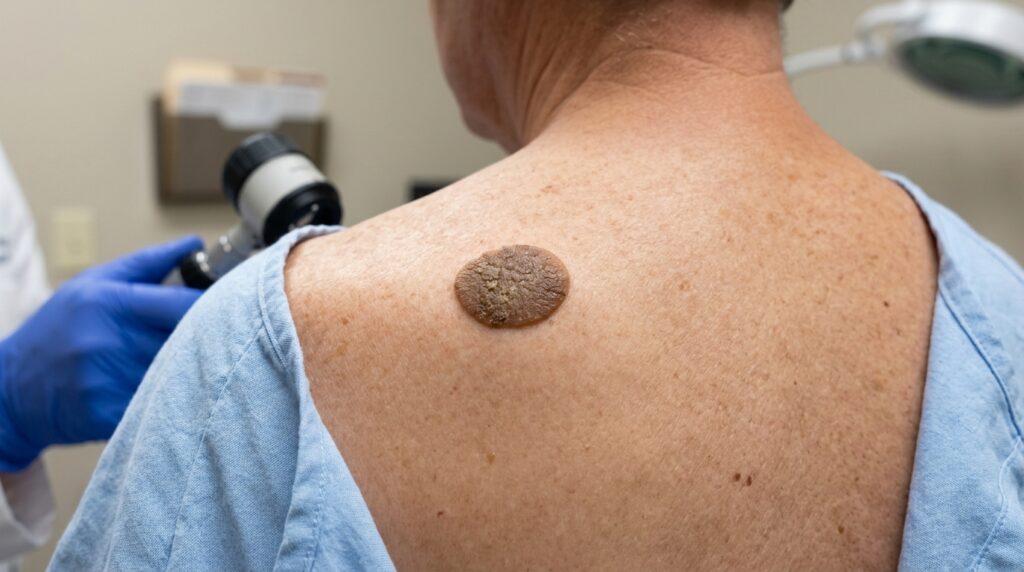
A benign warty or crusty growth that develops with age and is often mistaken for a mole. Appears stuck-on to the skin surface. Responds well to shave removal or radiofrequency technique. Very common after the age of 40.
Hairy Moles:
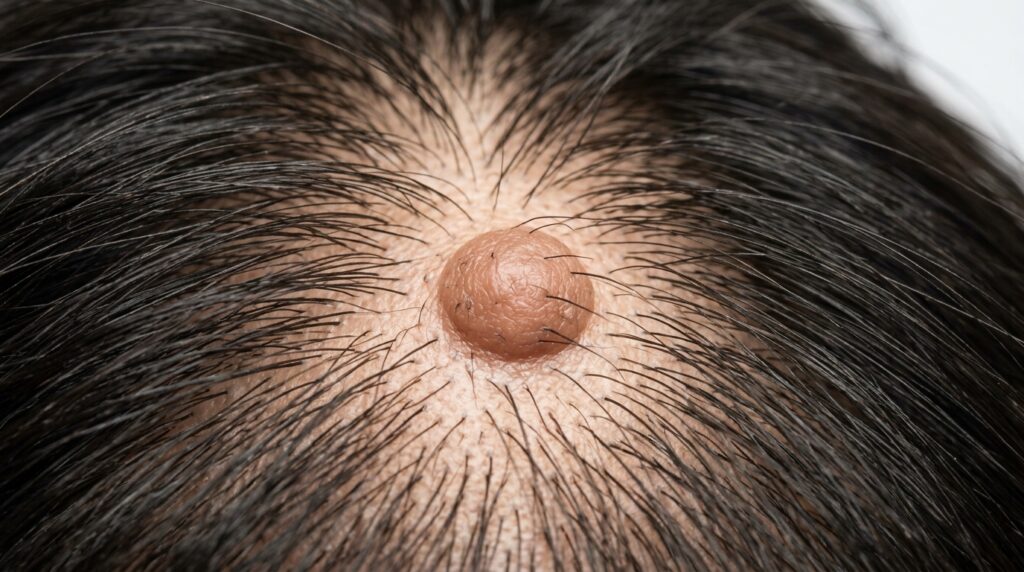
Moles with one or more terminal hairs growing from them. Typically intradermal or compound naevi. Full surgical excision with sutures produces the best cosmetic outcome because the hair follicle root needs to be removed alongside the mole tissue.
Cosmetic Mole Removal vs Medical Mole Removal
This is one of the most important distinctions to understand before booking any mole removal procedure anywhere.
Medical mole removal is performed on the NHS when a mole shows suspicious features suggesting possible melanoma or other skin cancer. The NHS does not remove benign, non-suspicious moles for cosmetic reasons.
Cosmetic mole removal — the private service we provide at Skin Esthetics Clinic — removes clinically benign moles for appearance or comfort reasons. Every patient must be assessed at consultation to confirm the mole is clinically benign before any cosmetic removal proceeds. This is not a step we skip, and any clinic that does skip it is placing you at risk.
When to Be Concerned About a Mole
Not every mole needs removing. But certain changes in a mole warrant clinical assessment before any other decision is made.
The ABCDE Rule for Mole Assessment
The ABCDE rule is the standard clinical tool for identifying moles that need medical review:
A — Asymmetry. One half does not match the other in shape.
B — Border. The edge is irregular, ragged, notched, or blurred rather than smooth and defined.
C — Colour. The mole contains more than one colour — shades of brown, black, red, white, or blue within the same lesion.
D — Diameter. The mole measures more than 6mm — approximately the size of a pencil eraser.
E — Evolving. The mole is changing in size, shape, colour, or behaviour — becoming itchy, bleeding, or crusting without clear cause.
If your mole shows any of these features, seek medical assessment before any removal. At Skin Esthetics Clinic, we assess every mole at consultation and will refer any lesion with suspicious features directly rather than proceeding with cosmetic removal. Your safety always comes first.
When Not to Have Cosmetic Removal
Do not proceed with cosmetic mole removal anywhere if your mole has changed recently, bleeds without being caught or scratched, is itchy persistently, or displays any ABCDE features. These moles need a GP assessment or dermatology referral, not a cosmetic removal booking.
Why People Choose Mole Removal
Cosmetic Reasons
The mole sits prominently on the face, neck, or décolletage and affects daily confidence. It is visible in photographs. It draws attention the patient does not want. These are completely valid and common reasons to remove a mole, and the most frequent motivation among our patients at Skin Esthetics Clinic.
Practical Reasons
The mole catches on clothing, jewellery, seatbelts, or razors and causes repeated irritation. It sits in the hairline and pulls when styling. It sits in a fold of skin that rubs. Practical discomfort is a legitimate clinical reason to remove a benign mole, and one that private clinics can address when the NHS cannot.
Can I Get a Mole Removed on the NHS?
The NHS will only remove a mole free of charge if it shows suspicious features or if there is a clinical reason for removal. Skin mole removal for cosmetic or comfort reasons is classified as an elective procedure by the NHS and is not funded. Private mole removal in Romford at Skin Esthetics Clinic is the route to removing a benign mole on your own terms and timeline.
Mole Removal Methods at Skin Esthetics Clinic
Not every mole is removed the same way. The type of naevus, its size, depth, location, and whether it is raised or flat all determine which removal method produces the best result. We select the right technique at your consultation based on a complete assessment.
Surgical Excision (with Sutures)
Surgical excision removes the entire mole by cutting it out with a fine surgical blade, along with a small margin of surrounding skin. The wound is then closed with fine sutures and heals as a narrow linear scar.
This is the most thorough removal method. It allows the tissue to be sent for histological laboratory analysis — confirming the diagnosis and ruling out atypical cells. It is the preferred method for deeply pigmented moles, hairy moles, and compound naevi where complete removal is clinically important.
The procedure is performed under local anaesthetic. Sutures are removed at a follow-up appointment 7 to 10 days post-procedure. The linear scar fades significantly over 6 to 12 months with proper aftercare.
Shave Excision
Shave excision removes a raised mole by shaving it level with the skin surface using a specialised surgical blade. No sutures are required. The base is then cauterised with a radiofrequency device to seal the wound and minimise any residual pigmentation.
Ideal for raised, dome-shaped intradermal naevi — particularly on the face and neck where no suture scar is preferred. Heals faster than surgical excision. Forms a shallow scab that separates naturally within 7 to 10 days, leaving pink new skin that fades progressively over 6 to 8 weeks.
Shave excision carries a small regrowth risk of up to 5% where base cells were not fully addressed. We discuss this openly with every patient before proceeding.
Radiofrequency Mole Removal
Radiofrequency removal uses high-frequency radio waves to cut and cauterise mole tissue simultaneously. It produces very clean wound edges with minimal bleeding and excellent healing outcomes. Particularly well-suited to raised moles on cosmetically sensitive areas including the face, eyelids, and neck.
The wound heals to a shallow scab within 24 hours, which separates naturally within 7 to 10 days. Final cosmetic results are typically excellent, with minimal visible trace of the original lesion for most patients.
Laser Mole Removal
Laser treatment uses targeted light energy to break down the pigmented cells within flat, superficial moles. It is most appropriate for small, flat, strongly pigmented junctional naevi and some benign pigmented lesions on visible facial skin.
The advantage of laser mole removal is precision with minimal surrounding tissue effect. Its limitation is that no tissue is removed for histological analysis, meaning it is only appropriate for moles that have been clearly confirmed as benign at clinical assessment. Multiple sessions may occasionally be needed for complete clearance.
CryoPen Mole Removal
CryoPen cryotherapy applies precise controlled freezing to the lesion using nitrous oxide. It is most effective for seborrhoeic keratoses, skin tags, and certain superficial benign lesions. It produces a blister-to-scab healing response and generally results in clean clearance for the right lesion types.
CryoPen is not the primary method for standard pigmented moles as it does not produce tissue for histological analysis and carries a higher recurrence rate than excision techniques. We use it selectively at Skin Esthetics Clinic where it is the most appropriate option for the specific lesion.
Which Method Is Right for Your Mole?
| Mole Type | Best Method |
|---|---|
| Raised skin-coloured intradermal naevus | Shave excision or radiofrequency |
| Deeply pigmented raised mole | Surgical excision with sutures |
| Hairy mole | Surgical excision with sutures |
| Flat pigmented junctional naevus | Laser or shave excision |
| Seborrhoeic keratosis | CryoPen or shave excision |
| Large mole | Surgical excision with sutures |
We select the right method at your free consultation based on the specific mole, its type, size, location, and your skin. You will never be offered a one-method approach for all moles at Skin Esthetics Clinic.
Mole Removal Procedure at Skin Esthetics Clinic Romford
Step 1 — Free Consultation and Clinical Assessment
Every patient begins with a thorough consultation before any removal is planned. We examine the mole under dermoscopy — magnified illuminated assessment that reveals the lesion’s internal structure, border, pigmentation, and any features that warrant referral rather than cosmetic removal.
We review your medical history, any medications you take, and any changes you have noticed in the mole. We ask when you first noticed it, whether it has changed, and whether it causes any symptoms. We confirm suitability for the planned removal method and explain the expected procedure, healing timeline, and cosmetic outcome in full before you commit.
If we have any concern about a mole, we do not remove it. We give clear advice about the appropriate next step.
Step 2 — The Removal Procedure
On your removal day, we cleanse the skin and apply local anaesthetic to the area. The injection takes a few seconds and causes brief stinging. Once the anaesthetic takes full effect, the removal begins. You feel no pain during the procedure — only occasional mild pressure.
Most removals at Skin Esthetics Clinic take between 10 and 30 minutes from start to finish. Sutures close wounds from surgical excision immediately after removal. Shave and radiofrequency wounds are sealed at treatment with no sutures required.
Step 3 — Aftercare, Healing and Follow-Up
You receive full written aftercare guidance before leaving the clinic. For surgical excision, a follow-up appointment for suture removal is scheduled at 7 to 10 days. For shave and radiofrequency removal, a review appointment at 6 to 8 weeks assesses the cosmetic result.
Mole Removal Healing Stages
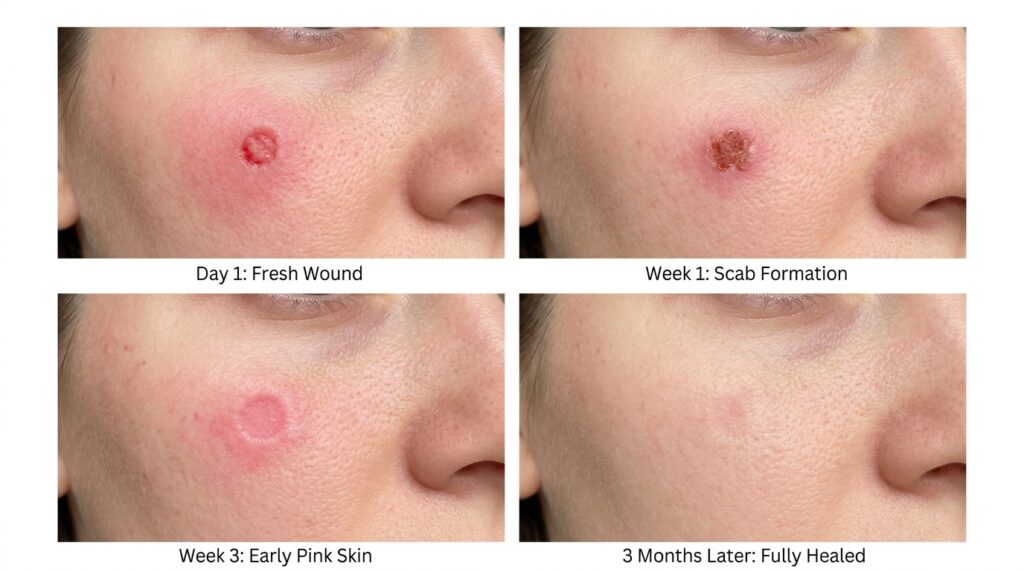
Understanding the healing timeline removes anxiety and helps you care for your wound correctly.
Days 1 to 3
The treated area is red and slightly tender. For surgical excision, the sutured wound feels tight and may be mildly swollen. For shave and radiofrequency wounds, a shallow red area is visible. Mild swelling is completely normal. Keep the area clean and dry. Do not apply makeup directly to the wound.
Days 4 to 7
A protective scab forms over shave and radiofrequency wounds. For surgical excision, wound edges seal and swelling reduces. Do not pick or disturb the scab. It protects the new skin forming beneath and removing it prematurely increases scarring risk.
Days 7 to 14
The scab from shave and radiofrequency removal begins to separate naturally. This is the normal process — do not force it. Sutures from surgical excision are removed at this stage at your follow-up appointment. The skin beneath appears pink and new.
Weeks 2 to 6
Pink skin progressively fades toward your natural skin tone. For surgical excision, the linear scar begins to soften and flatten. Some redness during this period is entirely expected and normal.
Months 2 to 6
The treated area continues to mature between months two and six. Patients looking to support skin quality and hydration during this period — and improve the overall condition of facial skin at the same time — may benefit from our skin booster treatment, which can be introduced once the removal site is fully healed.
Mole Removal Healing Stages Pictures — What to Expect
Individual healing varies based on mole depth, removal method, body location, skin type, and aftercare compliance. Facial wounds heal faster due to the strong blood supply. Body wounds, particularly on the back and shoulders, heal more slowly due to skin tension and movement. We show you healing stage examples at your consultation so expectations are accurate before treatment begins.
Mole Removal Aftercare
How you care for the wound after mole removal directly affects your healing speed and cosmetic result.
What to Do After Mole Removal
Keep the wound clean and dry for the first 24 to 48 hours. After that, cleanse the area once daily with cooled boiled water or saline and a soft cloth. Pat dry gently. Apply a thin layer of petroleum jelly or a healing ointment and cover with a small sterile dressing until the scab forms. Keep the wound moist — moist wound healing consistently produces less noticeable scars than dry healing.
Apply SPF 30 or higher to any healed removal site exposed to sunlight for at least 6 months post-procedure. This is especially important for patients with skin that is prone to post-inflammatory pigmentation.
If you are also dealing with uneven skin tone or dark patches more broadly, our hyperpigmentation treatment can be discussed alongside your mole removal at the same consultation.
What Not to Do After Mole Removal
Do not pick, scratch, or force the scab to separate. Do not apply makeup directly to the wound until it has fully closed. Avoid swimming, saunas, steam rooms, and vigorous exercise for at least one week following removal. Do not use retinoids, glycolic acid, or other active topicals on the wound area until fully healed. Avoid direct sun exposure on the healing wound.
Signs of Infection After Mole Removal
Infection following mole removal is uncommon when proper aftercare is followed. Contact us immediately if you notice any of the following mole removal infection signs: increasing redness spreading beyond the wound edge, warmth and swelling that is worsening rather than reducing, yellow or green discharge from the wound, a fever, or pain that is increasing rather than settling after the first 48 hours. These are treatable when addressed promptly.
Will Mole Removal Leave a Scar?
This is the most common question we receive — and it deserves a fully honest answer.
Yes. Any procedure that removes tissue from the dermis produces some form of mark. Mole removal replaces a mole with a scar. The goal of good mole removal technique is to make that scar as minimal and unnoticeable as possible.
The honest position: well-performed mole removal replaces something you notice every day with something progressively less noticeable over months.
Patients concerned about overall skin texture — including marks from previous skin conditions — may also benefit from our acne scarring treatment, which addresses post-inflammatory skin damage and uneven texture at a clinical level.
Can a Mole Grow Back After Removal?
Complete surgical excision with clear histological margins rarely results in regrowth. The entire mole and a margin of surrounding tissue are removed, leaving no residual cells to regenerate.
Shave excision carries a regrowth rate of up to 5%. If any deeper pigment cells were not reached during the shave, partial regrowth can occur over months to years. Importantly, regrowth from a previously shaved benign mole can sometimes look different — darker or more irregular — than the original. Any regrowth should always be reviewed clinically before re-treatment is considered.
If you notice any regrowth at a previously treated site, contact us for assessment. This is a manageable outcome and not a cause for alarm, but it warrants review.
Mole Removal on the Face
Facial Mole Removal — What Is Different?
The face is the most common site for cosmetic mole removal and the area where both the cosmetic motivation and the technical precision required are highest. Facial skin is thinner and more vascular than body skin, which supports faster healing and generally excellent cosmetic results. The close proximity of structures including the eye, lip, nasal margin, and ear requires careful technique and practitioner experience.
At Skin Esthetics Clinic, facial mole removal is one of the most frequently performed procedures we carry out. We treat the face with the precision and care the location demands.
White and Raised Moles on the Face
Raised skin-coloured or white moles on the face are almost always intradermal naevi — completely benign, soft, dome-shaped lesions sitting within the dermis. They are among the most satisfying moles to remove because shave excision and radiofrequency technique produce consistently clean, minimal-scar results on facial skin.
If your mole is a raised flesh-coloured or white bump on your cheek, nose, chin, or eyelid area, it is very likely an intradermal naevus that responds excellently to our removal techniques.
Removing Moles From the Face — Results
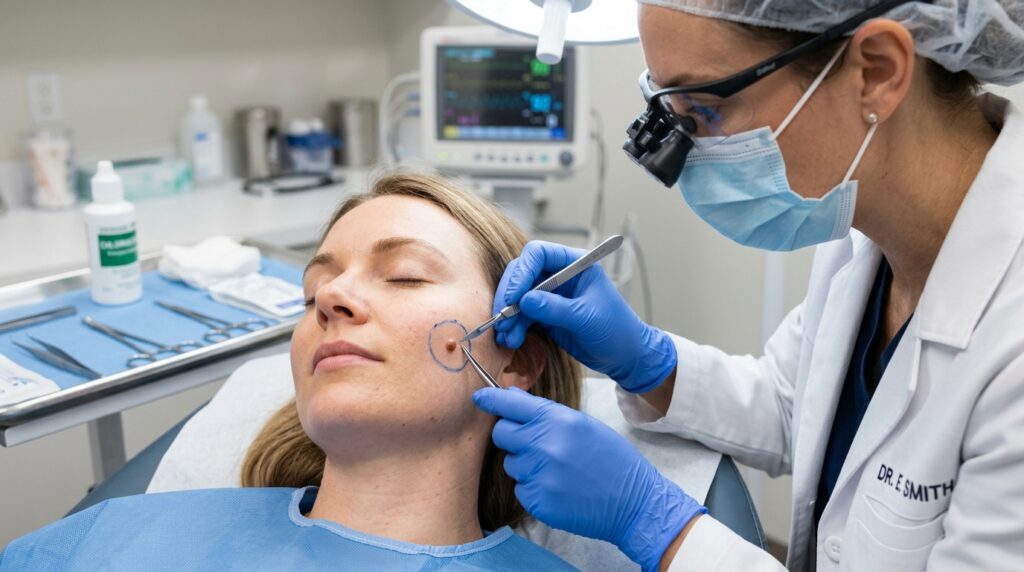
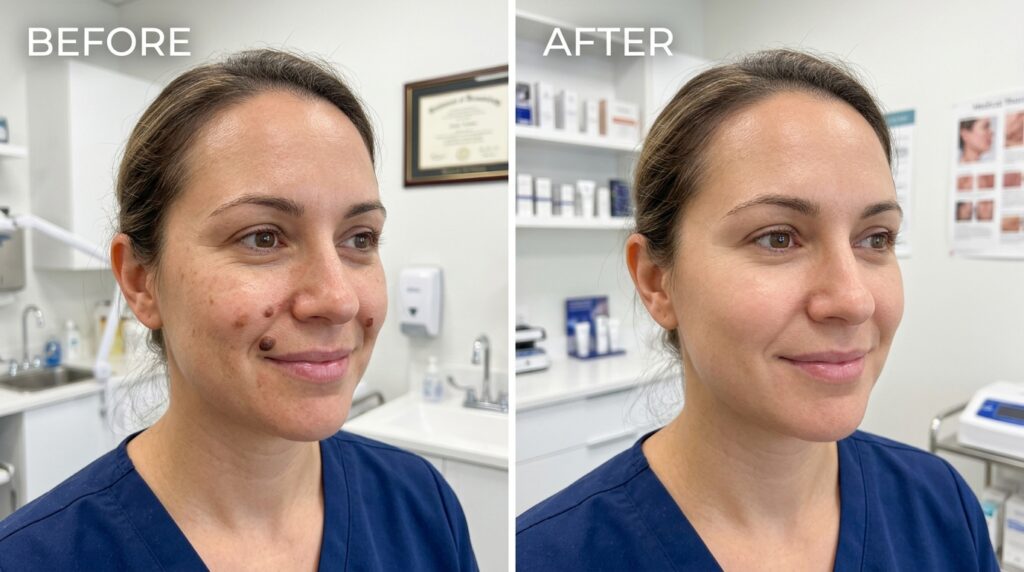
Facial mole removal before and after results at Skin Esthetics Clinic are consistently strong when the right method is used and aftercare is followed. Most patients see a smooth, progressively fading result within 6 to 8 weeks, with final cosmetic outcome visible at 3 to 6 months.
Mole Removal on Other Body Areas
Removing Moles From the Scalp
Moles on the scalp are common and frequently cause irritation when combing or styling hair. Removing moles on scalp areas requires careful technique because of the hair follicles surrounding the lesion. Surgical excision is typically the preferred method for scalp moles to ensure complete removal and allow the wound to be properly closed. Healing on the scalp is generally good due to the strong blood supply.
Removing Large Moles
Large mole removal — moles over 1cm in diameter — typically requires surgical excision with sutures to achieve complete removal and allow proper wound closure. The resulting scar is proportionally longer than for a small mole but heals and fades well with good technique and aftercare. We assess large moles carefully at consultation to plan the removal method that achieves both complete removal and the best possible cosmetic outcome.
Mole Removal on the Neck, Back and Body
Body moles on the neck, back, chest, arms, and legs are all treatable at Skin Esthetics Clinic. Body skin heals slightly more slowly than facial skin, and scars on the back and shoulders in particular can take longer to mature due to movement and skin tension. We factor body location into the healing timeline discussion at every consultation.
Related Lesions We Also Remove
Seborrhoeic Keratosis Removal
Seborrhoeic keratoses are benign warty, crusty, or rough-textured growths that develop with age. They are often mistaken for moles. They are entirely benign but can be cosmetically bothersome or catch on clothing. We remove them using shave excision or CryoPen at Skin Esthetics Clinic with consistently clean results.
Skin Tag Removal
Skin tags are small soft growths that hang from the skin on a narrow stalk. They develop in areas of friction — neck, underarms, groin, and eyelids. They are benign and cause no medical concern but can be irritating and cosmetically unwanted. We remove skin tags alongside moles in a single session where appropriate.
Epidermoid Cyst Removal
Epidermoid cysts are smooth, round benign cysts beneath the skin surface. They can develop anywhere on the body and sometimes on the face. Where they are causing concern or cosmetic distress, surgical excision is the appropriate treatment to remove the entire cyst wall and prevent recurrence.
Who Is a Good Candidate for Mole Removal?
You are likely a good candidate if you:
Have a mole that has been assessed as clinically benign and causes cosmetic concern or physical irritation. Have a raised, flat, pigmented, or skin-coloured naevus on the face, neck, scalp, or body that you want removed. Are in good general health with no untreated conditions that impair wound healing. Are not currently pregnant. Are not taking anticoagulant medications without medical clearance. Have realistic expectations — mole removal replaces a mole with a fading scar, not invisible skin. Live in or around Romford, Hornchurch, Ilford, Barking, Dagenham, Havering, or Essex. Are committed to following aftercare guidance, including SPF protection of the healing site.
Who Is Not Suitable for Mole Removal?
You may not be suitable if you:
Have a mole showing any ABCDE suspicious features — these need dermatological assessment, not cosmetic removal. Are currently pregnant or breastfeeding. Have an active skin infection or inflammatory condition at the mole site. Have a documented history of keloid scarring, particularly in the planned treatment area. Have a blood clotting disorder or are on anticoagulant medication without clearance. Have had a skin cancer diagnosis in or near the proposed treatment area without specialist clearance. Have not yet had a clinical assessment of the specific mole being considered.
We assess all of these factors at your free consultation and give honest, clear guidance.
Private Mole Removal Cost in Romford
What Affects the Price of Mole Removal?
Private mole removal price at Skin Esthetics Clinic depends on the type of mole, its size and depth, the removal method required, and whether histological tissue analysis is included. A small raised facial mole requiring shave excision costs less than a large deeply rooted mole requiring full surgical excision with sutures.
We provide a full transparent cost breakdown at your free consultation before you commit to anything. No hidden fees. No pressure. The cost quoted is the cost you pay.
Multiple Mole Removal — Can I Remove More Than One?
Yes. We regularly remove multiple moles in a single session, which is more convenient and more cost-effective than booking separate appointments. The total number treatable in one visit depends on the sizes, locations, and removal methods involved. We plan this specifically at your consultation and price it transparently.
Is Private Mole Removal Worth the Cost?
For the vast majority of our patients, the answer is yes. Cosmetic mole removal ends daily awareness of something you notice every time you look in the mirror. The procedure is straightforward, the recovery is manageable, and the results are consistently good when carried out by a trained practitioner using the right technique. Many patients report wishing they had done it sooner.
Before and After Mole Removal Results
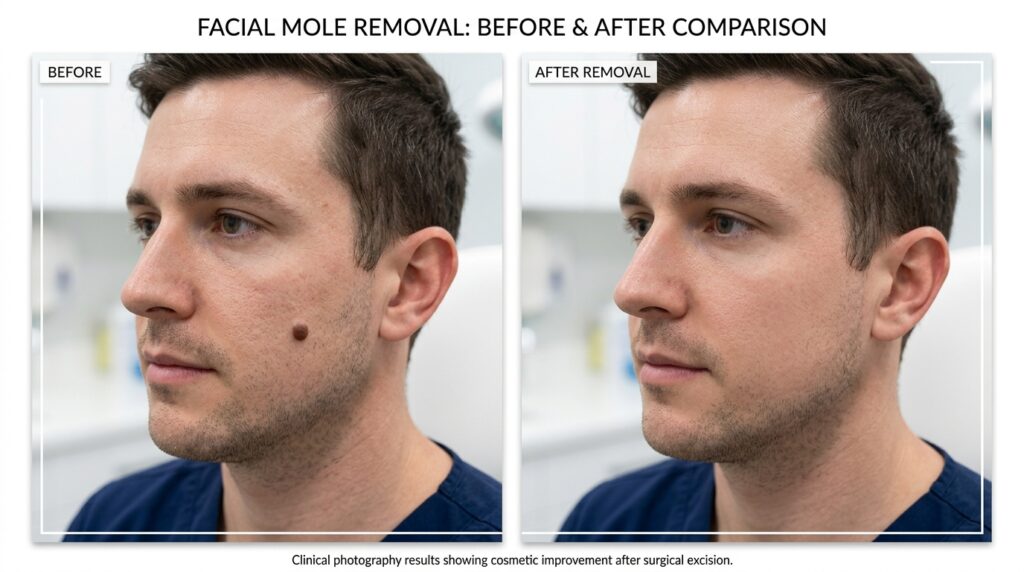
Cosmetic results vary depending on the mole type, removal method, skin type, and how well aftercare instructions are followed. At your free consultation, we show you examples from patients with similar moles and skin types so your expectations are accurate and realistic before treatment begins.
Why Choose Skin Esthetics Clinic for Mole Removal in Romford?
Clinical assessment before every removal. We examine every mole under dermoscopy before any treatment is planned. No suspicious lesion is treated cosmetically when it needs specialist assessment first.
The right method for your specific mole. Surgical excision, shave removal, radiofrequency, laser, and CryoPen each have specific indications. We choose the method that gives your mole the best cosmetic result — not a universal approach applied to every patient.
Histological analysis where indicated. Removed tissue is sent for laboratory analysis where the removal method and clinical picture warrant it, confirming the diagnosis and giving you peace of mind.
Honest outcomes. We tell you realistically what your result will look like. We never promise invisible results. We consistently deliver good cosmetic outcomes through precise technique and thorough aftercare.
Multiple lesions in one visit. Where you have more than one mole, skin tag, or related lesion to address, we plan and complete all removals in a single session where clinically appropriate.
Local and accessible. We serve patients from across Romford, Hornchurch, Ilford, Barking, Dagenham, Chadwell Heath, Harold Wood, Havering, and Essex. No GP referral needed. Same-week appointments available.
Conclusion
A mole that makes you self-conscious every time you look in the mirror is worth doing something about. Cosmetic and skin mole removal is safe, straightforward, and produces consistently good results when carried out by a trained practitioner using the right technique for the right mole.
At Skin Esthetics Clinic in Romford, every removal begins with a proper clinical assessment. Every technique is chosen based on your specific mole. Every patient leaves with the aftercare guidance and follow-up support they need to heal well and feel good about their result.
Your first consultation is completely free. No GP referral needed. No obligation. We serve patients from across Romford, Hornchurch, Ilford, Barking, Dagenham, Chadwell Heath, and Essex. Same-week appointments available.
Book your free mole removal consultation in Romford today.
FAQs
Does mole removal hurt?
The procedure itself is not painful. We apply local anaesthetic to the area before removal begins — the injection takes a few seconds and causes brief stinging. Once the anaesthetic takes effect you feel no pain, only occasional mild pressure. Mild tenderness in the area for 24 to 72 hours post-procedure is normal and manageable with paracetamol.
How long does mole removal take to heal?
Primary healing — the wound closing and any scab naturally separating — takes 7 to 14 days for most patients. Full cosmetic healing, including scar fading and skin tone normalisation, takes 3 to 6 months. Surgical excision scars continue to soften and fade for up to 12 months.
Will mole removal leave a scar?
Any procedure that removes tissue from the dermis produces some form of mark. For shave excision and radiofrequency removal on the face, the cosmetic outcome is typically a flat, progressively fading area that becomes much less noticeable over months. Surgical excision produces a narrow linear scar that fades significantly over time. We discuss expected scarring for your specific mole and method at consultation.
Can a mole grow back after removal?
Complete surgical excision with clear margins rarely results in regrowth. Shave excision carries a regrowth rate of up to 5%. Any regrowth at a previously treated site should be assessed clinically before any re-treatment is considered, as the appearance can occasionally differ from the original mole.
How much does mole removal cost in Romford?
Private mole removal cost at Skin Esthetics Clinic depends on the mole type, size, and the removal method required. We provide a full transparent price breakdown at your free consultation. Multiple moles removed in a single session are priced at a reduced per-lesion rate. There are no hidden fees.
Can I have more than one mole removed at the same time?
Yes. We regularly remove multiple moles, skin tags, and related lesions in a single session. This is more cost-effective and more convenient than separate visits. We plan multi-lesion removal specifically at your consultation.
Do I need a GP referral for mole removal?
No. You can book directly at Skin Esthetics Clinic without a GP referral. If we identify any suspicious mole at your assessment, we will guide you through the appropriate referral pathway rather than proceeding with cosmetic removal.
Can moles be removed from the face?
Yes. Facial mole removal is one of the most common procedures we perform. The face heals well due to its strong blood supply, and shave excision and radiofrequency technique produce consistently clean cosmetic results on facial skin.
What are the signs of infection after mole removal?
Signs of infection include increasing redness spreading beyond the wound edge, worsening swelling and warmth, yellow or green discharge, fever, or pain that increases after the first 48 hours rather than settling. These are uncommon with proper aftercare but should be reported to us promptly if they occur.
What is the difference between cosmetic and medical mole removal?
Medical mole removal is carried out on the NHS when a mole has suspicious features potentially indicating melanoma. The NHS does not fund removal of benign moles for cosmetic reasons. Cosmetic mole removal at Skin Esthetics Clinic is a private procedure removing clinically benign moles for appearance or comfort reasons.
What is Atypical Mole Syndrome?
Atypical Mole Syndrome — also called Dysplastic Naevus Syndrome — is a condition in which a person has a large number of moles, some of which have atypical features including irregular borders, varied pigmentation, or large size. People with Atypical Mole Syndrome have an elevated lifetime risk of developing melanoma and require regular dermatological monitoring. If you have multiple atypical moles, seek dermatological assessment before considering cosmetic removal of any individual lesion.
Is laser mole removal better than surgical removal?
Neither is universally better — they serve different mole types. Laser mole removal is most appropriate for small, flat, superficial pigmented lesions on visible skin areas where no suture scar is preferred and histological analysis is not required. Surgical excision is more appropriate for raised, hairy, deeply pigmented, or large moles where complete removal and tissue analysis are important. We recommend the right method for your specific mole at consultation — not based on what is easiest or most profitable to offer.
Book Your Free Mole Removal Consultation in Romford
Whether you have lived with an unwanted mole for years or recently noticed one you want assessed and removed, Skin Esthetics Clinic in Romford offers the clinical expertise and cosmetic precision to remove it safely, effectively, and with the result you are hoping for.
Your first consultation is completely free. No GP referral needed. No obligation to proceed. Just a thorough clinical assessment of your mole, an honest recommendation for the right removal method, and a transparent cost breakdown before you commit to anything.
Same-week appointments available. Serving patients from across Romford, Hornchurch, Ilford, Barking, Dagenham, Chadwell Heath, Harold Wood, Havering, and Essex.
Book your free mole removal consultation today.