
- ACNE TREATMENT
- Alopecia Treatment
- Tricology
- Exosome Therapy
- Eye brow lift
- Hair Fall Treatment
- PRP
- Micro needling
- HIFU
- Moles, Warts & Skin Tags Removal
- Scalp health treatment
- IV drip (whitening and vitamins)
- Melasma / hyper pigmentation treatment
- Skin booster
- Wrinkle treatment
- Fillers
- Sculptra
- Anti Aging Treatments
- Hair Thining Treatment
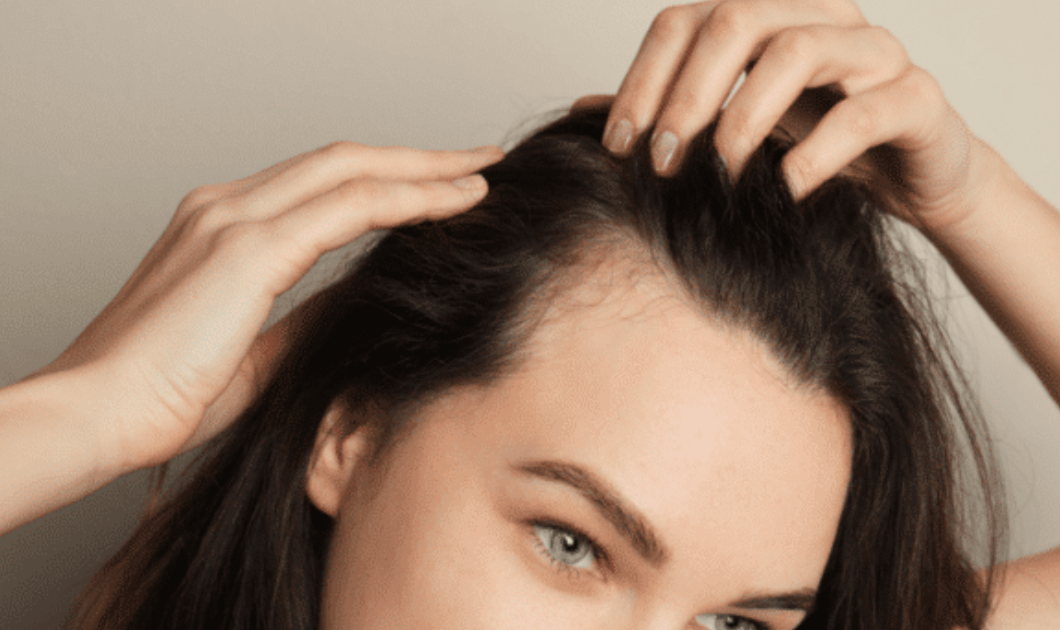
Losing your hair changes how you see yourself. Alopecia is not just a cosmetic issue. It affects your confidence, your identity, and your daily life.
At Skin Esthetics Clinic in Romford, we treat alopecia with clinically proven alopecia treatment methods, personalised to your hair type, your condition, and your goals.
Whether you are in the early stages or have been dealing with hair loss for years, there are real options available to you.
What Is Alopecia?
Alopecia is a medical term for hair loss. It covers a wide range of conditions. From small bald patches to complete loss of hair across the entire body. Some forms develop gradually. Others appear almost overnight.
Understanding what type of alopecia you have is the first step toward treating it effectively.
How Alopecia Differs From Regular Hair Loss
Losing 50 to 100 hairs a day is normal. Your hair follicles go through natural growth and rest cycles. That daily shedding is part of the process.
Alopecia is different. It disrupts that cycle. Hair follicles stop producing new hair, become damaged, or are attacked by the body’s own immune system. The result is hair loss that does not reverse on its own.
Regular shedding is temporary. Alopecia, without treatment, tends to progress.
Who Does Alopecia Affect?
Alopecia does not discriminate. It affects both men and women across all age groups and ethnicities. Androgenetic alopecia is the most common form of alopecia that affects roughly half of all men by age 50 and a significant number of women after menopause.
In Romford and across East London, we see patients from a wide range of backgrounds. Hair texture, ethnicity, and genetics all play a role in how alopecia presents and how it should be treated.
How Alopecia Affects Mental Health
Research consistently links alopecia with anxiety, depression, and reduced self-worth. For younger patients especially, hair loss during school years or early careers can feel devastating.
It affects social confidence. Some people stop going out. Many wait too long before seeking help because they feel embarrassed or unsure whether treatment will work.
You are not alone in feeling this way. And you do not have to keep waiting.
Regain Confidence with Healthy Hair
Our goal is to restore not just your hair, but also your confidence. With professional alopecia care, you can achieve thicker, healthier hair and prevent future hair loss.

What Causes Alopecia?
Alopecia rarely has a single cause. In most cases, several factors combine to trigger or worsen hair loss. Understanding your personal triggers is part of how we build your treatment plan.
Autoimmune Triggers
In autoimmune forms of alopecia, the body treats its own hair follicles as a threat. White blood cells attack the follicle, disrupting the growth cycle. This immune response is the same mechanism seen in conditions like psoriasis and rheumatoid arthritis.
People with a family history of autoimmune disease carry a higher risk. Managing immune activity is therefore a key part of treating alopecia areata effectively.
Hormonal Imbalances
Hormones have a direct effect on hair follicle behaviour. DHT shortens the growth phase in androgenetic alopecia. Thyroid disease both underactive and overactive disrupts the hair cycle.
Hormonal shifts during pregnancy, menopause, and after stopping birth control can all trigger significant shedding.
Stress & Lifestyle Factors
Chronic stress raises cortisol levels. High cortisol pushes follicles out of their growth phase prematurely. This is the mechanism behind telogen effluvium in many patients.
Poor sleep, heavy alcohol use, and smoking all reduce blood flow to the scalp and deprive follicles of the oxygen and nutrients they need to function.
Nutritional Deficiencies
Hair follicles are among the most nutritionally demanding cells in the body. Iron deficiency is one of the most common and overlooked causes of hair loss in women. Low levels of vitamin D, zinc, biotin, and ferritin all affect the hair growth cycle.
Crash diets and restrictive eating strip the body of the nutrients hair needs to grow. We often screen for nutritional deficiencies as part of our initial assessment.
Genetic Factors
Your genes set the baseline for how your hair follicles respond to hormones, immune signals, and ageing. If your parents or grandparents experienced significant hair loss, your risk is higher.
Genetics do not mean hair loss is inevitable. But knowing your predisposition means you can act earlier and protect more of what you have.
Types of Alopecia We Treat at Skin Esthetics Clinic
Not all hair loss is the same. Each type of alopecia has its own cause, pattern, and treatment approach. At Skin Esthetics Clinic, we diagnose your specific condition before recommending any treatment.
Alopecia Areata
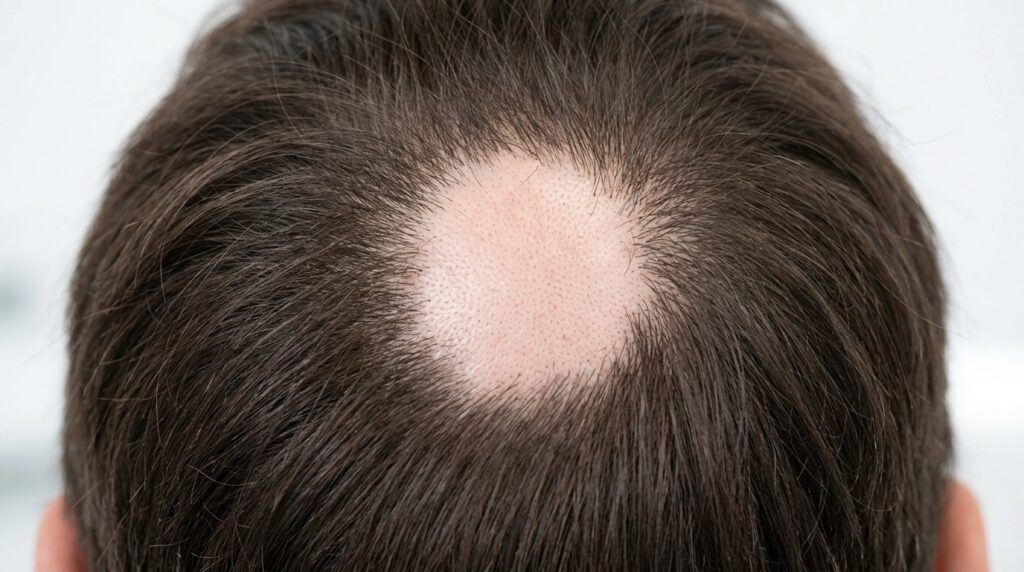
Alopecia areata is an autoimmune condition. The immune system mistakenly attacks healthy hair follicles, causing patchy hair loss usually on the scalp, but sometimes on the beard (alopecia barbae), eyebrows, or eyelashes.
Androgenetic & androgenic Alopecia (Male & Female Pattern Baldness)
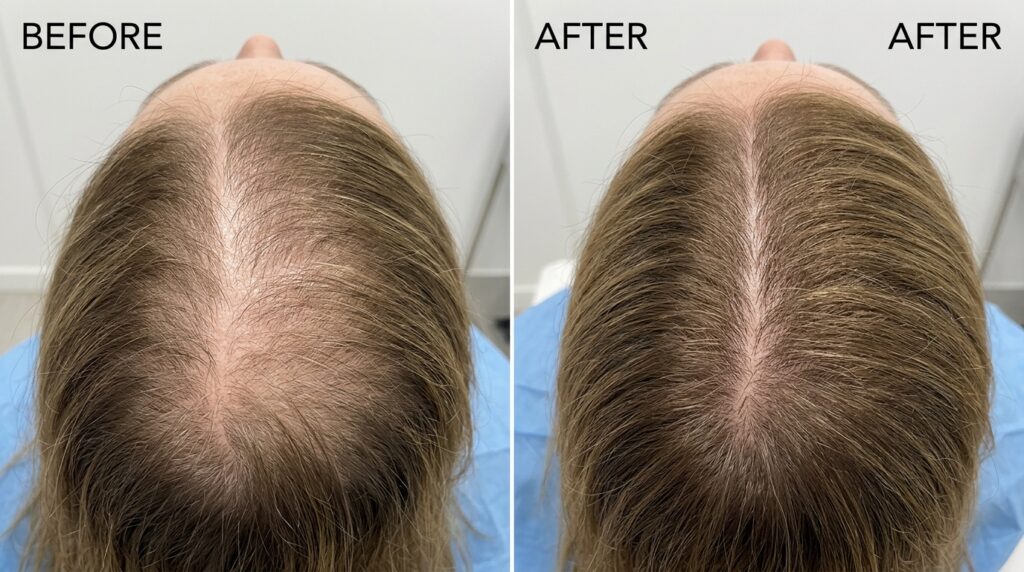
This is the most common form of hair loss. In men, it usually starts at the temples or crown. In women, it tends to show as a widening parting or overall thinning across the top of the scalp.
Traction Alopecia
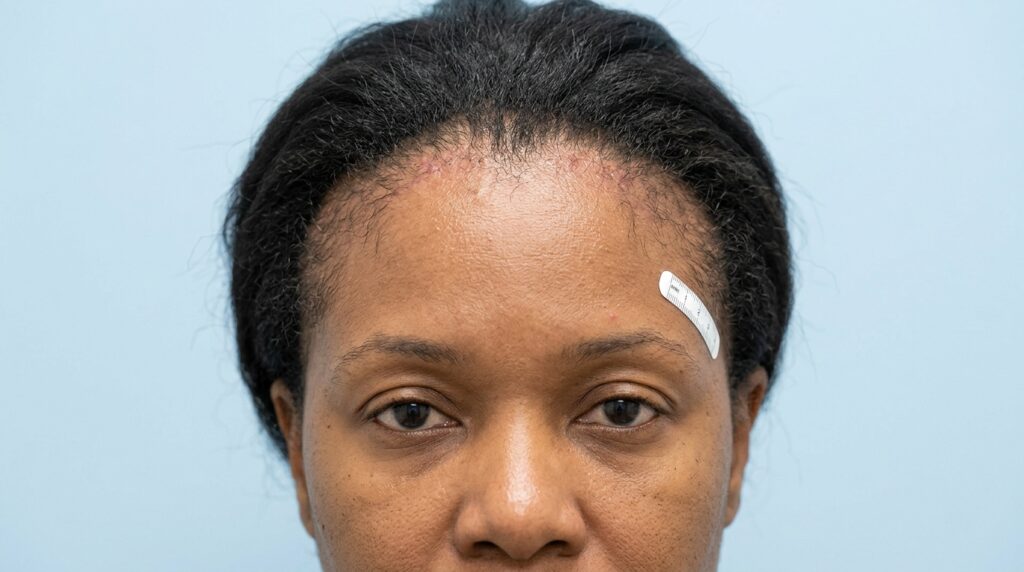
Traction alopecia develops from repeated tension on the hair. Tight braids, ponytails, weaves, and extensions pull at the follicles over time. Initially, the damage is reversible. Left untreated, it becomes permanent.
Telogen Effluvium
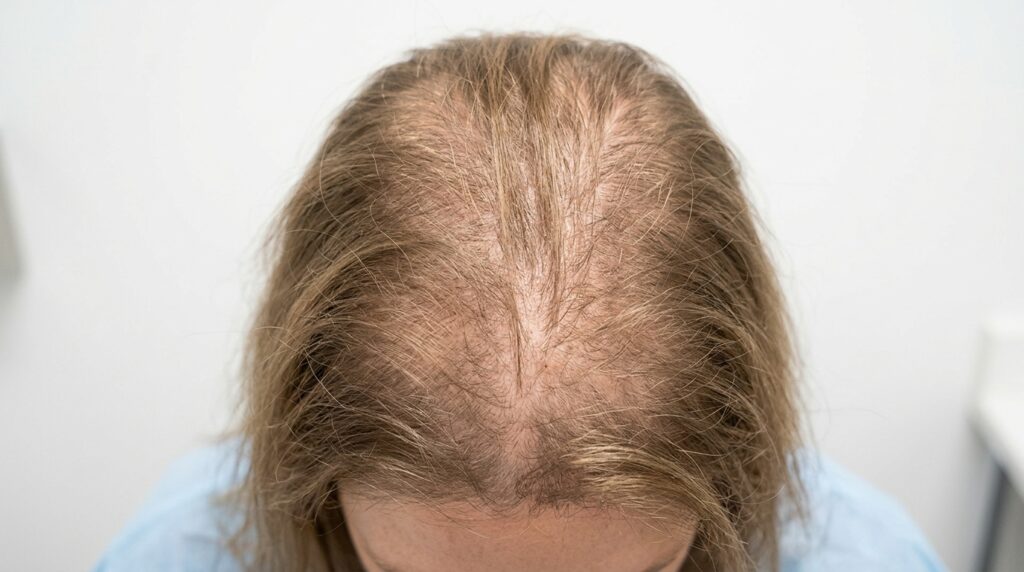
Telogen effluvium is sudden, widespread hair shedding triggered by a shock to the body. Childbirth, surgery, severe illness, crash dieting, and extreme stress are common triggers.
The follicles shift into a resting phase all at once, leading to heavy shedding two to three months after the trigger event.
Scarring Alopecia
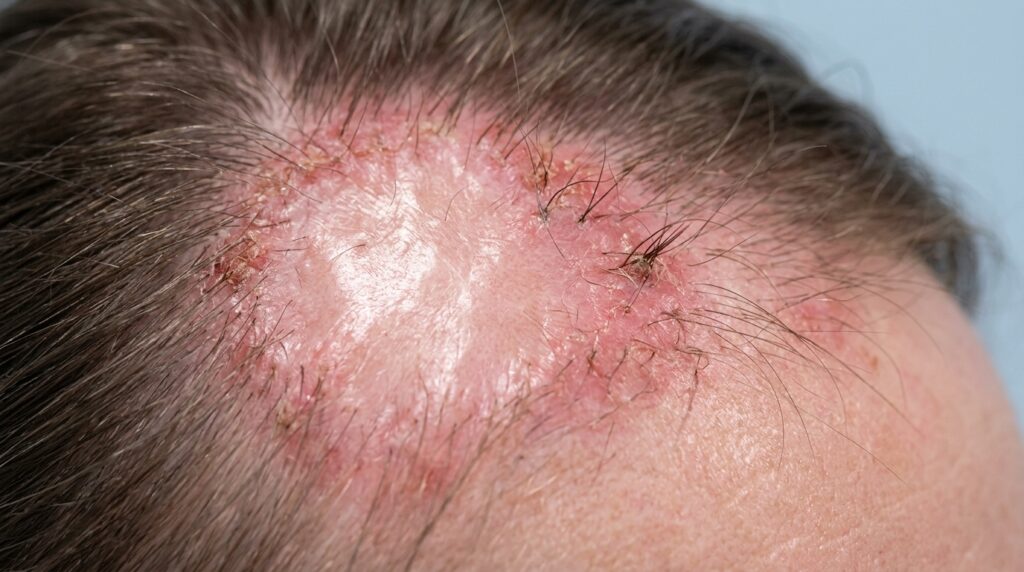
Scarring alopecia also called cicatricial alopecia permanently destroys hair follicles and replaces them with scar tissue. Inflammation is usually the cause. Once follicles are scarred, they cannot regrow hair.
Alopecia Totalis & Universalis
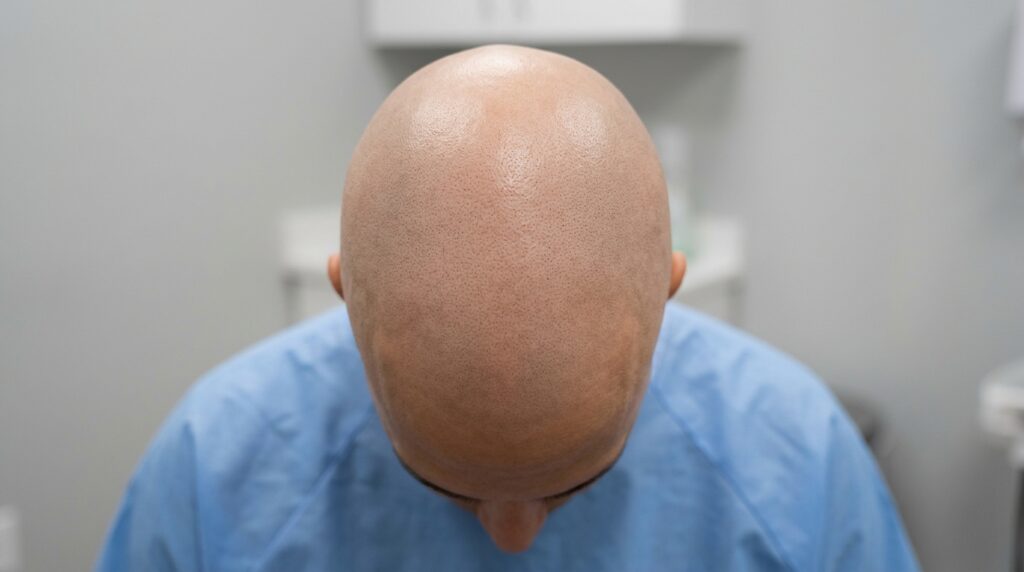
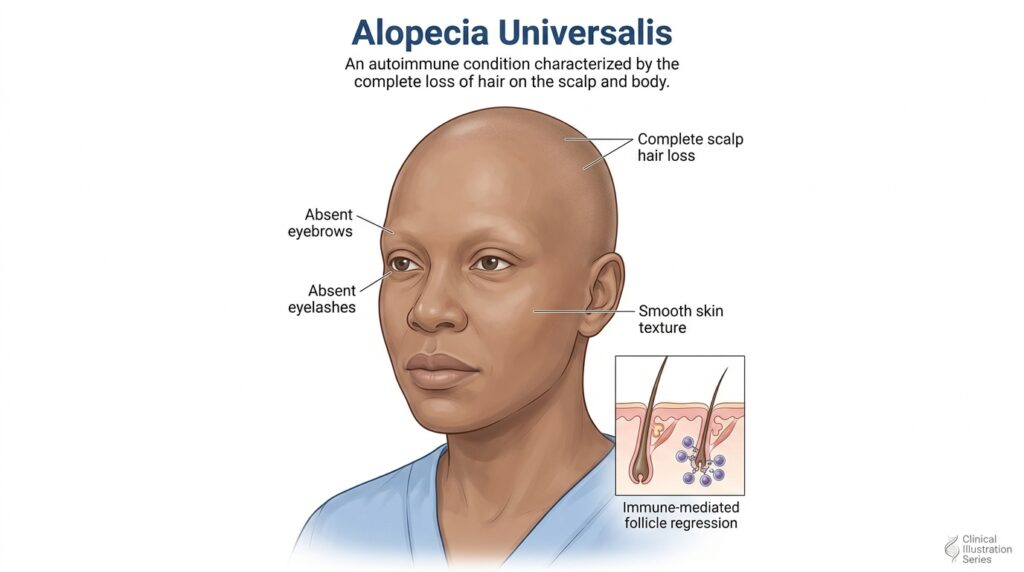
Alopecia totalis refers to the complete loss of hair on the scalp. Alopecia universalis goes further total hair loss across the entire body, including eyebrows and eyelashes.
Both are severe forms of alopecia areata and require specialist input. While these conditions are harder to treat, supportive therapies can help manage the condition and improve scalp health.
Alopecia Treatment Options at Skin Esthetics Clinic Romford
We do not offer a one-size-fits-all approach. Every patient at Skin Esthetics Clinic receives a treatment plan built around their specific type of alopecia, their scalp condition, and their goals.
PRP Therapy for Alopecia
Platelet-rich plasma therapy uses your own blood. We draw a small sample, spin it in a centrifuge to concentrate the growth factors, and inject the plasma directly into areas of thinning or loss.
Those growth factors wake up dormant hair follicles. They stimulate circulation, reduce inflammation around the follicle, and trigger new hair growth. PRP works well for alopecia areata, androgenetic alopecia, and telogen effluvium. Most patients see visible improvement after three to four sessions.
Exosome Therapy for Alopecia
Exosome therapy is one of the most advanced options available for hair restoration. Exosomes are tiny cell-signalling particles loaded with growth proteins. When applied to the scalp, they communicate with follicle cells and switch on regenerative processes.
This treatment is particularly effective for patients who have not responded well to PRP, or for those with more advanced hair loss.
Microneedling for Hair Restoration
Microneedling creates controlled micro-channels in the scalp using fine needles. This stimulates collagen production, increases blood supply to the follicles, and when combined with PRP or topical treatments dramatically improves absorption and effectiveness.
It also activates the scalp’s natural wound-healing response, which encourages follicles in the resting phase to re-enter the growth cycle.
Scalp Health Treatment
A healthy scalp is the foundation of healthy hair. Seborrheic dermatitis, excess sebum, and scalp inflammation all block follicle function. Our scalp health treatments address these underlying conditions directly.
We use medical-grade products and professional protocols to rebalance the scalp environment, reduce inflammation, and create the conditions hair needs to grow.
Trichology Consultation
A trichologist specialises in scalp and hair disorders. At Skin Esthetics Clinic, our trichology consultation goes beyond surface-level assessment. We look at your hair loss pattern, your scalp condition, your medical history, and your lifestyle — then give you an honest picture of what is happening and what will actually help.
This is the starting point for every patient. No assumptions. No rushed recommendations.
How We Diagnose Alopecia at Skin Esthetics Clinic
Getting the diagnosis right changes everything. Many patients come to us having already tried treatments that did not work because the wrong condition was being treated. We take diagnosis seriously.
Scalp & Hair Analysis
Before starting alopecia treatment We examine your scalp and hair under magnification, looking at hair density, follicle health, scalp texture, and the pattern of loss. This gives us a clear picture of what is happening below the surface.
Trichoscopy Assessment
Trichoscopy is a non-invasive diagnostic tool. It allows us to examine the scalp and hair follicles in fine detail identifying early signs of scarring, follicle miniaturisation, and inflammation that would not be visible to the naked eye.
It is one of the most accurate methods available for differentiating between types of alopecia.
Medical History Review
Your health history tells us a great deal. We ask about autoimmune conditions in your family, any medications you take, hormonal changes, recent illnesses, and your diet. Conditions like thyroid disease, psoriasis, and arthritis often connect to hair loss in ways that patients are not aware of.
Personalised Treatment Planning
Once we have a full picture, we sit down with you and explain exactly what we found, what type of alopecia you have, and what your treatment options are. You leave with a clear plan not a vague set of recommendations.
What to Expect From Alopecia Treatment At Skin Esthetics Clinic
Here is exactly how your journey at Skin Esthetics Clinic looks from start to finish.
Step 1 — Free Consultation & Diagnosis
Your first visit is free. We assess your scalp, review your history, and give you an honest diagnosis. There is no pressure and no obligation to proceed.
Step 2 — Personalised Treatment Plan
Based on your diagnosis, we put together a treatment plan specific to your type of alopecia, your scalp condition, and your timeline. We explain each treatment, what it does, and what results you can realistically expect.
Step 3 — In-Clinic Treatment Sessions
Your sessions are carried out by trained specialists using medical-grade equipment. Most treatments take between 45 and 90 minutes. We keep you comfortable throughout and answer any questions as we go.
Step 4 — Aftercare & Scalp Care Routine
What you do between sessions matters. We give you a home care routine specific to your scalp type and advise on products, ingredients to use, and things to avoid. Aftercare is not an afterthought. It is part of the alopecia treatment.
Step 5 — Progress Review & Maintenance
We monitor your results at regular intervals. If the plan needs adjusting, we adjust it. Once you reach your target, we move you to a maintenance schedule to protect your results long-term.
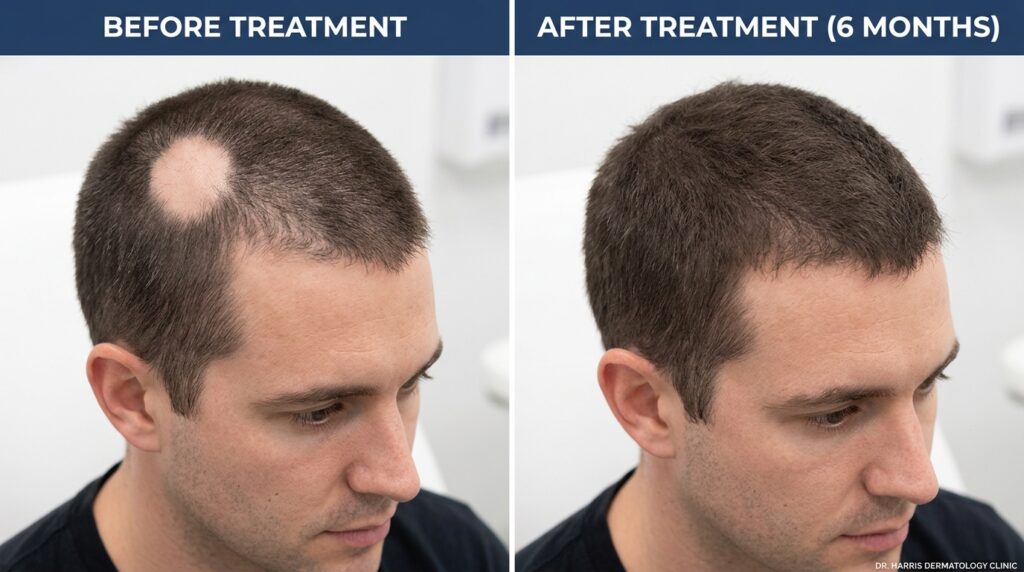
Before & After — Real Alopecia Treatment Results
Results vary from patient to patient depending on the type of alopecia, how long they have had it, and how consistently they follow their treatment plan.
During your consultation, we will give you a realistic expectation based on your specific condition.
Who Is a Good Candidate for Alopecia Treatment?
You are likely a good candidate if you:
- Have noticed recent or progressive hair thinning or shedding
- Have been diagnosed with alopecia areata, androgenetic alopecia, traction alopecia, or telogen effluvium
- Still have active hair follicles in the affected area
- Are in good general health with no untreated underlying conditions
- Are committed to following a treatment plan and aftercare routine
- Live in or around Romford, Hornchurch, Ilford, Dagenham, Barking, or East London
The earlier you start, the more follicles we can protect and reactivate.
Who Is Not Suitable for Alopecia Treatment?
Not every treatment suits every patient. You may not be a suitable candidate if you:
- Have advanced scarring alopecia where follicles have been permanently destroyed
- Are currently pregnant or breastfeeding (some treatments require deferral)
- Have an active scalp infection or open wounds on the scalp
- Have a blood clotting disorder that prevents PRP therapy
- Are undergoing active chemotherapy or radiation treatment
- Have not yet had a proper diagnosis of their hair loss type
We will always tell you honestly if a treatment is not right for you — and where possible, we will suggest an alternative approach.
Alopecia Hair Care Tips From Our Specialists
How you treat your hair and scalp at home directly affects how well your clinical treatments work. Here is what our specialists recommend.
Best Ingredients for Alopecia-Prone Scalps
Look for products containing:
- Biotin — supports keratin production and follicle strength
- Caffeine — stimulates blood flow at the follicle level
- Niacinamide — reduces scalp inflammation and improves circulation
- Zinc — regulates DHT and supports follicle repair
- Rosemary oil — shown in research to be as effective as minoxidil for androgenetic alopecia in some studies
- Peptides — signal follicle cells to stay in the growth phase longer
What to Avoid With Alopecia
- Tight hairstyles that pull at the scalp
- Sulphate-heavy shampoos that strip the scalp barrier
- Heat styling without protection
- Harsh chemical treatments like bleach and relaxers
- Scratching or picking at patches
- Skipping meals or following crash diets — your follicles need consistent nutrition
Scalp Massage & Stimulation Techniques
Daily scalp massage increases blood flow to the follicles. Use your fingertips not your nails and apply gentle circular pressure across the scalp for four to five minutes each day.
A dermaroller used at home between sessions can also improve product absorption and keep the scalp stimulated. We will advise you on the right needle size and frequency based on your treatment plan.
FAQs
Can alopecia be cured permanently?
There is no universal permanent cure for alopecia. But many patients achieve long-term remission and significant regrowth with the right treatment.
What is the most effective treatment for alopecia areata?
PRP therapy and exosome therapy are currently among the most effective non-surgical options for alopecia areata.
Is alopecia treatment painful?
Most patients find treatment very manageable. PRP injections cause mild discomfort similar to a small scratch. Microneedling feels like a light vibration on the scalp. We use numbing protocols where needed to keep you comfortable.
How long does alopecia treatment take to show results?
Most patients see early signs of improvement within 8 to 12 weeks. Meaningful regrowth typically becomes visible between three and six months.
Is alopecia treatment suitable for women?
Absolutely. We treat a large number of female patients at Skin Esthetics Clinic.
Can stress cause alopecia?
Yes. Chronic stress is one of the most common triggers for telogen effluvium.
What is the difference between alopecia areata and androgenetic alopecia?
Alopecia areata is an autoimmune disease. The immune system attacks the follicle. It typically causes patchy loss and can affect any area.
Androgenetic alopecia is driven by genetics and hormones specifically DHT and follows a predictable pattern of recession or thinning.
What is the best treatment for frontal alopecia?
Frontal fibrosing alopecia requires anti-inflammatory treatment to slow progression. Androgenetic alopecia at the temples responds well to PRP therapy and exosome treatment.
Can postpartum alopecia be treated?
Yes. Postpartum alopecia is a treatable form of telogen
effluvium caused by hormonal changes after childbirth.
How much does alopecia treatment cost in Romford?
Treatment costs depend on the type of alopecia, the treatments recommended, and the number of sessions needed.
We provide a full, transparent cost breakdown during your free consultation before you commit to anything.
Can alopecia come back after treatment?
In autoimmune forms of alopecia, recurrence is possible. Androgenetic alopecia will progress again if maintenance treatment stops.
This is why we build long-term maintenance plans into every programme. The goal is not just regrowth it is keeping what you grow.
At what stage of alopecia treatment is most effective?
Earlier is always better. When follicles are dormant but still intact, treatment can reactivate them. Once follicles are permanently scarred or destroyed, regrowth is not possible in that area.
Does diet affect alopecia?
Significantly. Iron, zinc, vitamin D, and protein are all directly involved in the hair growth cycle. A poor diet will slow down your treatment results even when everything else is right. We include nutritional screening as part of our diagnostic process.
Conclusion
At Skin Esthetics Clinic in Romford, we have helped patients from across Romford, Hornchurch, Ilford, Barking, and Dagenham take back control of their hair and their confidence.
Your first step costs nothing. Book your free consultation today and find out exactly what is causing your hair loss and what we can do about it.