
- ACNE TREATMENT
- Alopecia Treatment
- Tricology
- Exosome Therapy
- Eye brow lift
- Hair Fall Treatment
- PRP
- Micro needling
- HIFU
- Moles, Warts & Skin Tags Removal
- Scalp health treatment
- IV drip (whitening and vitamins)
- Melasma / hyper pigmentation treatment
- Skin booster
- Wrinkle treatment
- Fillers
- Sculptra
- Anti Aging Treatments
- Hair Thining Treatment
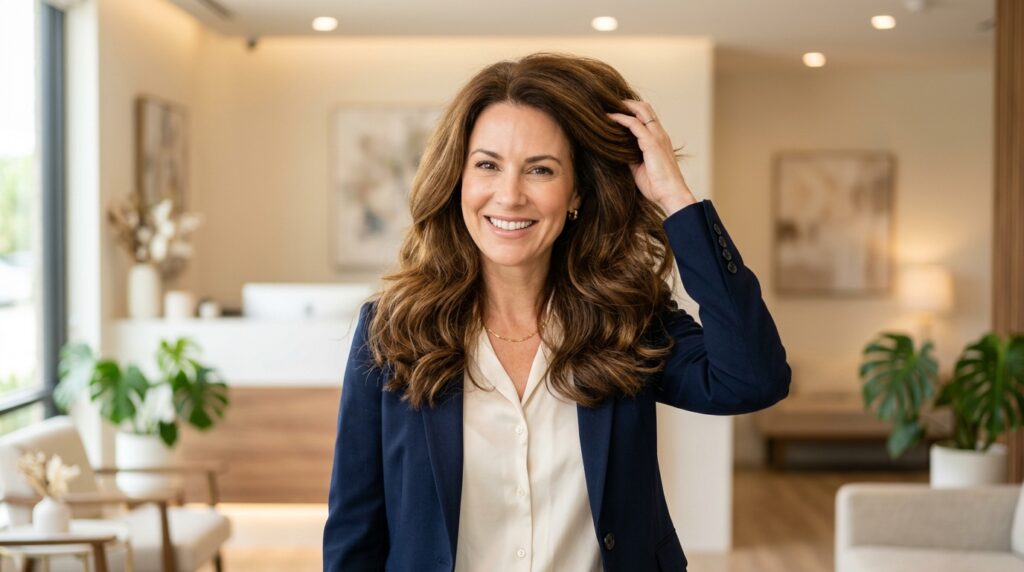
Hair thinning can affect your confidence and overall appearance, but with the right treatment, healthy and fuller hair is possible. At Skin Esthetics Clinic our advanced hair thinning treatment solutions are designed to strengthen weak roots, reduce excessive shedding, and improve overall hair density.
We focus on restoring scalp health to create the perfect environment for natural hair growth.Thinning hair is not something you have to accept. And the sooner you act, the more we can do.
What Is Hair Thinning?
Hair thinning is a gradual reduction in hair density and strand diameter. Unlike sudden shedding, it develops slowly over months or years. You may not notice it at first. Then one day the light catches your scalp in the mirror and the change becomes undeniable.
It happens when hair follicles begin to miniaturise. Each growth cycle produces a finer, shorter strand than the one before. Over time, those follicles produce hair so fine it becomes invisible to the naked eye. Eventually, without treatment, they stop producing hair altogether.
Thinning hair affects men and women of all ages. It is not purely a sign of aging. It is a clinical condition with identifiable causes and effective treatments.
What Is the Difference Between Hair Thinning and Hair Loss?
Hair loss and hair thinning are related but distinct conditions. Hair loss refers to hair falling out from the root, leaving the follicle empty.
Hair thinning refers to follicles still producing hair, but that hair becoming progressively finer, weaker, and less dense over time.
Is Hair Thinning Permanent or Reversible?
It depends on the cause and how long the condition has been present. Hair thinning caused by stress, nutritional deficiency, hormonal shifts, or scalp inflammation is often reversible with the right treatment. The follicles are dormant, not dead.
Hair thinning driven by genetics and long-term DHT exposure leads to follicle miniaturisation that becomes permanent if left untreated for too long. Once a follicle is completely destroyed, it cannot be reactivated.
This is why early hair thinning treatment matters. The window for reversal is open now. It will not stay open indefinitely.
How Hair Thinning Affects Your Confidence and Daily Life?
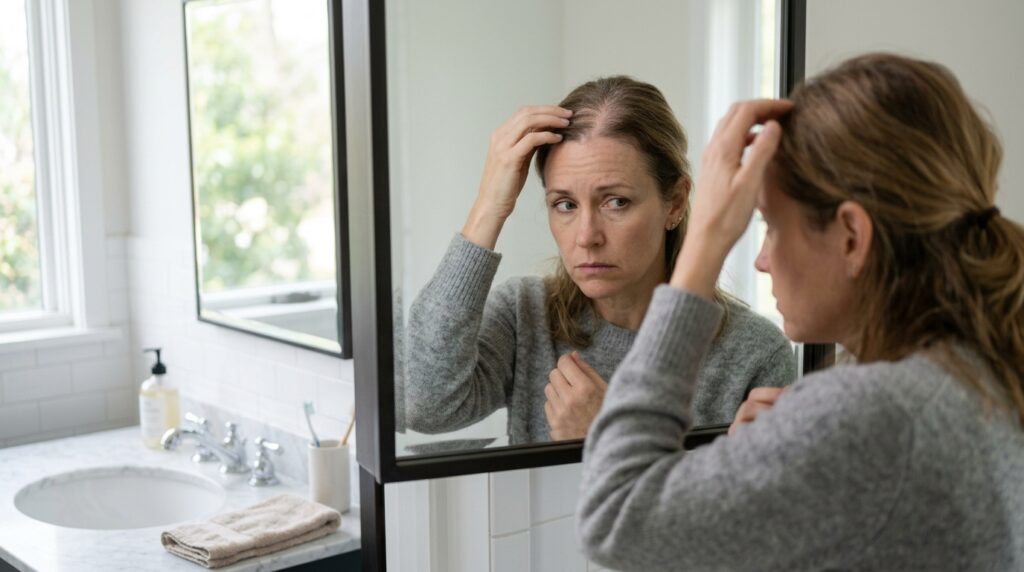
Hair thinning does more than change how you look. It changes how you feel about yourself. Patients at Skin Esthetics Clinic regularly describe avoiding social situations, spending more time trying to style their hair to cover thinning areas, and feeling self-conscious in photographs.
For women especially, hair is deeply tied to identity and femininity. Thinning hair after childbirth, during menopause, or in your thirties when it is least expected can feel isolating. You are not alone in feeling this way. And there is real, effective help available right here in Romford.
What Causes Hair Thinning?
Hair thinning rarely has one single cause. In most patients, several factors combine to disrupt the hair growth cycle. Understanding what is driving your specific thinning is what makes treatment effective.
Hormonal Changes
Hormones regulate the hair growth cycle directly. When they shift, the follicle responds. Oestrogen supports hair in its growth phase. When oestrogen drops during menopause, follicles spend less time growing and more time resting. The result is progressively thinner, less dense hair.
Nutritional Deficiencies
Hair follicles are nutritionally demanding. They need a consistent, adequate supply of iron, ferritin, vitamin D, biotin, zinc, and protein to complete each growth cycle.
When any of these fall below optimal levels, the follicle enters a resting phase early and shedding increases.
Stress and Telogen Effluvium
Chronic stress elevates cortisol. High cortisol disrupts the hair growth cycle by pushing follicles out of the active growth phase and into a resting phase.
This is the mechanism behind telogen effluvium widespread shedding that typically begins two to three months after the triggering stress event.
Genetics and Androgenetic Alopecia
Genetic hair thinning (androgenetic alopecia) is the most common form of progressive thinning in both men and women. It is driven by inherited sensitivity of the follicle to dihydrotestosterone. DHT binds to receptors in the follicle and gradually shrinks it over successive growth cycles, producing finer and shorter strands until growth stops.
Scalp Health and Follicle Miniaturisation
An inflamed, congested, or imbalanced scalp directly impairs follicle function. Seborrhoeic dermatitis, excess sebum, product buildup, and scalp inflammation all create an environment where follicles cannot perform their growth cycle properly.
Over time, chronic scalp inflammation accelerates miniaturisation turning a manageable condition into a progressive one.
Scalp health is foundational to hair density. Treating the scalp is always part of treating thinning.
Lifestyle Factors
Poor nutrition deprives follicles of the vitamins, minerals, and protein they need. Inadequate sleep disrupts the overnight cellular repair cycle that supports hair growth.
Smoking reduces blood flow to the scalp, starving follicles of oxygen and nutrients. Heavy alcohol consumption depletes zinc and B vitamins both essential for healthy hair growth.
These lifestyle factors rarely cause thinning in isolation. But they compound every other cause and slow down recovery from every treatment. Addressing them is part of every treatment plan we build.
Hair Care Damage
Repeated bleaching, colouring, relaxing, and perming weaken the hair shaft at a structural level. This does not directly cause follicle miniaturisation but it does cause breakage that mimics thinning.
A head of hair that is breaking off two centimetres from the scalp will look and feel thin even if the follicles are healthy.
Types of Hair Thinning We Treat at Skin Esthetics Clinic
Female Hair Thinning
Female hair thinning is more common than most people realise. Around 40% of women experience noticeable hair thinning by the age of 50.
It presents differently to male thinning usually as a widening parting, reduced ponytail thickness, or overall loss of volume rather than a defined receding pattern.
Male Hair Thinning
Male hair thinning typically follows a defined pattern starting at the temples and crown and progressing outward.
It is driven primarily by genetics and DHT sensitivity, beginning in some men as early as their twenties.
Crown Thinning
Crown thinning is one of the most common presentations of androgenetic alopecia in men. The hair at the top of the scalp thins progressively while the sides and back remain relatively dense. Many patients first notice it when someone photographs them from above.
Thinning Hair at the Front and Temples
Thinning at the frontal hairline and temples affects both men and women. In men it is typically the first sign of androgenetic alopecia. In women it is often linked to traction alopecia from tight hairstyles, hormonal shifts, or frontal fibrosing alopecia.
Receding Hairline Thinning
A receding hairline is one of the earliest signs of hair thinning in men and is increasingly common in women with traction related loss or frontal fibrosing alopecia.
The hairline moves progressively backward, creating an increasingly high forehead and temples.
Menopause Related Hair Thinning
Menopause is one of the most significant hormonal events in a woman’s life. The drop in oestrogen that accompanies menopause removes a key protective factor for hair follicles.
This form of thinning responds well to treatment when the hormonal context is understood and addressed. PRP therapy, exosome treatment, and targeted nutritional support all support follicle recovery in post-menopausal women.
Postpartum Hair Thinning
After childbirth, oestrogen levels drop sharply. This pushes large numbers of follicles into the resting phase simultaneously triggering widespread shedding that typically peaks around three to four months after delivery.
For most women, postpartum thinning resolves within six to twelve months.
At Skin Esthetics Clinic, we treat postpartum hair thinning with targeted nutritional support, scalp health treatment, and gentle clinical therapies appropriate for the recovery stage.
Hair Thinning Treatment Options at Skin Esthetics Clinic Romford
Every treatment plan at Skin Esthetics Clinic is built around your specific diagnosis. We combine the right treatments in the right sequence for your individual condition, scalp type, and goals.
PRP Therapy for Hair Thinning
Platelet-rich plasma therapy is one of the most effective non-surgical hair thinning treatments available with strong clinical evidence behind it.
We draw a small blood sample, concentrate the growth factors through centrifugation, and inject the plasma directly into areas of thinning across the scalp.
Exosome Therapy for Thinning Hair
Exosome therapy represents the most advanced option we offer for hair thinning. Exosomes are cell-signalling particles loaded with growth proteins and regenerative signals.
Applied to the scalp, they communicate directly with follicle cells and switch on repair and regeneration processes at a cellular level.
Microneedling for Scalp and Hair Density
Scalp microneedling creates controlled micro-channels in the scalp using fine needles.
This stimulates collagen production, increases blood flow to follicles, and triggers the scalp’s natural wound-healing response encouraging follicles in the resting phase to re-enter the growth cycle.
Trichology Consultation and Scalp Assessment
Every patient at Skin Esthetics Clinic begins with a full trichology consultation. Our trichologist examines your scalp under trichoscopy, assesses hair density and follicle health, reviews your medical history, and identifies the specific causes of your thinning.
It is a thorough clinical assessment that forms the foundation of everything we do. Getting the diagnosis right is what makes the treatment work.
Scalp Health Treatment
Scalp health is the foundation of hair density. When the scalp is inflamed, congested, or microbiome-imbalanced, follicles cannot function properly regardless of how good your other treatments are.
Our scalp health protocols use medical-grade products and professional treatments to rebalance the scalp environment, reduce inflammation, control excess sebum production, and create the conditions that hair needs to grow. Cleansing, exfoliation, and hydration of the scalp are all part of the process.
Personalised Hair Thinning Treatment Programme
For patients with complex or progressing thinning, a single treatment is rarely enough. Our personalised programme combines the right clinical treatments in the right sequence alongside a home care routine and nutritional guidance tailored to your specific condition.
We track your progress at every stage and adjust the plan based on how your scalp and follicles respond. Treatment should adapt to you. Not the other way around.
Natural Treatment for Hair Loss and Thinning Hair
Many patients come to the Skin Esthetics Clinic having already tried natural approaches. Some have helped. Most have not delivered the results they hoped for. Here is an honest assessment of what the evidence supports.
What Natural Approaches Support Hair Thinning Treatment?
Several natural ingredients have genuine clinical support for their role in hair health:
- Rosemary oil has shown comparable results to minoxidil in some studies for androgenetic alopecia when applied consistently to the scalp. It improves scalp circulation and reduces DHT activity locally.
- Castor oil improves scalp hydration and creates a protective coating around the hair shaft.
- Caffeine applied topically has been shown to penetrate the follicle and counteract the effects of DHT at a local level. Caffeine-based shampoos and serums are a reasonable addition to a broader treatment plan.
- Biotin supplementation supports keratin production and is particularly useful when deficiency is present. It is less effective when levels are already adequate.
- A balanced diet rich in protein, iron, zinc, and vitamins B and D provides the nutritional foundation all follicles need. No clinical treatment works as well in a nutritionally depleted body.
When Natural Treatment Is Not Enough?
Natural approaches support hair health. They do not reverse clinically established thinning caused by genetic follicle miniaturisation, hormonal imbalances, or advanced nutritional deficiency.
If you have been using natural treatments for three to six months without meaningful improvement, your thinning has a clinical driver that needs professional hair thinning treatment.
How We Diagnose Hair Thinning at Skin Esthetics Clinic
Trichoscopy and Scalp Analysis
We examine your scalp and hair follicles under trichoscopy a non-invasive tool that magnifies the scalp to reveal follicle health, miniaturisation patterns, scalp inflammation, and early signs of scarring.
This gives us precise, objective data about your specific thinning pattern and its stage.
Hair Density and Pull Test Assessment
We measure hair density across different areas of the scalp counting hairs per square centimetre and comparing density between affected and unaffected areas. These two tests together tell us how active your thinning is and how fast it is progressing.
Medical History and Hormonal Review
Your health history tells us a great deal about the likely driver of your thinning. We ask about thyroid conditions, hormonal changes, medications, recent illnesses, stress events, and family history of hair thinning or alopecia.
Connecting your thinning to a systemic or hormonal cause changes the treatment approach completely.
Nutritional Screening and Blood Tests
Where nutritional deficiency or hormonal imbalance is suspected, we recommend targeted blood tests.
We screen for ferritin, iron, vitamin D, zinc, thyroid function, and hormonal markers. Results give us objective clinical data to work with and often reveal deficiencies that have been present for years without detection.
What to Expect From Hair Thinning Treatment Step by Step
- Step 1 Free Consultation and Hair Thinning Assessment
Step 2 Personalised Treatment Plan
Step 3 In Clinic Treatment Sessions
Step 4 Home Care and Aftercare Routine
Step 5 Progress Review and Maintenance
Before and After Real Hair Thinning Results
Real results from real patients tell the story more clearly than any promise we can make.
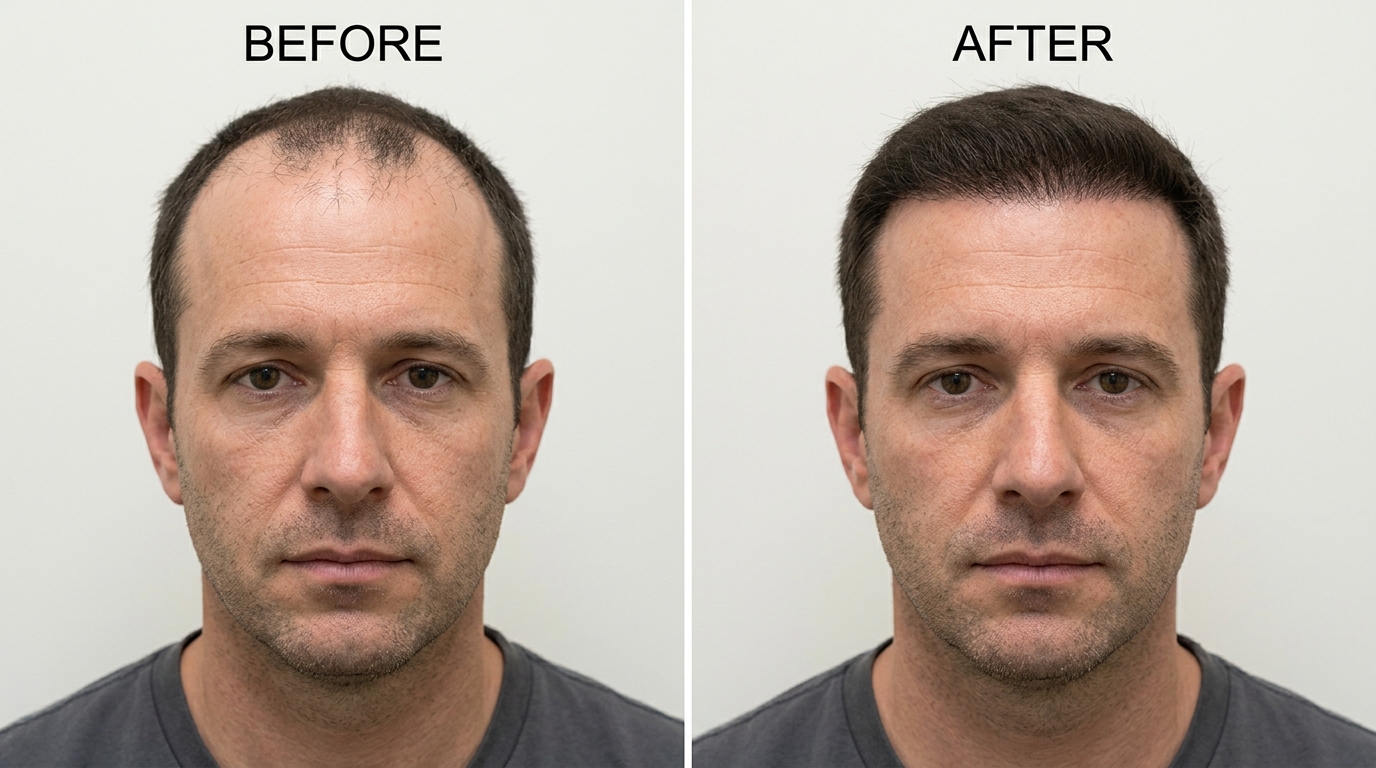
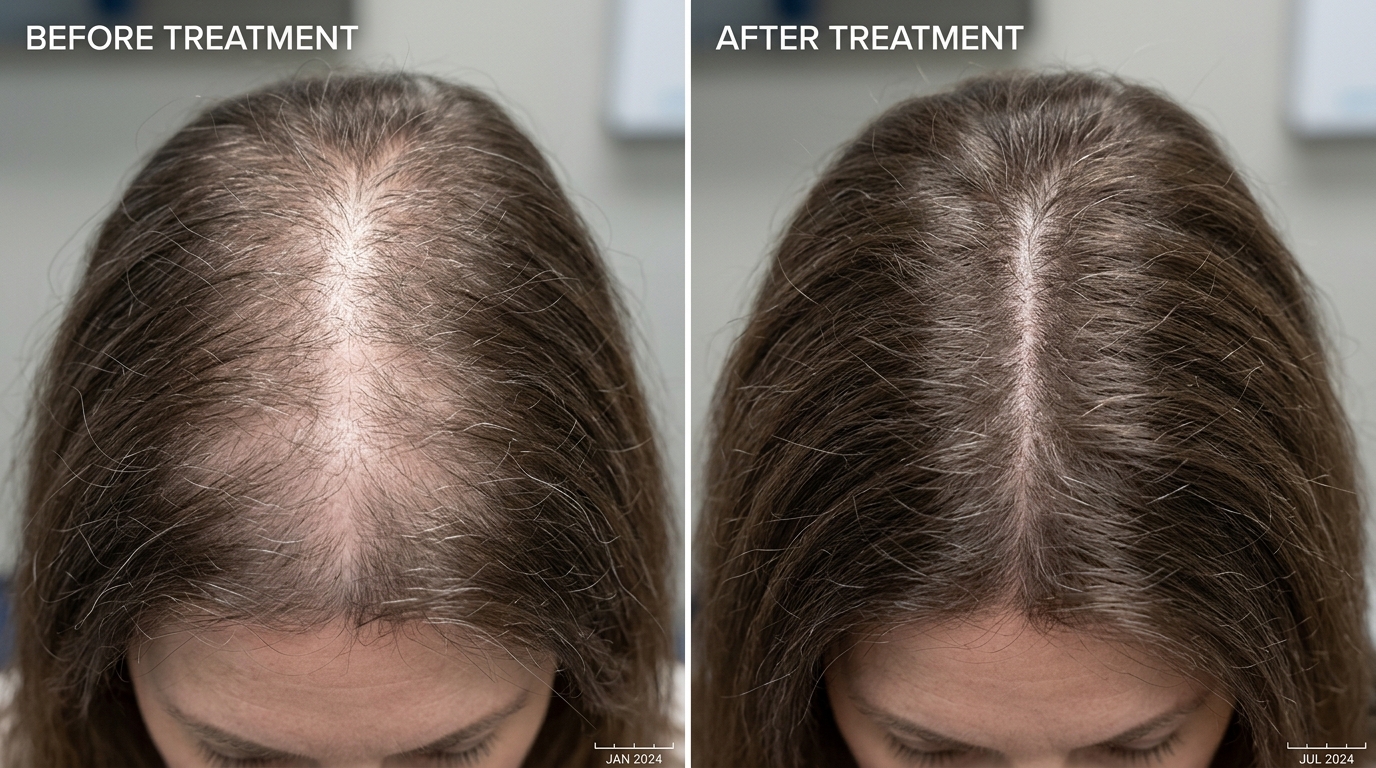
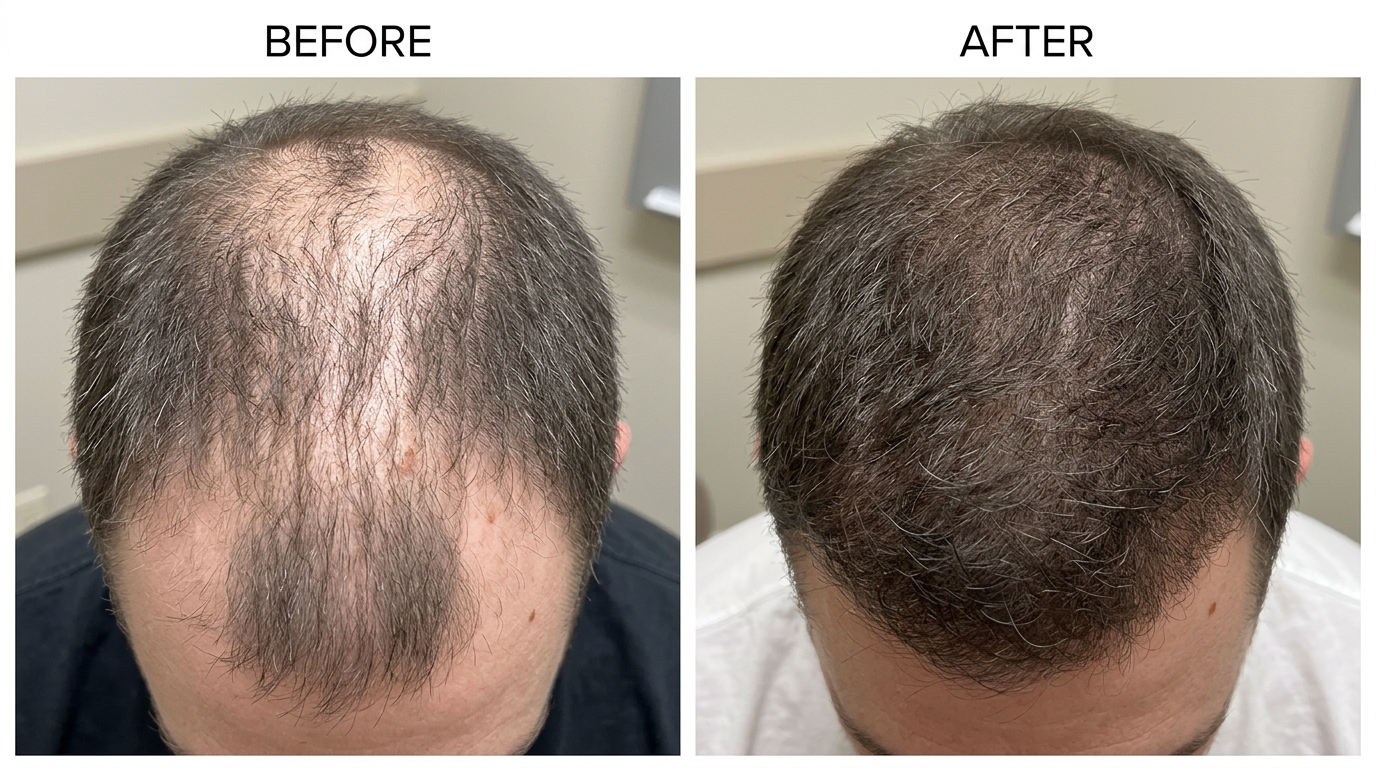
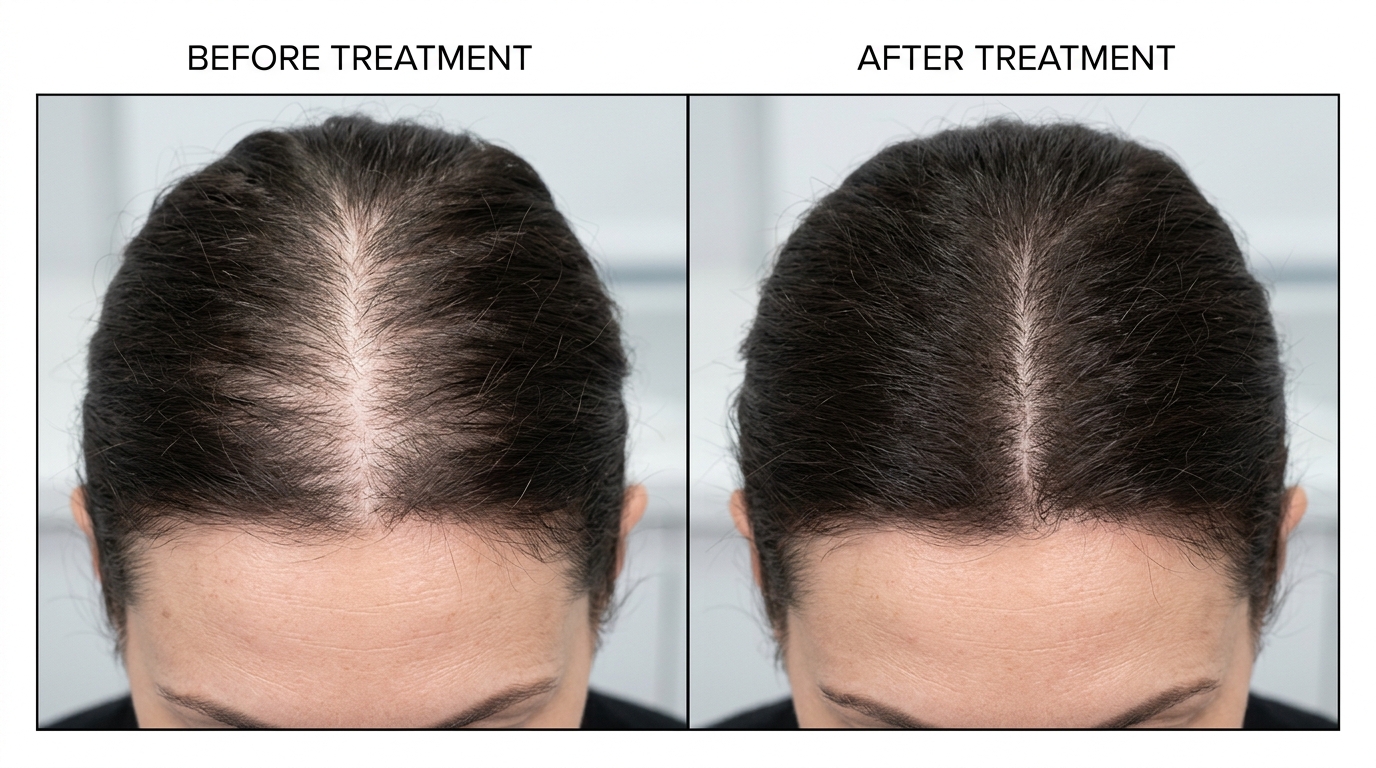
Results vary from patient to patient depending on the type of thinning, its duration, and how consistently the treatment plan is followed. At your free consultation, we give you a realistic expectation based on your specific diagnosis and not a best-case scenario.
Who Is a Good Candidate for Hair Thinning Treatment?
You are likely a good candidate if you:
- Have noticed progressive thinning across the scalp, crown, temples, or frontal hairline
- Have been experiencing increased daily shedding over the past three to six months
- Have a family history of hair thinning or androgenetic alopecia
- Are experiencing hair thinning related to menopause, postpartum hormonal changes, or thyroid disorder
- Have tried over-the-counter hair thinning treatment products with limited or no results
- Still have active follicles in the affected area that can be stimulated
- Are in good general health with no untreated underlying conditions
- Are committed to following a treatment plan and home care routine
- Live in or around Romford, Hornchurch, Ilford, Barking, Dagenham, Chadwell Heath, or East London
The earlier treatment begins, the more follicles we can preserve and reactivate.
Who Is Not Suitable for Hair Thinning Treatment?
You may not be a suitable candidate if you:
- Have advanced scarring alopecia where follicles are permanently destroyed
- Are currently pregnant and require treatments that are contraindicated during pregnancy
- Have an active scalp infection or open wounds on the scalp
- Have a blood clotting disorder that prevents PRP therapy
- Are undergoing active chemotherapy or radiation treatment
- Have not yet had a proper diagnosis of your specific thinning type
We always tell you honestly if a treatment is not appropriate for you. Where possible, we suggest an alternative approach or refer you to the right specialist.
Hair Thinning Prevention Tips From Our Specialists
Best Ingredients for Thinning Hair
Look for products and supplements containing:
- Rosemary oil
- Caffeine
- Biotin
- Collagen peptides
- Zinc
- Iron and protein
What to Avoid With Thinning Hair
- Tight hairstyles that pull at the scalp and hairline
- Sulphate-heavy shampoos that strip the scalp barrier and trigger excess sebum production
- Heat styling without thermal protection
- Harsh chemical treatments including bleach and relaxers
- Crash diets and restrictive eating that deprive follicles of the nutrients they need
- Skipping meals — follicles are one of the first systems the body deprioritises under caloric restriction
Daily Habits That Support Hair Growth
- Scalp massage for four to five minutes every day increases blood flow to follicles. Use fingertips not nails
- Sleep seven to nine hours each night. The overnight cellular repair cycle is when follicles do much of their growth work. Chronic sleep deprivation directly impairs this process.
- Exercise regularly. Aerobic exercise improves scalp circulation and reduces systemic cortisol levels.
- Manage stress actively.
Why Choose Skin Esthetics Clinic for Hair Thinning Treatment in Romford?
Every patient at Skin Esthetics Clinic begins with a full trichology consultation before a single treatment is recommended.
We examine your scalp with clinical tools, review your medical history thoroughly, and build a complete picture of your specific thinning pattern, scalp condition, hormonal profile, and nutritional status.
No two patients receive the same treatment plan. Your condition, your goals, and your response to treatment shape everything we do.
Book your free hair thinning consultation today and take the first real step toward thicker, healthier hair.
Conclusion
Thinning hair does not have to define how you feel about yourself. Whether you are a woman dealing with postpartum shedding, menopause-related density loss, or female pattern thinning, or a man watching his hairline and crown change year by year, there are treatments that work and a team in Romford that knows exactly how to deliver them.
Book your free hair thinning consultation today and take the first real step toward thicker, healthier hair.
FAQs
What is the most effective treatment for thinning hair?
The most effective treatment depends on the cause and stage of your thinning. PRP therapy combined with microneedling and a targeted home care routine is one of the strongest non-surgical hair thinning treatment combinations available.
Can thinning hair grow back?
In many cases, yes. When follicles are dormant but still intact, clinical treatment can reactivate them. Hair thinning caused by nutritional deficiency, stress, hormonal shifts, or scalp inflammation often reverses significantly with the right treatment.
Is hair thinning treatment suitable for women?
Absolutely. We treat a large number of female patients at Skin Esthetics Clinic.
How long does hair thinning treatment take to work?
Most patients see early signs of improvement within eight to twelve weeks. Meaningful density improvement typically becomes visible between three and six months. Full results from a complete treatment course usually show at the six to twelve month mark.
What causes hair thinning in women?
The most common causes of hair thinning in women are hormonal changes including menopause and PCOS, nutritional deficiencies particularly iron and vitamin D, postpartum hormonal shifts, stress-driven telogen effluvium, genetic sensitivity to DHT, thyroid disorders, and scalp inflammation.
What causes hair thinning in men?
The primary cause of hair thinning in men is androgenetic alopecia driven by genetic DHT sensitivity. Other contributors include nutritional deficiency, chronic stress, thyroid disorders, anemia, scalp inflammation, and lifestyle factors.
Is hair thinning treatment painful?
Most treatments are comfortable and well tolerated. PRP injections feel like a mild scratch. Microneedling produces a light vibration sensation on the scalp. Scalp health treatments are completely painless. We use topical numbing where needed to ensure your comfort throughout every session.
How much does hair thinning treatment cost in Romford?
Treatment cost depends on your diagnosis, the treatments recommended, and the number of sessions required. At your free consultation, we provide a full, transparent cost breakdown before you commit to anything.
Can menopause cause hair thinning?
Yes. Menopause is one of the most significant hormonal drivers of hair thinning in women.
What is the difference between hair thinning and hair loss?
Hair thinning refers to follicles producing progressively finer and less dense strands over time. Hair loss refers to follicles stopping production entirely and hair falling out from the root.
Thinning often precedes loss. Treating thinning early prevents it from progressing to loss in many cases.
Can stress cause hair thinning?
Yes. Chronic stress elevates cortisol which disrupts the hair growth cycle and triggers telogen effluvium. Stress-driven thinning typically appears two to three months after the stressor and can be significant.