
- ACNE TREATMENT
- Alopecia Treatment
- Tricology
- Exosome Therapy
- Eye brow lift
- Hair Fall Treatment
- PRP
- Micro needling
- HIFU
- Moles, Warts & Skin Tags Removal
- Scalp health treatment
- IV drip (whitening and vitamins)
- Melasma / hyper pigmentation treatment
- Skin booster
- Wrinkle treatment
- Fillers
- Sculptra
- Anti Aging Treatments
- Hair Thining Treatment
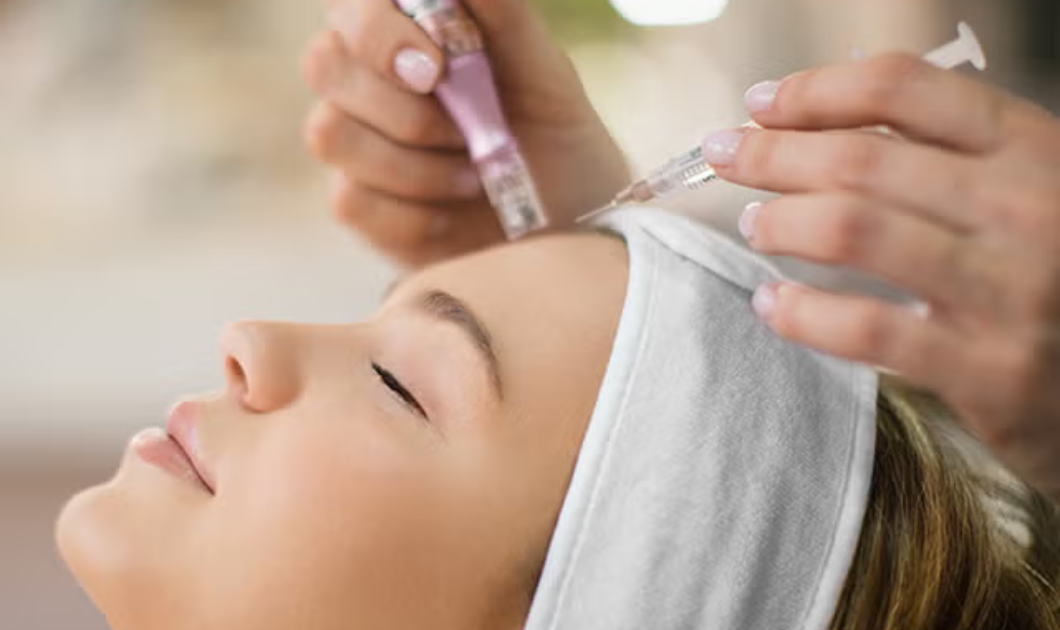
Noticing your hair getting thinner, your parting getting wider, or your hairline slowly changing is not something you should have to accept without answers. Microneedling for hair loss is a clinically proven, non-surgical scalp treatment that stimulates dormant hair follicles, improves scalp health, and triggers your body’s own regenerative response to produce new hair growth.
At Skin Esthetics Clinic in Romford, we deliver medical-grade scalp microneedling as part of a properly diagnosed, personalised hair restoration plan. Every patient begins with a full scalp assessment.
Every session uses sterile, single-use equipment at the precise needle depth required to reach the follicle. And every treatment plan is built around your specific hair loss condition, not a generic protocol applied to everyone who walks through the door.
What Is Microneedling for Hair Loss?
Scalp microneedling also called microneedle therapy for hair loss or MNS — is a treatment that uses a medical-grade device fitted with fine needles to create thousands of controlled micro-channels in the scalp. These micro-channels penetrate to the level of the dermis where the hair follicle and its supporting structures reside.
The controlled micro-injuries trigger the body’s natural wound-healing response. Growth factors are released. Stem cells in the hair bulge area are activated. Blood flow to the scalp increases. The follicle receives the biological signals it needs to re-enter the active growth phase and produce new hair.
How Microneedling Stimulates Hair Growth
When the microneedles penetrate the scalp at follicle depth, they create a controlled injury response in the dermis. The body responds by sending platelets, growth factors, and healing cells to the area.
Platelet derived growth factor, vascular endothelial growth factor, and fibroblast growth factor are all released locally. These are the same growth factors that PRP therapy delivers through injection, microneedling triggers your body to produce them naturally.
Who Is Microneedling for Hair Loss Suitable For?
Microneedling for hair loss is suitable for a wide range of patients. You are likely a good candidate if you:
- Are experiencing progressive hair thinning or hair loss that has not responded adequately to topical treatments alone
- Have been diagnosed with androgenetic alopecia, telogen effluvium, alopecia areata, or traction alopecia
- Have active follicles in the affected area that can be stimulated and reactivated
- Are looking for a non-surgical, evidence-based treatment option
- Want to enhance the effectiveness of existing treatments including minoxidil or PRP
- Are in good general health with no contraindicated scalp conditions
- Are a man or woman experiencing hair loss at any stage of adult life
- Live in or around Romford, Hornchurch, Ilford, Barking, Dagenham, Chadwell Heath, or East London
Microneedling for hair loss produces the strongest results when treatment begins before follicle miniaturisation is advanced. The earlier you start, the more follicles can be reactivated and the better your outcomes.
Microneedling for Hair Loss in Men
Male Pattern Baldness (Androgenetic Alopecia)
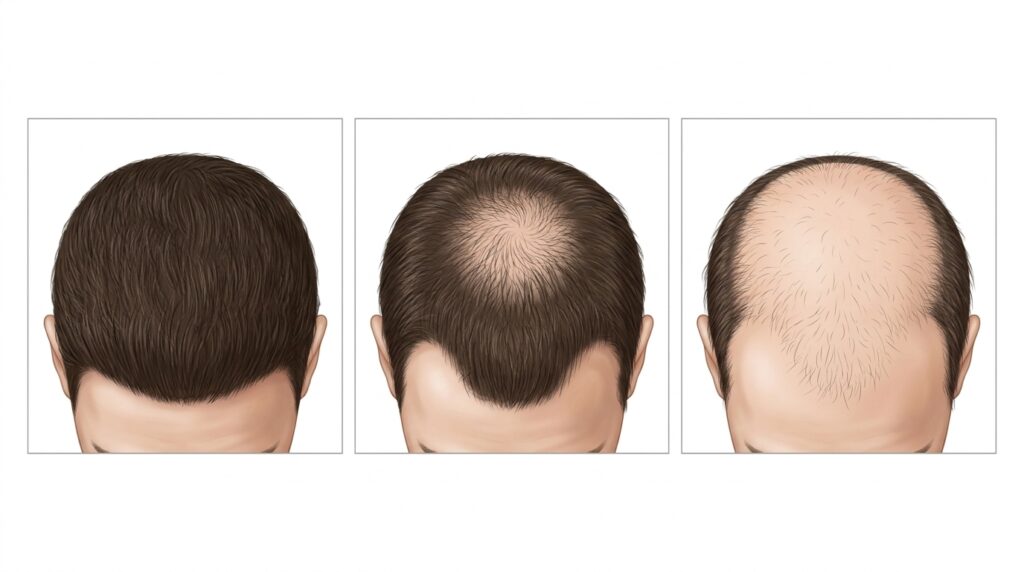
Male pattern baldness is the most common form of hair loss in men. It is driven by genetic sensitivity of the follicle to dihydrotestosterone. DHT binds to androgen receptors in susceptible follicles, shortens the growth cycle, and progressively miniaturises the follicle with each successive hair generation.
Microneedling addresses male pattern hair loss by breaking down scalp fibrosis, stimulating growth factor release, and activating stem cells in the follicle bulge.
Receding Hairline Treatment
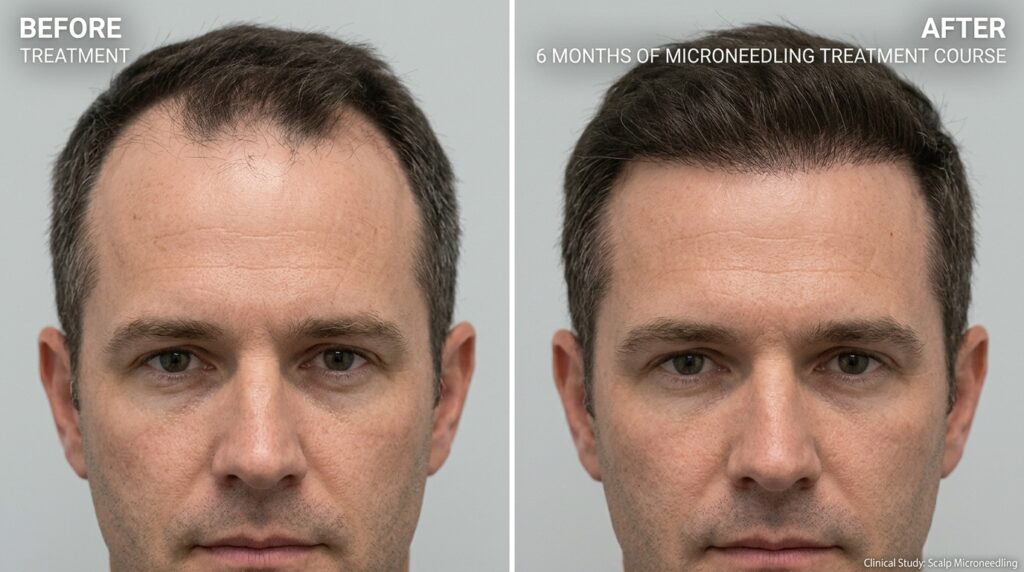
A receding hairline is one of the earliest and most visible signs of male androgenetic alopecia. The frontal hairline and temples are often the first areas to show progressive thinning and recession.
Scalp microneedling targeted at the hairline and temple area stimulates follicles that are still present but producing progressively finer hair.
By delivering growth factors directly to these follicles and improving blood flow to the area, microneedling can slow hairline recession and partially restore density in these regions. Early treatment produces significantly better results than waiting until recession is advanced.
Microneedling for Hair Loss in Women
Female Pattern Hair Thinning
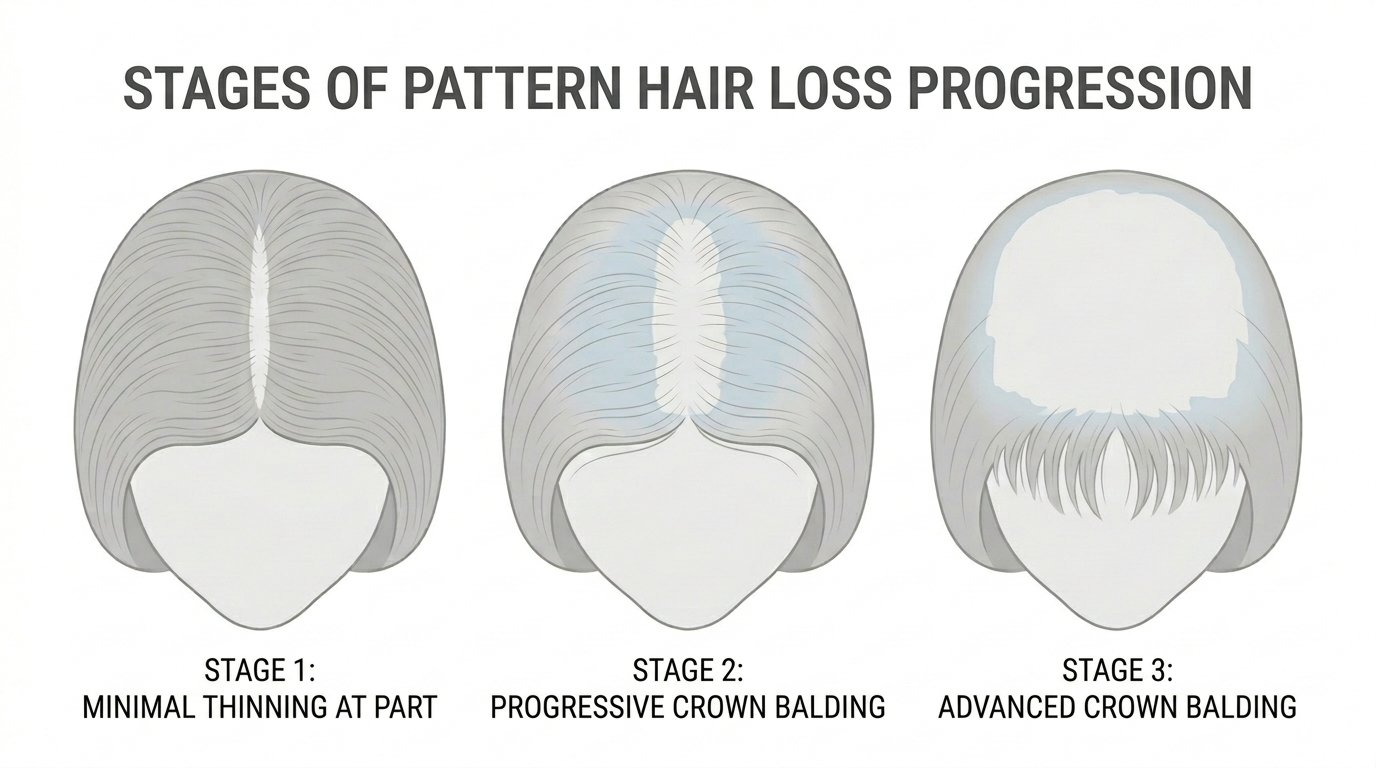
Female pattern hair thinning presents as a progressive reduction in density across the crown and top of the scalp, with the frontal hairline typically preserved. It follows the Ludwig scale rather than the Norwood scale used for men. It affects approximately 40% of women by the age of 50 and is one of the most common conditions we treat at Skin Esthetics Clinic.
Post-Partum and Hormonal Hair Loss
Postpartum hair loss and hormonal hair shedding are forms of telogen effluvium triggered by the sharp hormonal shifts of pregnancy, childbirth, and menopause. Large numbers of follicles enter the resting phase simultaneously and shed two to four months after the trigger event.
Microneedling accelerates recovery from telogen effluvium by pushing follicles back into the growth phase through mechanical stimulation and growth factor activation.
Other Conditions We Treat
Alopecia Areata
Alopecia areata is an autoimmune condition where the immune system attacks healthy hair follicles, producing patchy hair loss. Microneedling has shown promise in clinical studies for alopecia areata. The mechanism involves growth factor stimulation and the disruption of the inflammatory signals that suppress follicle activity in affected patches.
Traction Alopecia
Traction alopecia develops from repeated tension on the hair follicles from tight hairstyles. In the early to mid stages, follicles are damaged but not permanently destroyed. Microneedling can support recovery by improving blood flow to the affected follicles and stimulating regeneration in the damaged follicle structures.
Stress Related Hair Shedding (Telogen Effluvium)
Telogen effluvium is widespread shedding triggered by physical or psychological stress. The follicles are pushed into the resting phase and shed simultaneously. Microneedling supports recovery by activating stem cells in dormant follicles and improving the scalp environment for regrowth.
Who Is NOT a Suitable Candidate for Microneedling For Hair Loss?
Scalp microneedling is not appropriate for everyone. You may not be suitable if you:
- Have an active scalp infection, open wounds, or untreated dermatitis on the scalp
- Are currently undergoing chemotherapy or radiation treatment
- Have a blood clotting disorder or are taking blood thinning medications
- Have advanced scarring alopecia where follicles are permanently destroyed
- Are currently pregnant
- Have a history of keloid scarring
- Have active psoriasis or eczema in the treatment area
- Have had recent scalp surgery or procedures in the treatment area
We conduct a thorough medical history review and scalp assessment at every consultation to identify contraindications before recommending treatment. If microneedling is not appropriate for you, we will tell you honestly and discuss what alternatives may be suitable.
Our Microneedling Hair Loss Treatment Process at Skin Esthetics Clinic
Step 1 In-Depth Scalp and Hair Loss Assessment
Every patient begins with a full scalp and hair loss assessment. We examine your scalp using trichoscopy, assess follicle health and density, review your medical history and any medications you take, and identify the specific type and stage of your hair loss.
This assessment determines whether microneedling is appropriate, what needle depth and protocol will be used, and what combination treatments will produce the best results for your specific condition.
Step 2 Personalised Treatment Plan
Based on your assessment, we build a treatment plan specific to your hair loss type, your scalp condition, and your goals. We explain exactly what microneedling will do for your specific condition, how many sessions we recommend, what we will apply to the scalp post-treatment, and what results you can realistically expect. You leave your first consultation with a clear, actionable plan.
Step 3 The Microneedling Treatment Session
On the day of treatment, we cleanse your scalp thoroughly and apply a topical numbing preparation. We allow adequate time for the numbing to take full effect before the device passes begin. We use a medical-grade microneedling device with sterile, single-use needle cartridges calibrated to the appropriate depth for your hair loss pattern and scalp condition.
Step 4 Aftercare and Recovery Guidance
Following your session, we provide a full written aftercare guide. Your scalp will be red and mildly tender for 24 to 48 hours. This is a normal part of the healing response and not a cause for concern. We advise on what to avoid, what products are safe to use, when you can wash your hair, and how to protect the scalp during the recovery window. We are available to answer any questions that arise between sessions.
Step 5 Progress Review and Follow-Up Sessions
We review your results at regular intervals throughout your treatment course. Trichoscopy assessments at review appointments allow us to measure changes in hair density and follicle health objectively. If your plan needs adjusting needle depth, combination treatments, session frequency we adjust it. Once you complete your initial course, we move you to a maintenance schedule to protect and sustain your results.
Microneedling Before and After Results
Real patient results from real microneedling sessions tell the story more clearly than any description we can provide.
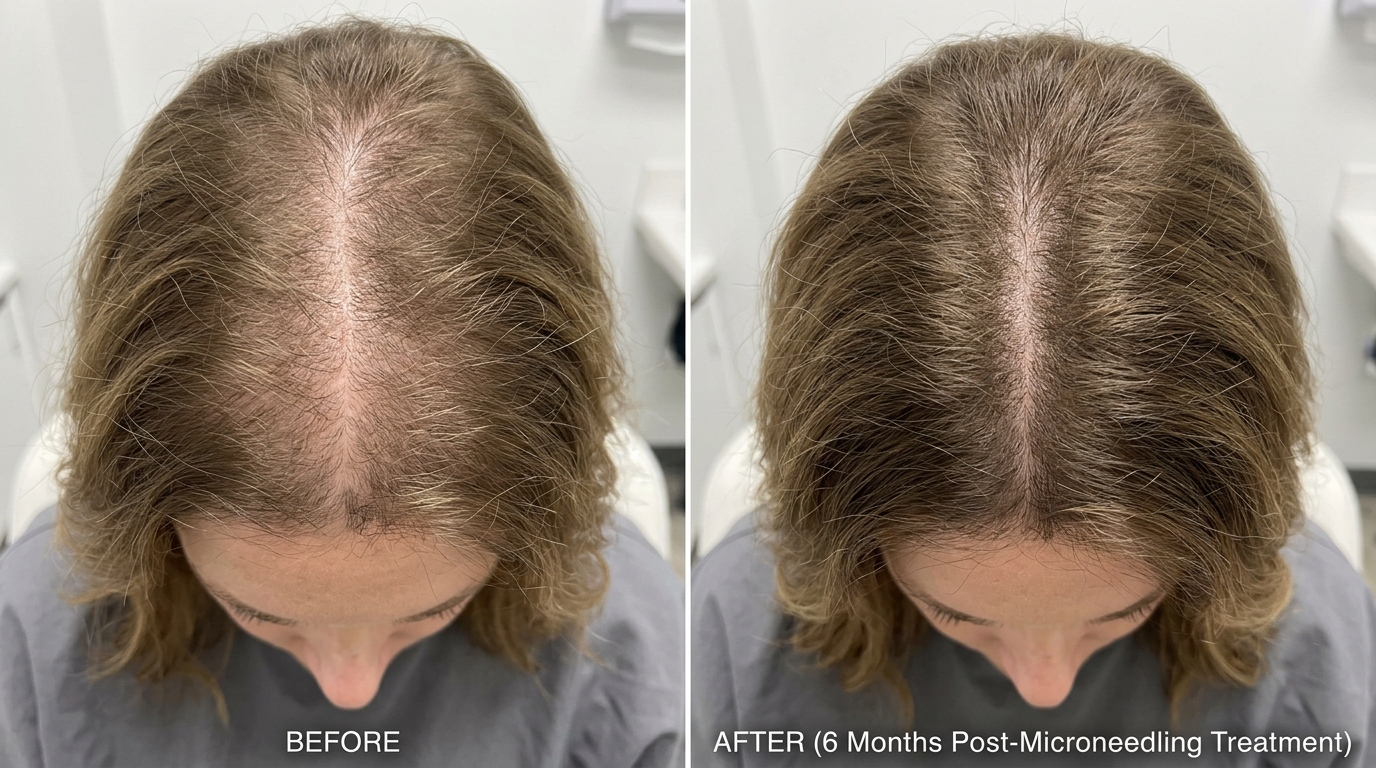
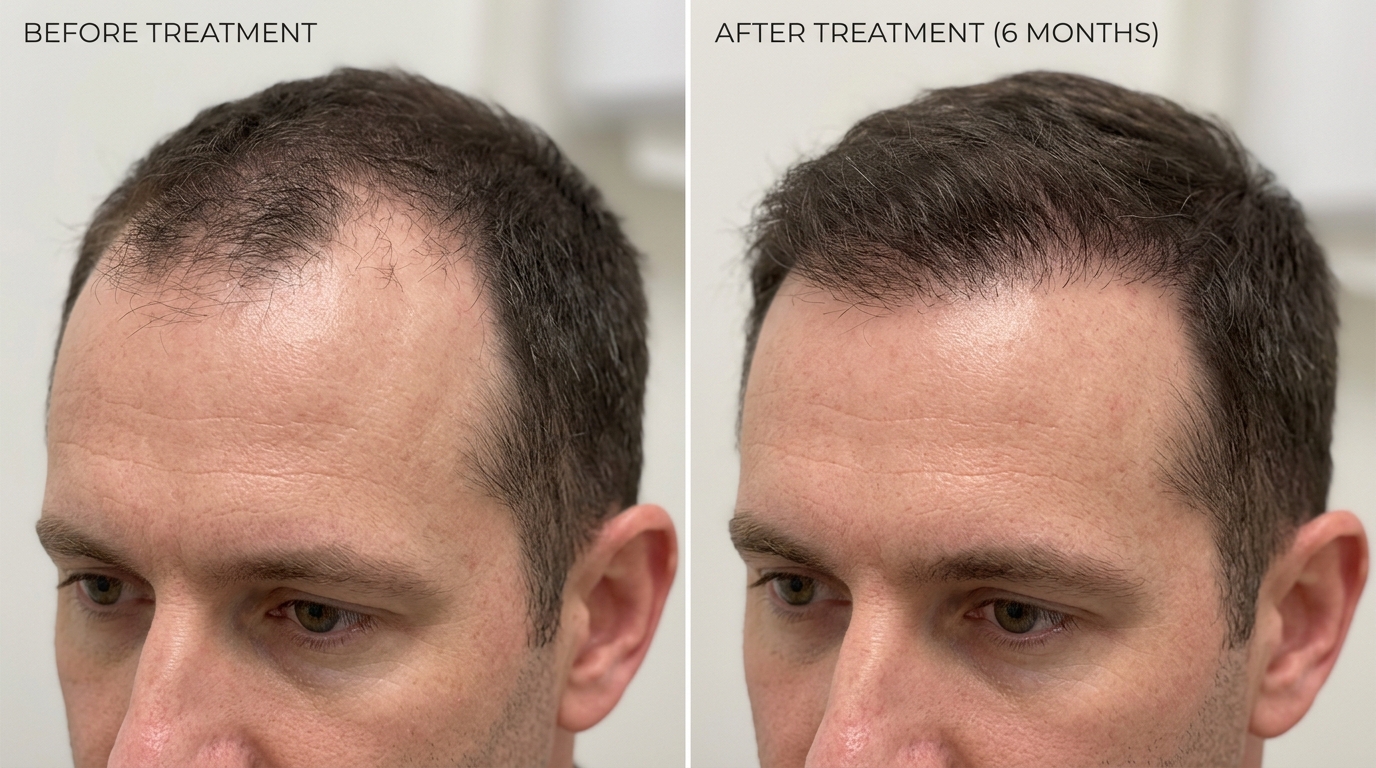
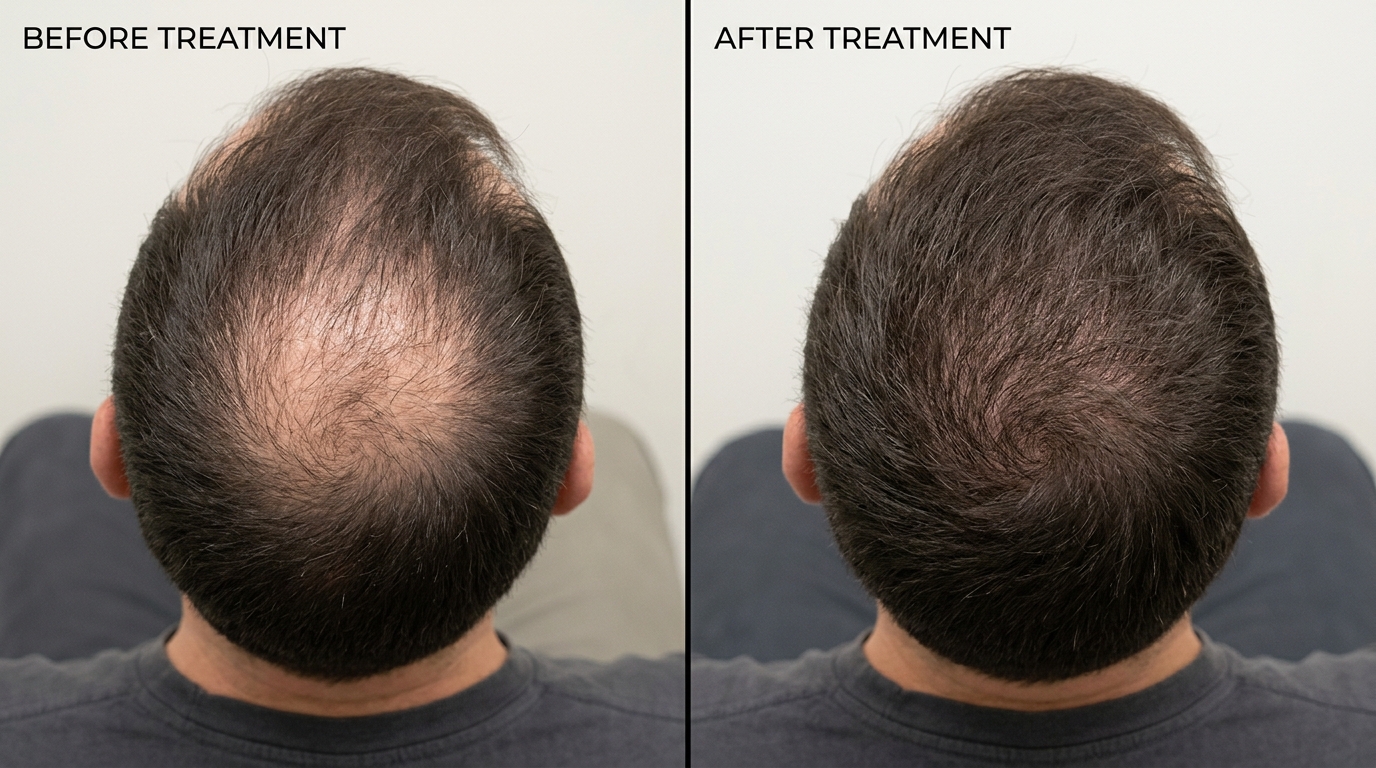
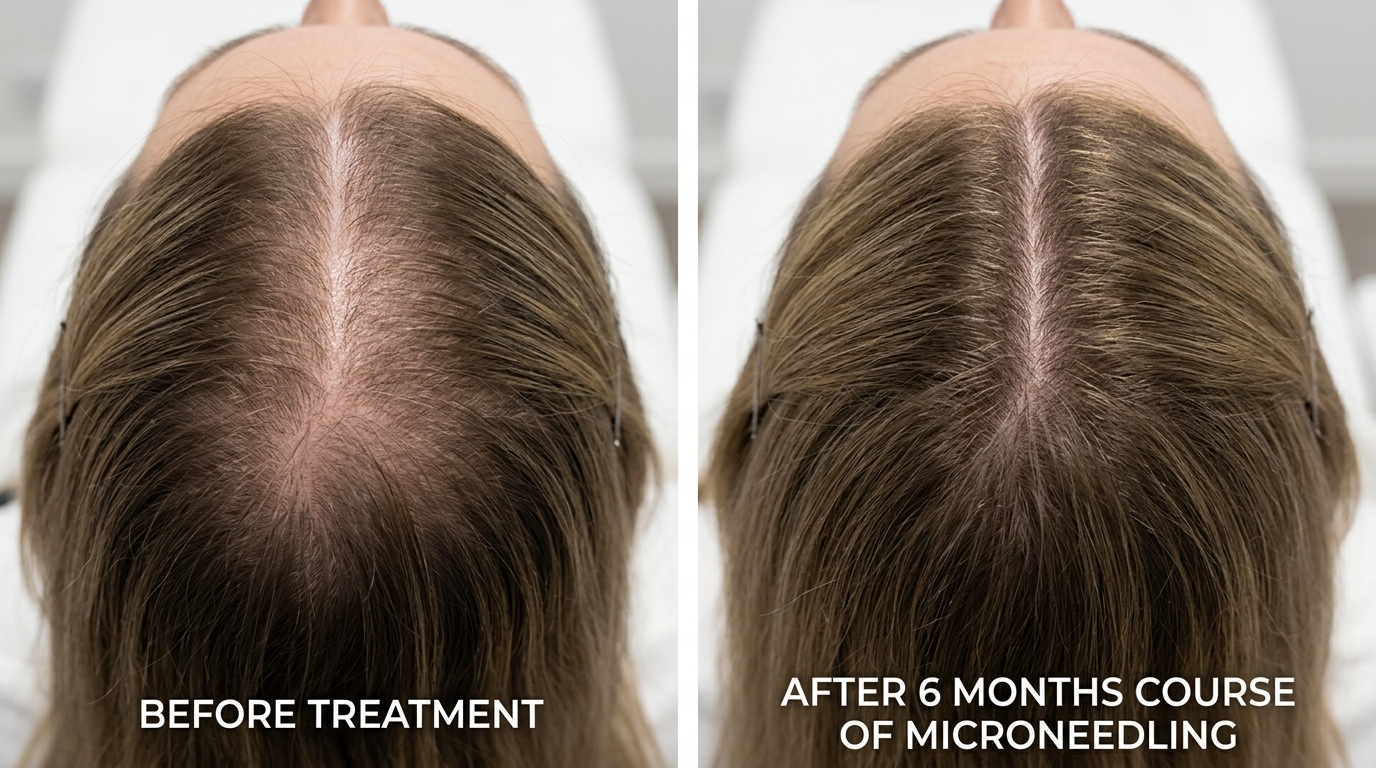
Microneedling for hair loss before and after results vary between patients depending on the type of hair loss, how long it has been present, the stage of follicle miniaturisation, and how consistently the treatment programme is followed. Patients with early to mid-stage hair loss and active follicles consistently show the strongest before and after improvements.
At your free consultation, we give you a realistic expectation of what microneedling can achieve for your specific hair loss condition based on your diagnosis — not a best-case scenario.
How Often Should You Have Microneedling for Hair Loss?
The recommended microneedling session frequency depends on your specific hair loss condition and the needle depth used in your treatment.
For most patients, an initial course of six to eight sessions spaced two to four weeks apart produces the best outcomes. At this frequency, each session builds on the healing and growth factor activity initiated by the previous one creating a cumulative biological effect that produces stronger results than isolated sessions.
After the initial course, most patients move to a maintenance schedule of one session every one to three months. Maintenance sessions sustain the growth factor stimulation, keep the scalp environment optimised for hair growth, and prevent regression of the results achieved during the initial course.
The microneedling for hair loss course structure we recommend at Skin Esthetics Clinic is based on the protocols used in published clinical studies and adapted to the individual patient’s response at each review appointment.
Microneedling for Hair Loss at Home vs Professional Clinic Treatment
Home microneedling devices like dermarollers and stamp devices are widely available and marketed as a convenient, affordable alternative to clinic treatment. Here is an honest comparison of what they can and cannot deliver.
Needle Depth:
Home devices operate at needle depths of 0.2 to 0.5 millimetres. At this depth, they reach the epidermis and the very superficial dermis. They produce enough stimulation to slightly improve topical product absorption and provide mild surface-level stimulation. They do not reach the depth of the hair follicle or the dermal papilla where clinical microneedling produces its primary effect.
Clinical microneedling uses medical-grade devices that penetrate to 0.5 to 1.5 millimetres depending on the area and protocol. At this depth, the needles reach the dermis where the follicle bulb and dermal papilla reside. This is the depth required to trigger meaningful stem cell activation, growth factor release, and follicle reactivation.
Other Differences:
Beyond depth, clinical microneedling is delivered with sterile, single-use needle cartridges, calibrated device settings, and a precisely controlled technique.
Home rollers cannot be adequately sterilised between uses. Blunt or contaminated needles cause damage rather than controlled micro-injury, increasing the risk of infection, scarring, and inflammation without delivering therapeutic benefit.
For patients already using a home dermaroller between clinic sessions as part of a supervised protocol, home use can support treatment outcomes. For patients considering home microneedling as a replacement for clinical treatment, the depth limitation means they will not achieve the follicle-level stimulation that produces meaningful hair regrowth.
Microneedling for Hair Loss Side Effects and Safety
Common Side Effects and How Long They Last
Microneedling is a safe and well-tolerated procedure when performed by a trained practitioner using medical-grade equipment. The side effects most patients experience are mild and temporary.
Scalp redness is the most common and typically resolves within 24 to 48 hours. Mild tenderness at the treatment site is normal for 24 to 72 hours following the session. Some patients experience slight swelling in the treated area that resolves within 48 hours. Pinpoint bleeding at the injection site during treatment is normal and expected, it is a sign that the needles are reaching the appropriate depth.
Temporary increased hair shedding in the two to four weeks following the first few sessions is reported by some patients. This is a known phase in the hair growth cycle response to microneedling stimulation and typically resolves as regrowth begins. We advise patients about this possibility at consultation so it does not cause unnecessary concern.
How We Minimise Risk at Our Romford Clinic
At Skin Esthetics Clinic, every microneedling session uses sterile, single-use needle cartridges that are never reused between patients. We follow strict hygiene protocols throughout every session. Our practitioners are trained in follicular anatomy and scalp microneedling technique, ensuring that needle depth, device speed, and pressure are calibrated correctly for each patient and each area of the scalp.
We conduct a full contraindication assessment before every treatment and do not proceed if any factors that increase risk are present. Our aftercare guidance is specific, written, and followed up at your next appointment.
When Microneedling Is Not Recommended
Microneedling should not be performed on an actively infected scalp, on skin with open wounds or active inflammation, in patients with blood clotting disorders, or in patients undergoing chemotherapy. We review all of these factors at consultation and at every subsequent appointment before proceeding with treatment.
Why Choose Skin Esthetics Clinic for Microneedling in Romford?
Many patients come to us having tried home dermarollers or beauty clinic microneedling without meaningful results. The difference is consistently in the depth of the clinical assessment, the quality of the equipment, and the precision of the treatment delivery.
At Skin Esthetics Clinic, every treatment plan is built around a specific diagnosis. Every session uses medical-grade equipment and sterile single-use components.
We combine microneedling with PRP therapy, exosome treatment, scalp health protocols, and targeted home care plans where appropriate because the strongest results come from treatments that work together, not in isolation.
Book Your Microneedling Hair Loss Consultation in Romford
If you are dealing with hair thinning, progressive hair loss, or a receding hairline and want a non-surgical treatment with a strong evidence base, scalp microneedling at Skin Esthetics Clinic is worth a serious conversation.
Your first consultation costs nothing. We assess your scalp, explain your diagnosis clearly, and tell you honestly whether microneedling is the right treatment for your specific condition. If it is, we build you a personalised plan. If another treatment would serve you better, we tell you that instead.
Book your free microneedling hair loss consultation today.
FAQs
Does Microneedling Work For Hair Loss?
Yes. Microneedling for hair loss has a well-established clinical evidence base. Multiple published studies in peer-reviewed dermatology journals demonstrate statistically significant improvements in hair count, hair density, and hair shaft diameter following microneedling treatment.
How Much Does Microneedling Cost in Romford?
Microneedling for hair loss cost at Skin Esthetics Clinic depends on the number of sessions in your treatment course, the size of the area being treated, and whether microneedling is being combined with PRP or other treatments.
Is Scalp Microneedling Painful?
Most patients find scalp microneedling very manageable. Sensitivity varies between patients and between areas of the scalp the hairline tends to be more sensitive than the crown. We always adjust the treatment to your comfort level and encourage you to communicate throughout the session.
How Long Does a Session Take?
A full scalp microneedling session at Skin Esthetics Clinic takes between 45 and 60 minutes.
Can Microneedling Be Combined With Minoxidil or PRP?
Yes and this combination produces significantly better results than either treatment alone.
How Long Do Results Last?
Results from a full microneedling course develop progressively and continue improving for up to six months after the final session as the biological regeneration process continues beneath the scalp surface.
Is Microneedling Suitable for All Hair Types?
Yes. Scalp microneedling is suitable for all hair types and all ethnicities.
Can I Wash My Hair After a Session?
We recommend waiting 24 hours before washing your hair after a scalp microneedling session.
What Should I Avoid Before and After Treatment?
Before your microneedling session, avoid anti-inflammatory medications including ibuprofen for 48 hours as they can reduce the platelet activity that contributes to the healing response. Avoid alcohol for 24 hours before treatment. Do not apply any topical treatments to the scalp on the day of your session.
After treatment, avoid vigorous exercise, saunas, steam rooms, and swimming pools for 48 hours. Avoid direct sun exposure on the treated scalp for 48 hours. Do not use retinoids or active skincare products on the scalp for 72 hours post-treatment. Avoid anti-inflammatory medications for 48 hours after treatment for the same reason as before.