- ACNE TREATMENT
- Alopecia Treatment
- Tricology
- Exosome Therapy
- Eye brow lift
- Hair Fall Treatment
- PRP
- Micro needling
- HIFU
- Moles, Warts & Skin Tags Removal
- Scalp health treatment
- IV drip (whitening and vitamins)
- Melasma / hyper pigmentation treatment
- Skin booster
- Wrinkle treatment
- Fillers
- Sculptra
- Anti Aging Treatments
- Hair Thining Treatment
Your hair tells a story. When it starts thinning your scalp becomes uncomfortable. Most people reach for a new shampoo or try a supplement recommended online treating what they can see rather than what is actually driving the problem.
Trichology treatment works differently. A trichologist looks at your hair and scalp at a clinical level examining your follicles, identifying the root cause of your condition, and building a treatment plan around your specific diagnosis.
At Skin Esthetics Clinic in Romford, that is exactly how we work. If your hair or scalp health is suffering, this is where your answers start.
What Is Trichology?
Trichology is the science of the hair and scalp. It covers the structure, function, and diseases of human hair — from the follicle beneath the skin to the strand you can see and touch. The word comes from the Greek word trichos, meaning hair.
In a clinical setting, trichology is the diagnosis and treatment of disorders and diseases affecting the scalp and hair. It sits at the intersection of dermatology, endocrinology, and nutrition — drawing on all three to understand why hair and scalp problems develop and how to treat them effectively.
Trichologist vs Dermatologist — What Is the Difference?
Both trichologists and dermatologists treat hair and scalp conditions. But they come at it from different directions.
A dermatologist is a medical doctor who specialises in skin, hair, and nails. They diagnose and treat a broad range of skin diseases — acne, eczema, psoriasis, and more. Hair and scalp conditions are part of their remit but not their sole focus.
A trichologist specialises exclusively in hair and scalp science. Every hour of their training, every tool they use, and every treatment they offer is specific to the hair and scalp. That narrow focus gives them an advantage when it comes to diagnosing complex or persistent hair and scalp disorders that general practitioners and dermatologists may overlook or misdiagnose.
For hair loss, scalp disorders, and hair texture problems — a trichologist is the specialist you want.
How Trichology Helps Diagnose Root Causes of Hair Problems
Trichology uses a systematic process of elimination. Your trichologist reviews your medical history, examines your scalp under magnification, assesses your hair density and growth patterns, and considers your lifestyle and diet. The result is a diagnosis that explains not just what is happening to your hair — but why.
That distinction matters. The wrong diagnosis leads to the wrong treatment. The right diagnosis leads to results.
Why Trichology Treatments Are Effective
Most hair treatments fail because they address the surface. A trichology treatment works because it starts underneath it.
Hair follicles sit deep within the scalp. They are affected by blood supply, hormone levels, immune activity, and nutrition. No shampoo or over-the-counter product reaches that level. Trichology does.
The holistic approach is what sets trichology apart. Your trichologist considers your lifestyle, your diet, your stress levels, your medical history, and your scalp health — not just the patches of thinning you can see. Conditions are treated as part of a whole-body picture, which is why outcomes are more lasting than anything you will find on a pharmacy shelf.
Diagnosis is also central to effectiveness. Many people spend months treating the wrong condition with the wrong products. A trichology assessment identifies your specific hair or scalp disorder and targets it directly — cutting through trial and error and giving your hair the right treatment from the start.
Why Choose Skin Esthetics Clinic for Trichology Treatment in Romford?
Romford trichology treatment is something many clinics claim to offer. Few deliver it at a clinical level.
At Skin Esthetics Clinic, trichology is not an add-on service. It is a dedicated discipline. Our trichologist brings specialist knowledge, clinical diagnostic tools, and a patient-first approach that puts your hair and scalp health at the centre of every decision.
We also understand the emotional weight of hair loss and scalp disorders. Losing your hair affects your confidence, your identity, and your daily life. We take that seriously. You will never be rushed through a consultation or given a vague answer about what is causing your condition.
We serve patients from across Romford, Hornchurch, Ilford, Barking, Dagenham, Chadwell Heath, and East London — and we are committed to being the most trusted trichology clinic in the area.
Personalised Diagnosis vs Generic Hair Treatments
Walk into any high street salon or pharmacy and you will find rows of products promising thicker, fuller, healthier hair. Most of them are built around one or two active ingredients applied to everyone regardless of their condition.
Trichology does not work that way. Your scalp is unique. Your hair loss pattern is unique. The combination of factors driving your condition is unique. A personalised diagnosis identifies all of those factors — and your treatment plan is built around them specifically.
The difference in outcomes between a personalised trichology treatment and a generic hair product is not marginal. It is significant. And it shows in the results.
Who Is an Ideal Candidate for Trichology Treatment?
Trichology treatment is suitable for a wide range of patients. You are likely an ideal candidate if you:
- Are experiencing hair thinning, excessive shedding, or patchy hair loss
- Have been diagnosed with alopecia areata, androgenetic alopecia, or telogen effluvium
- Have a scalp condition such as psoriasis, seborrhoeic dermatitis, or folliculitis
- Are dealing with hair breakage, poor hair texture, or chemical damage
- Have tried over-the-counter products and seen no meaningful improvement
- Suspect a hormonal imbalance, nutritional deficiency, or thyroid disorder is affecting your hair
- Are a woman experiencing hair loss related to PCOS, pregnancy, or menopause
- Are a man dealing with progressive hair thinning or male pattern hair loss
- Want a professional diagnosis before committing to a hair transplant or restoration procedure
- Live in or around Romford, Hornchurch, Ilford, Barking, or East London
Trichology treatment is suitable for both men and women across all age groups and ethnicities. The earlier you seek a professional assessment, the more treatment options are available to you.
Common Hair & Scalp Conditions Treated at Skin Esthetics Clinic Romford
Hair Loss Conditions
Hair loss takes many forms. Each type has its own cause, pattern, and treatment pathway. At Skin Esthetics Clinic, we diagnose and treat all of the following:
- Androgenetic alopecia
- Alopecia areata
- Telogen effluvium
- Traction alopecia
- Frontal fibrosing alopecia
- Diffuse alopecia Traumatic hair loss
- Hair loss related to thyroid disorders, iron deficiency, or nutritional imbalance
Scalp Disorders
A healthy scalp is the foundation of healthy hair. When the scalp is inflamed, infected, or imbalanced, hair growth suffers. We assess and treat:
- Seborrhoeic dermatitis
- Psoriasis
- Contact dermatitis
- Folliculitis
- Pityriasis amiantacea
- Excessive scalp oiliness driven by overactive sebaceous glands
- Scalp infections
Hair Shaft & Texture Disorders
Not all hair problems involve hair loss. Damage to the hair shaft affects texture, strength, and manageability. We treat:
- Hair shaft disorders causing brittleness and breakage
- Chemical damage from bleach, relaxers, and permanent colour treatments
- Heat damage from prolonged use of styling tools
- Trichotillomania
- General loss of hair condition, shine, and texture
What Are The Root Causes of Hair & Scalp Problems
Understanding the root cause of your hair or scalp condition changes everything. At Skin Esthetics Clinic, we investigate all of the following as potential drivers during your trichology assessment.
Hormonal Imbalances — Thyroid, PCOS
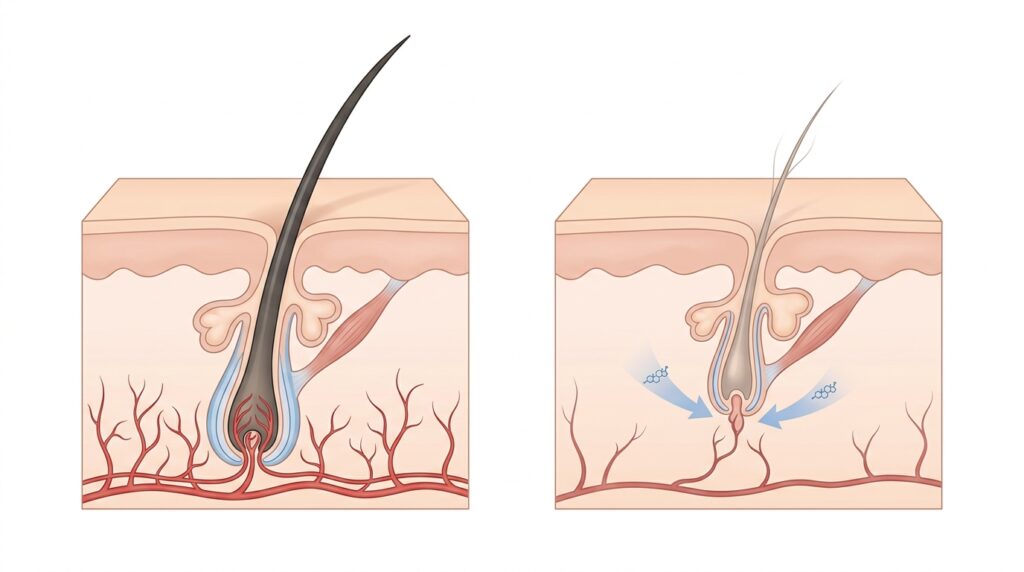
Hormones directly regulate the hair growth cycle. When hormone levels shift — due to thyroid disease, polycystic ovarian syndrome, pregnancy, menopause, or changes in contraception — the follicle responds. Hair sheds earlier than it should. Growth slows. Density drops.
Thyroid disorders are among the most commonly missed causes of hair loss. Both an underactive and overactive thyroid disrupt the hair cycle. PCOS raises androgen levels, which shrinks follicles and shortens the growth phase — producing progressively finer and shorter strands over time.
Identifying and addressing hormonal imbalances is often the turning point in a patient’s hair recovery.
Nutritional Deficiencies
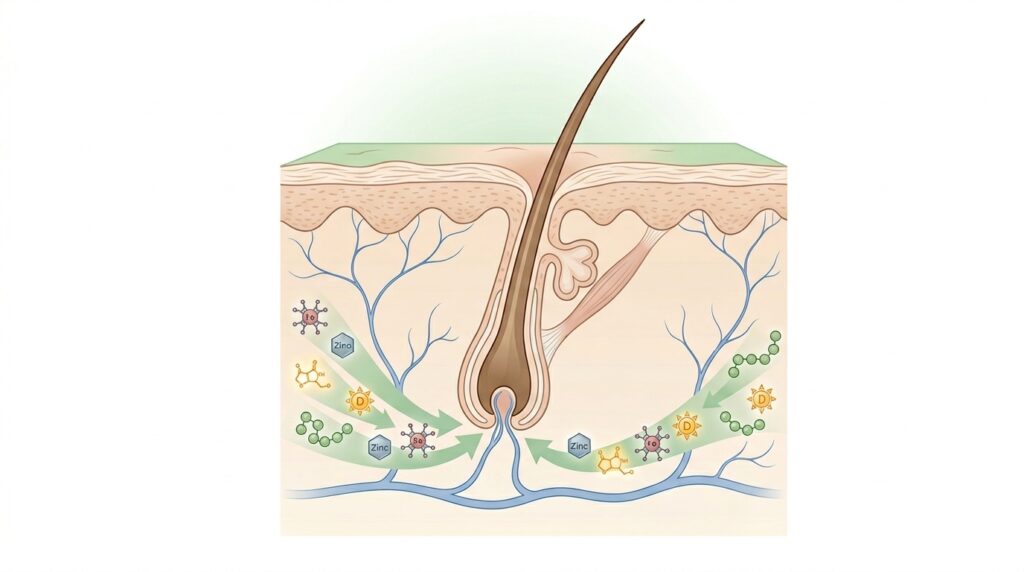
Hair follicles are among the most nutritionally demanding cells in the body. They need a consistent supply of iron, ferritin, zinc, biotin, vitamin D, and protein to function properly. When any of these fall below optimal levels, the follicle enters a resting phase prematurely — and shedding increases.
We screen for nutritional deficiencies as part of our trichology diagnosis process — because treating hair loss without addressing nutrition produces limited results.
Stress & Lifestyle Factors
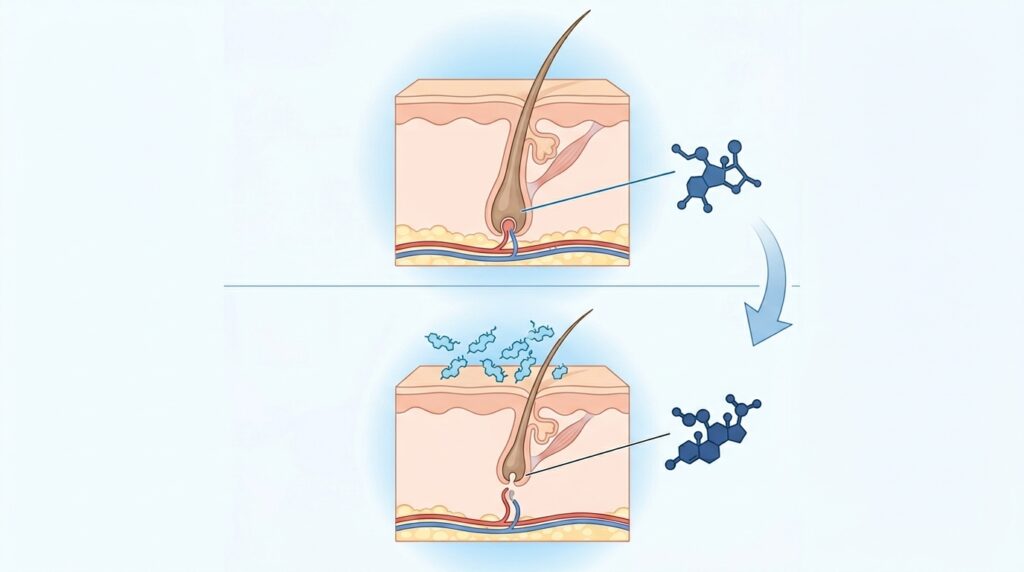
Chronic stress elevates cortisol. High cortisol pushes hair follicles out of their growth phase and into a resting phase — triggering the condition known as telogen effluvium. Shedding typically begins two to three months after the stress event, which is why many patients do not immediately connect the two.
Poor sleep, heavy alcohol consumption, and smoking all reduce blood flow to the scalp and deprive follicles of the oxygen and nutrients they need. These lifestyle factors compound other causes — making existing hair loss worse and slowing recovery.
Genetics & Family History
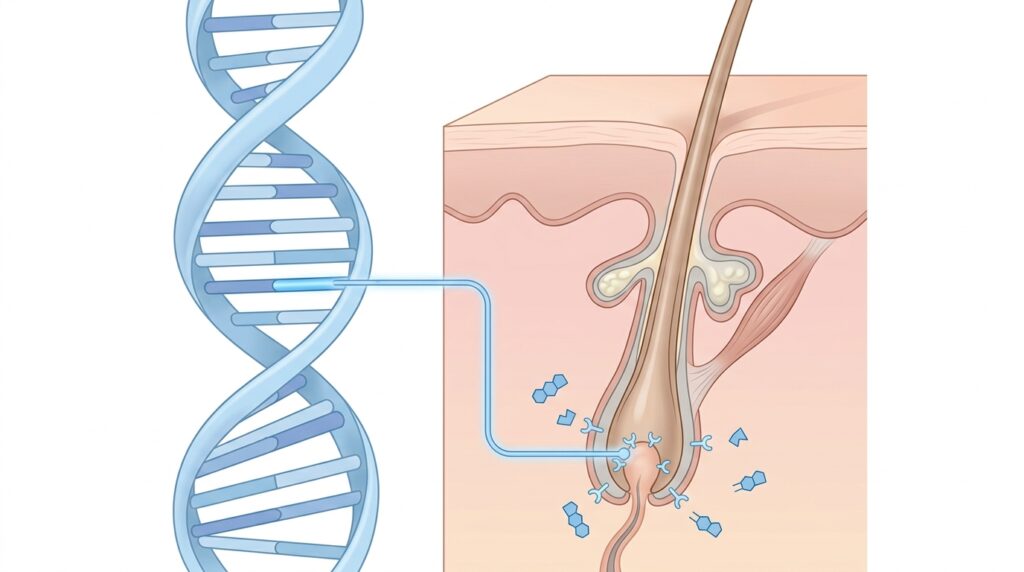
Your genetic blueprint determines how sensitive your follicles are to dihydrotestosterone, how early androgenetic alopecia develops, and how quickly it progresses. If your parents or grandparents experienced significant hair loss, your risk is elevated.
Genetics do not make hair loss inevitable. But knowing your predisposition allows us to act earlier — protecting more follicles before miniaturisation becomes irreversible.
Environmental Factors
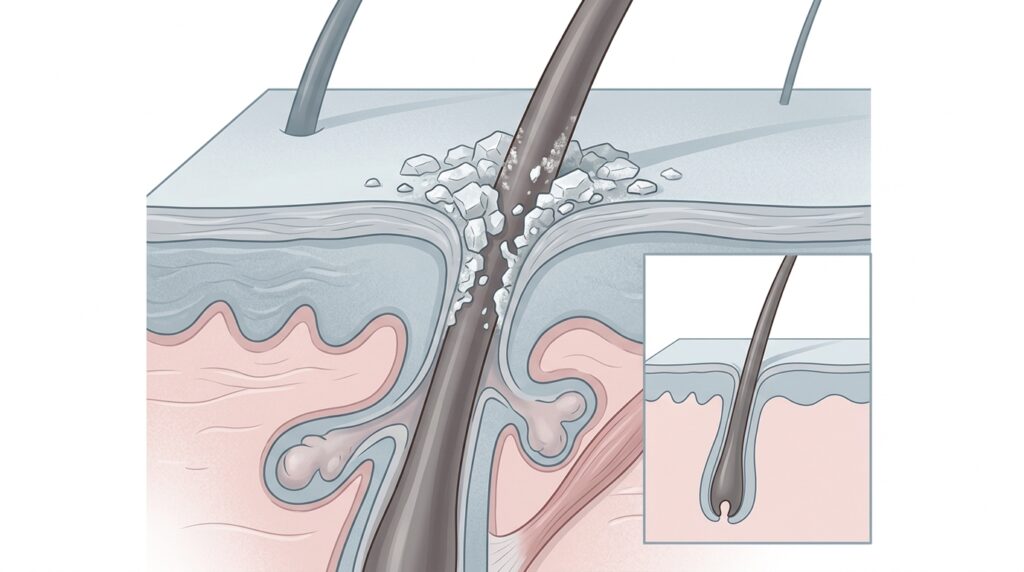
Environmental factors are an underappreciated driver of scalp and hair problems. Hard water — common across Romford and the wider London area — leaves mineral deposits on the scalp and hair shaft. These deposits block follicles, strip moisture from the hair, and contribute to scalp irritation and breakage over time.
If you live in Romford or surrounding areas and have noticed your scalp health declining, environmental factors may be contributing more than you realise.
Our Advanced Trichology Diagnosis Process
Getting the diagnosis right is everything. At Skin Esthetics Clinic, we use a structured, multi-stage assessment process to build a complete picture of your hair and scalp health before recommending any treatment.
Consultation & Medical History Review
Your assessment begins with a thorough consultation. We discuss your hair loss history, your scalp symptoms, your medical background, any medications you take, and your diet and lifestyle. We ask the questions that matter — including family history of hair loss, recent illnesses, hormonal changes, and stress events.
This initial conversation tells us a great deal before we even look at your scalp.
Scalp Examination — Microscopy and Trichoscopy
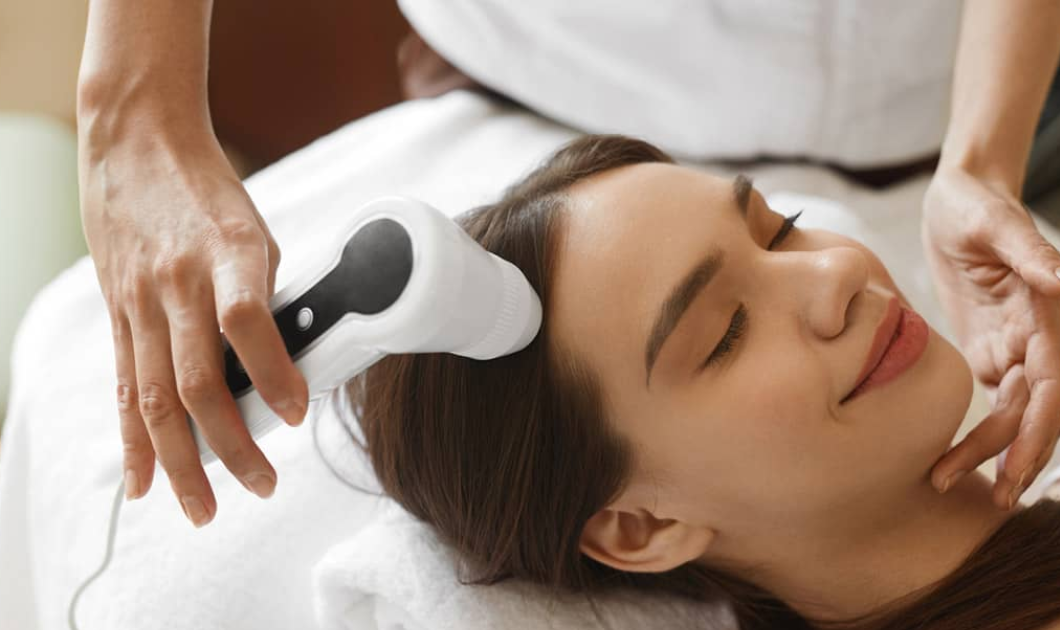
We examine your scalp and hair follicles under magnification using trichoscopy — a non-invasive diagnostic tool that allows us to assess follicle health, miniaturisation, scalp inflammation, and early signs of scarring in precise detail.
Trichoscopy identifies changes at the follicle level that are invisible to the naked eye — giving us an accurate picture of what is happening beneath the surface and how advanced your condition is.
Hair Pull Test & Density Analysis
The hair pull test assesses active shedding. We gently pull a small section of hair and count the number of strands released. This tells us whether your follicles are in an excessive shedding phase and how active your hair loss currently is.
Density analysis measures the number of hairs per square centimetre across different areas of the scalp — identifying patterns of loss and helping us track your progress over the course of treatment.
Blood Tests — If Required
Where a hormonal imbalance or nutritional deficiency is suspected, we may recommend blood tests. These screen for thyroid function, iron and ferritin levels, vitamin D, zinc, hormonal markers, and inflammatory indicators.
Blood test results give us objective data to work with — confirming or ruling out systemic causes that directly affect your hair and scalp health.
Personalised Treatment Planning
Once we have a complete picture, we sit down with you and explain exactly what we found. We go through your diagnosis clearly, outline your treatment options honestly, and build a plan that fits your condition, your lifestyle, and your goals.
You leave with a clear, actionable plan — not a vague set of recommendations.
Trichology Treatment Options Available at Skin Esthetics Clinic
Every treatment plan at Skin Esthetics Clinic is built around your specific diagnosis. We do not apply the same protocol to every patient. We combine the right treatments in the right sequence for your individual condition.
Medical & Pharmaceutical Treatments
Where appropriate, we advise on medical and pharmaceutical treatment options for hair and scalp disorders. These include topical treatments targeting scalp inflammation, sebum regulation, and follicle stimulation. Where prescription medication is required, we work closely with your GP or dermatologist to ensure a coordinated treatment approach.
Clinical Therapies
Our clinical therapy options for hair loss and scalp disorders include:
- PRP therapy
- Exosome therapy
- Microneedling LED light therapy
Scalp Treatments
Scalp health is the foundation of hair health. Our scalp treatments address seborrhoeic dermatitis, psoriasis, folliculitis, excess sebum production, and scalp microbiome imbalance. We use medical-grade protocols and professional products to restore a balanced, healthy scalp environment — creating the conditions hair needs to grow.
Nutritional & Lifestyle Support
We provide targeted nutritional guidance based on your blood test results and dietary assessment. This includes specific supplement recommendations, dietary adjustments, and lifestyle changes that directly support hair follicle health and recovery.
Pharmaceutical Preparations in Trichology
In cases of scalp disorders particularly, your trichologist may recommend specialist pharmaceutical preparations for use in the clinic or at home. These include medicated shampoos, treatment creams, and scalp solutions formulated to target specific scalp conditions.
These preparations are either manufactured by licensed trichologists holding a Medicines and Healthcare products Regulatory Agency licence, or sourced from licensed specialist manufacturers. They are significantly more targeted and effective than over-the-counter alternatives and should always be used in strict accordance with the instructions provided.
Where a prescription is required — for example, for certain topical medications — your trichologist works alongside your GP to ensure you receive the appropriate treatment within a fully coordinated care plan.
Results Timeline How Long Does It Take?
Hair growth is a biological process. It takes time. Setting realistic expectations is something we take seriously at Skin Esthetics Clinic because unrealistic promises set patients up for disappointment.
Here is a general timeline of what most patients experience:
- Weeks one to four — scalp health begins to improve, shedding may reduce
- Weeks four to eight — early signs of new hair growth may become visible in some patients
- Months three to six — meaningful regrowth visible in most patients following consistent treatment
- Months six to twelve — full results from a treatment course typically achieved
- Beyond twelve months — maintenance treatment begins to protect and sustain results
Results vary depending on your specific condition, how long you have had it, and how consistently you follow your treatment plan and home care routine. We track your progress at regular review appointments and adjust your plan based on how your hair and scalp respond.
Cost of Trichology Treatment in Romford
Trichology treatment cost at Skin Esthetics Clinic depends on your diagnosis, the treatments recommended, and the number of sessions required. There is no single fixed price — because no two patients have the same condition.
What we guarantee is complete transparency. At your free consultation, we give you a full cost breakdown before you commit to anything. No hidden fees. No surprises. No pressure.
Before & After Results
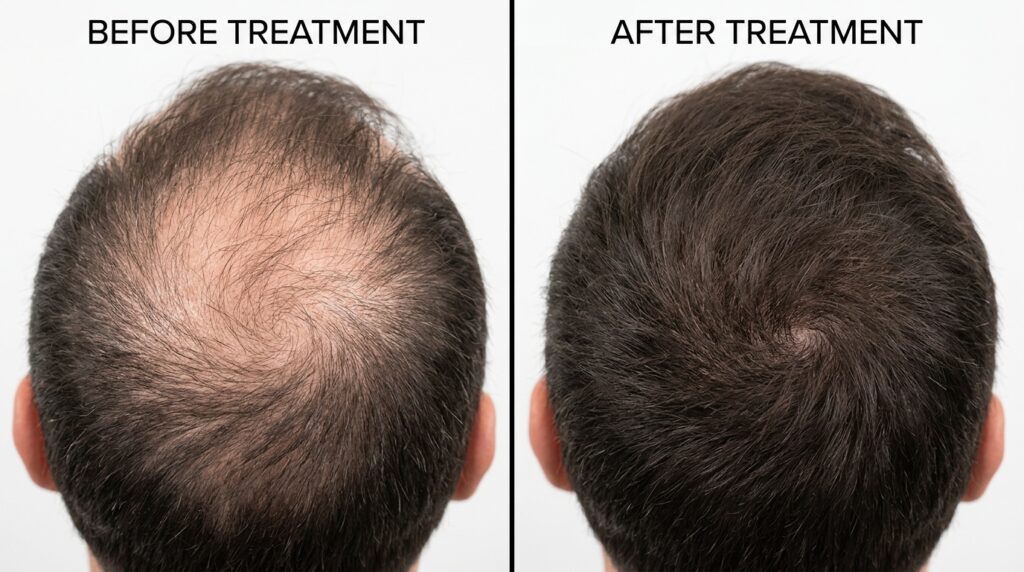
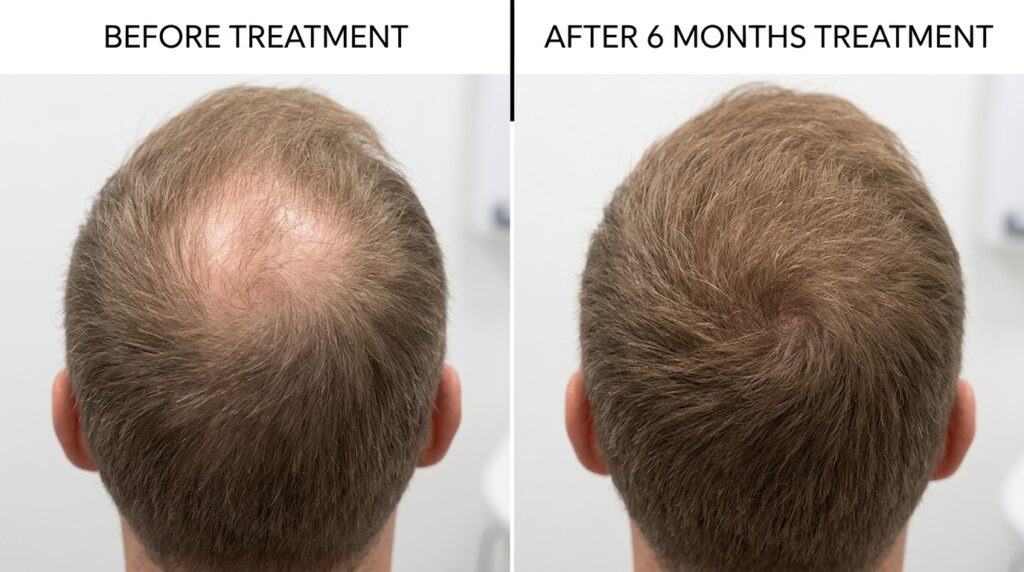
Real results from real patients speak louder than any promise we can make on a page.
Results vary from patient to patient depending on the type of hair or scalp condition, how long it has been present, and how consistently the treatment plan is followed. During your consultation, we will give you a realistic expectation based on your specific diagnosis — not a best-case scenario.
Prevention Tips for Healthy Hair & Scalp
The best trichology outcome is one where you maintain your results long term. Here is what our specialists recommend for ongoing hair and scalp health.
Eat enough protein. Hair is made of keratin — a protein. If your diet is low in protein, your hair growth suffers. Include eggs, fish, legumes, and lean meat in your daily diet.
Check your ferritin, not just your iron. Standard blood tests check serum iron but often miss ferritin — the stored form that matters most for hair growth. Ask your GP to check ferritin specifically if you are experiencing hair shedding.
Protect your scalp from hard water. Install a shower filter if possible. Use a chelating shampoo once a week to remove mineral buildup from the scalp and hair shaft.
Reduce heat styling frequency. Every session with a straightener or curling iron degrades your hair shaft. Space out heat styling and always use a heat protectant.
Massage your scalp daily. Four to five minutes of fingertip scalp massage each day increases blood flow to the follicles and supports the growth cycle. It costs nothing and makes a measurable difference over time.
Manage stress actively. Chronic stress is one of the most consistent drivers of hair loss. Exercise, sleep, and stress management techniques directly protect your follicles.
Never ignore early signs. A wider parting, more hair on the pillow, or an itchy inflamed scalp are early warning signs. The earlier you act, the more options you have.
FAQs
What does a trichologist do?
A trichologist diagnoses and treats disorders and diseases of the hair and scalp.
Is trichology treatment safe?
Yes. Trichology treatment at Skin Esthetics Clinic uses clinically proven, non-invasive diagnostic tools and evidence-based treatment protocols. All treatments are explained fully before they begin.
How many sessions are needed?
The number of sessions depends on your specific condition and its severity. Most patients complete between four and eight treatment sessions. Your trichologist will give you a realistic session estimate at your first consultation based on your diagnosis.
Can trichology regrow hair?
In many cases, yes. When hair follicles are still active — even if dormant — trichology treatment can stimulate regrowth by addressing the root cause of loss. Permanent results are more likely the earlier treatment begins.
Is trichology treatment suitable for men and women?
Absolutely. We treat both male and female patients across all age groups.
Are results permanent?
Results depend on the type of condition and the treatments used. Some conditions such as telogen effluvium resolve fully with treatment and do not recur.
Others such as androgenetic alopecia require ongoing maintenance to sustain results.
Does trichology treatment hurt?
Most trichology treatments are comfortable and non-invasive. Trichoscopy is completely painless.
PRP therapy involves small injections into the scalp — most patients describe the sensation as a mild scratch.
Microneedling produces a light vibration on the scalp. We use numbing protocols where needed to keep you comfortable throughout.
Can I combine trichology with other treatments?
Yes. Trichology treatment works well alongside other hair restoration therapies.
Is a trichologist better than a dermatologist for hair loss?
Neither is universally better — they serve different purposes. A dermatologist treats a broad range of skin and hair conditions from a medical perspective.
A trichologist specialises exclusively in hair and scalp science.
Conclusion
Every week you wait is a week your hair and scalp condition has to progress. Follicles that are dormant today can become permanently inactive tomorrow and once they are gone, your options narrow significantly. Trichology treatment in Romford at Skin Esthetics Clinic finds the root cause of your condition and targets it directly. Your first consultation is free.
We see patients from across Romford, Hornchurch, Ilford, Barking, Dagenham, Chadwell Heath, and East London and we are ready to see you too. Book your trichology consultation today and take the first real step toward healthier hair and scalp.